Fuel planning for a bike ride is less about carrying a perfect menu and more about avoiding long gaps without food or water. Distance, climbing, temperature and pace all change how quickly a ride becomes difficult. Waiting until you feel empty can make the next section feel harder than it needs to be, especially on a remote route. A practical plan uses small familiar portions, accessible storage and enough flexibility to respond to the actual day.
Start with a familiar meal
Begin with food you already know sits well before riding. Leaving hungry is rarely a reliable strategy, but a large unfamiliar meal immediately before a ride can be just as uncomfortable. Test new foods on shorter rides rather than introducing them halfway through an ambitious day. A comfortable start also helps you avoid the common mistake of riding the opening kilometres too hard simply because you feel fresh. Your early energy is a reserve to manage, not a reason to ignore the route length.
Eat before the dip
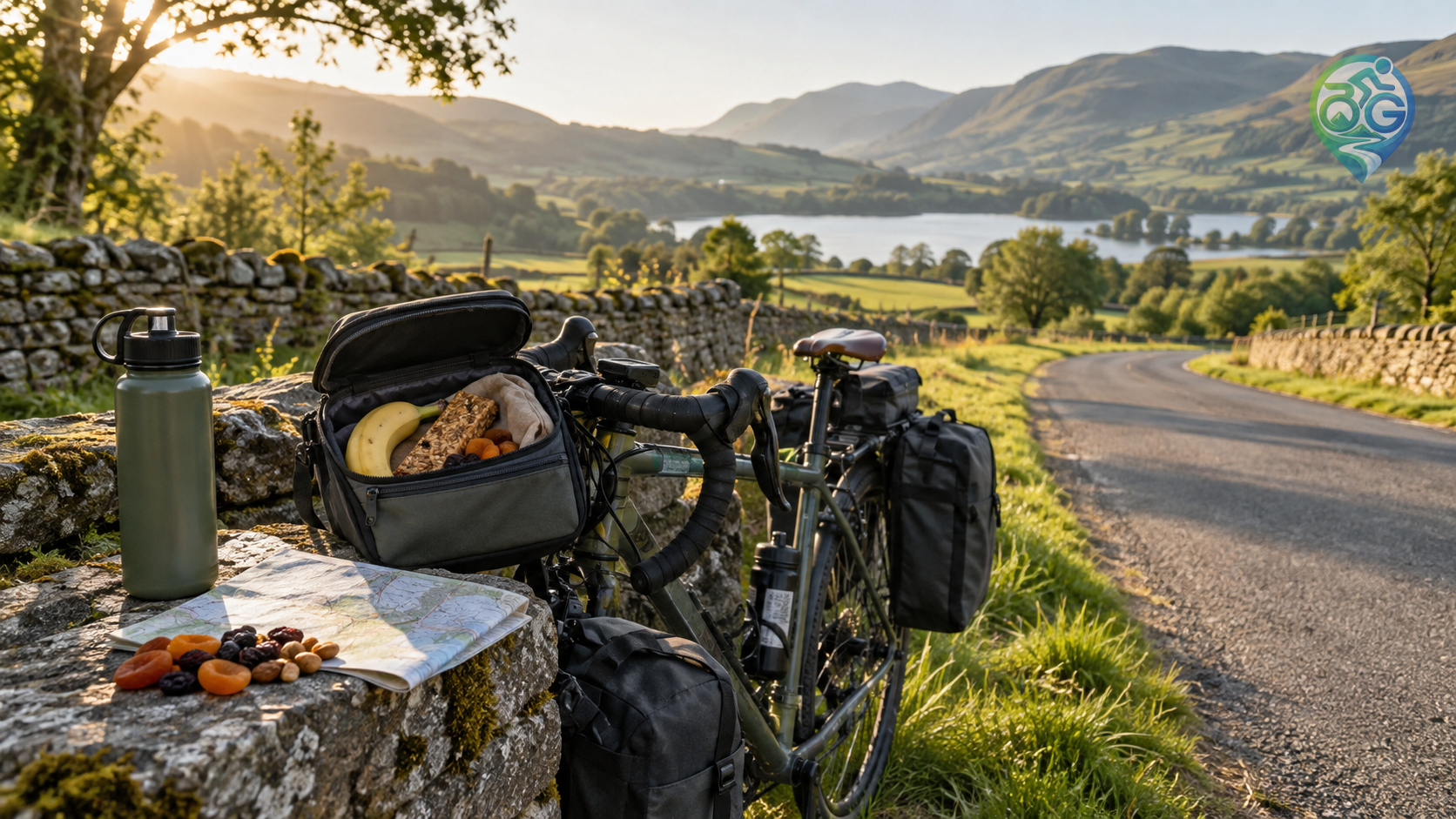
Small portions at regular points are usually easier to manage than waiting for a dramatic hunger signal. Bananas, dried fruit, a plain sandwich, an oat bar or another familiar food may work well if it survives the bag and your stomach. There is no universal snack list; the best choice is the one you can carry, reach and eat without disrupting the ride. The long-distance cycling preparation guide connects snack timing with distance, climbing and realistic rest planning.
Think about food and fluids together
Solid food cannot replace a sensible drink plan, and waiting until you are very thirsty can make a hot or exposed section harder. Keep a bottle within reach and review your fluid needs when heat or sweating increases. Salt loss varies with the rider and the conditions, so avoid treating a random supplement dose as a universal answer. Read labels and use products you have already tested. The water planning guide helps place refill points and bottle capacity into the route rather than leaving them to the final stop.
Prepare before a climb or exposed section
A short snack break before a long climb or open headwind is often easier than trying to eat while already struggling. It does not need to be a full meal: a few bites and some fluid can be enough to make the next decision calmer. The cadence and effort management guide shows how fuel choices work alongside perceived effort and pacing. If the wind or gradient is stronger than expected, lowering effort is also a way to conserve fuel and protect the rest of the day.
Pack snacks for access and weather
Put durable foods in a pocket you can reach without unpacking the bicycle. Heat can turn some snacks into a mess, so choose alternatives that tolerate the forecast. Keep opened food in a separate bag and avoid letting oil, sugar or salt spread through the luggage. The bikepacking starter guide helps balance food access with the rest of the touring load.
Test your personal routine
Every rider and every route is different. Use a shorter weekend ride to learn which foods travel well, when hunger appears and which drinks feel comfortable. If you experience dizziness, unusual weakness or significant stomach trouble, do not simply force down more food; stop, reassess the conditions and consider shortening the ride. A good fuel plan is not a rigid target. It is a repeatable habit that supports steady pacing and safer decisions.