
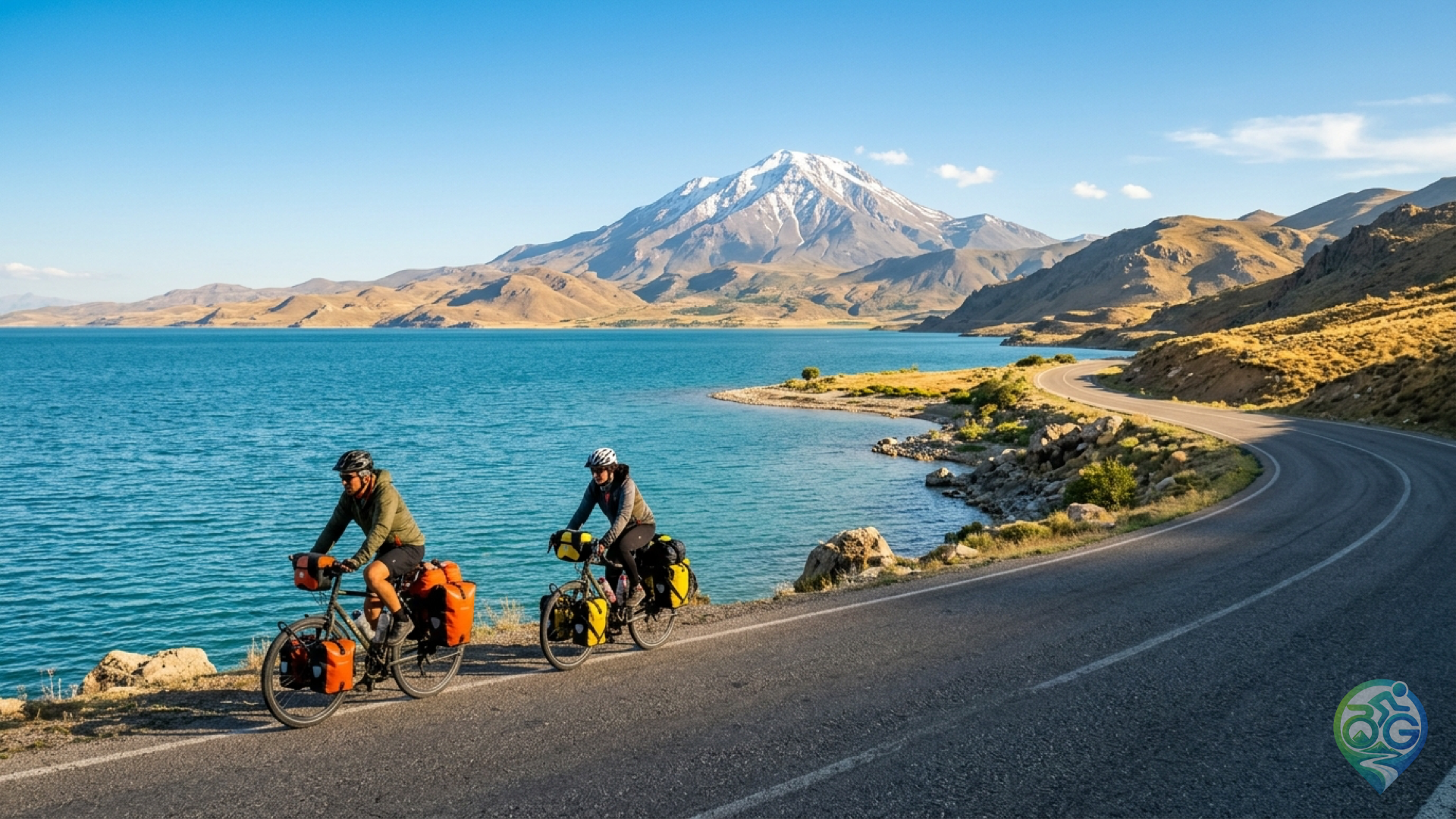
Encircled by imposing volcanic peaks and ancient civilizations, Lake Van—Turkey's largest body of water and the largest soda lake on Earth—presents one of the most mesmerizing multi-day touring routes in Eurasia. The annual Lake Van Cycling Festival (Van Gölü Bisiklet Festivali) brings together hundreds of adventurous cycle tourists from across the globe to pedal the scenic 430-kilometer circum-navigation loop across Eastern Anatolia. With a base plateau elevation starting at 1,650 meters and soaring up to 2,250 meters during the famed ascent to the Nemrut Caldera lakes, this challenging expedition merges raw natural wilderness with rich Seljuk heritage. Undertaking thorough long-distance cycling preparation transforms this high-altitude loop into an unforgettable bikepacking voyage.
1. Route Profile and 430 km Stage Breakdown
The circumference of Lake Van is traditionally conquered over 5 to 6 manageable stages, riding in either a clockwise or counter-clockwise loop. Connecting the vibrant city of Van through Tatvan, Ahlat, Adilcevaz, Ercis, and Muradiye back to Van, the route traverses smooth coastal asphalt with wide shoulders. However, exposed shoreline expanses frequently encounter gusty crosswinds and rolling undulating gradients. To anticipate elevation changes, village resupply points, and scenic detours like the Seljuk tombstones in Ahlat, executing a rigorous GPX track and route check on your GPS device prior to rolling out is essential for seamless energy allocation.
2. Climbing Mount Nemrut: Caldera Ascent and Altitude Dynamics
The undisputed queen stage of any Lake Van tour is the epic ride up Mount Nemrut caldera from Tatvan. Climbing from 1,650 meters up to 2,250 meters over 15 kilometers of continuous gradient averaging 8% to 12%, this volcanic ramp leads cyclists into an immense collapsed crater harboring twin alpine lakes. At this elevated altitude, reduced atmospheric oxygen density places greater demand on aerobic stamina. Maintaining smooth pedal momentum requires compact or sub-compact gearing (1:1 gear ratio on loaded touring setups) and disciplined pacing within a 70 to 75 RPM cadence rhythm to stave off premature muscular fatigue.
3. Campsite Selection, Alpine Climate, and Camp Kitchen
Eastern Anatolia's continental climate produces sharp temperature swings throughout the 24-hour cycle. While daytime temperatures under the brilliant high-altitude sun hover around 25°C to 28°C, mercury plummets dramatically down to 8°C to 10°C as soon as dusk settles over the water. Official festival basecamps are situated on municipal shores in Ahlat, Adilcevaz, and Edremit. Independent bikepackers should carry a sleeping bag rated to at least 0°C comfort and a wind-stable three-season tent. To prepare hot restorative meals and tea after taxing lakeside miles, selecting an efficient, wind-resistant camping stove for bikepacking is indispensable.
4. Hydration Discipline, Sodas, and Wind Strategy
Because Lake Van’s waters are highly alkaline and saline, the lake itself cannot serve as an emergency water source. Touring cyclists rely entirely on roadside fountain springs (hayrat çeşmeleri), petrol stations, and town markets. On the exposed steppe stretches between Adilcevaz and Ercis, dry alpine headwinds strip moisture rapidly from the body without apparent sweating. Implementing proactive water planning on bike tours with at least two large bidons and electrolyte powders is vital for sustained health. Moreover, drafting efficiently in organized pacelines during windy afternoon sections significantly reduces aerodynamic drag and conserves crucial glycogen reserves.
Discussion & Comments 0
Share your thoughts, gear experiences or ask questions about this guide.
No comments yet.
Be the first to share your thoughts!
Join the Discussion
Log in with your Bisikletli Gezgin mobile account to participate in discussions and track your contributions.