
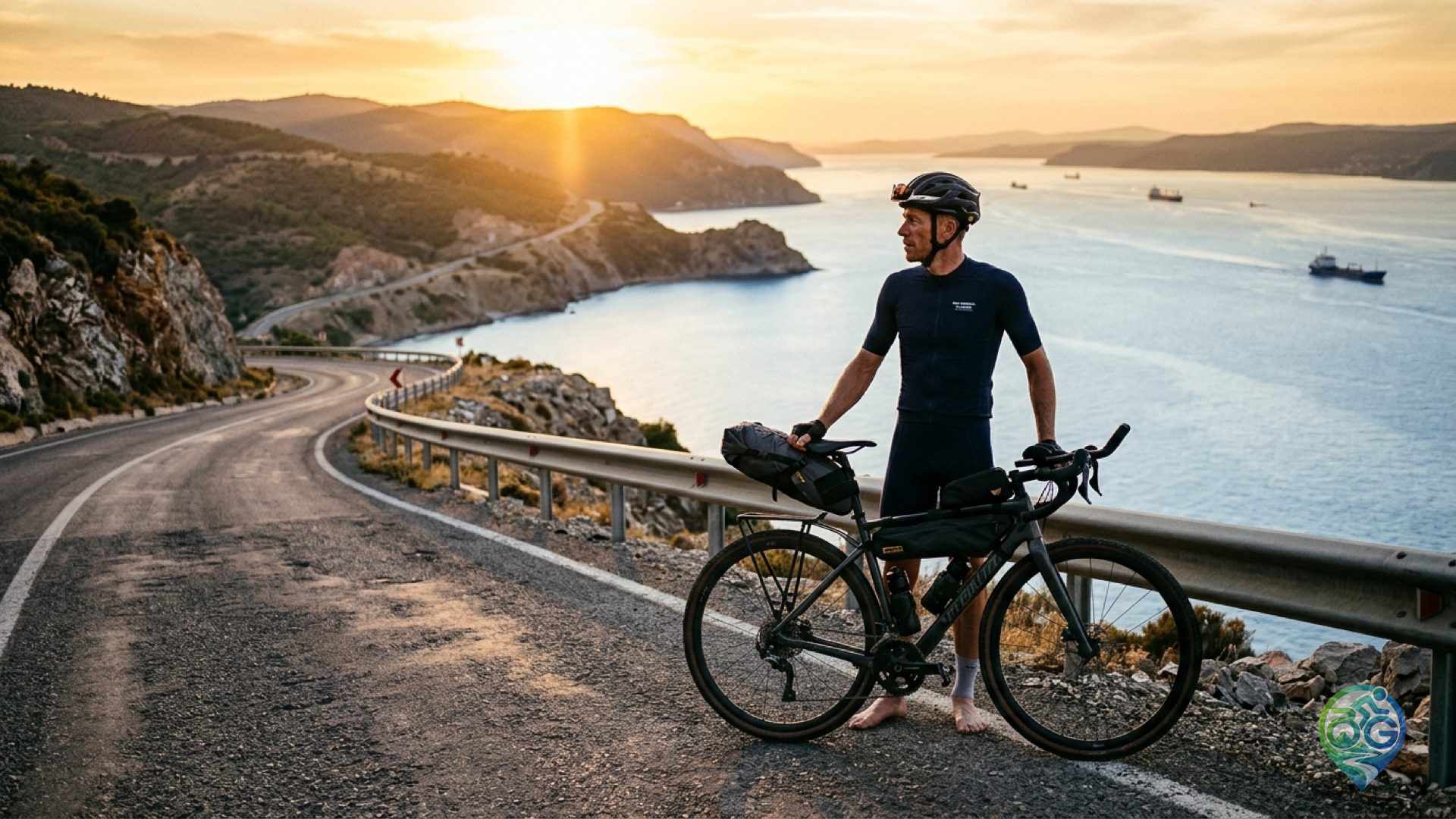
Renowned as the definitive, unsupported ultra-distance bicycle race across the European continent, the Transcontinental Race (TCR) holds a revered status in the global bikepacking community. Conceived by the late Mike Hall, this monumental test of endurance requires cyclists to navigate over 4,000 kilometers purely under their own power—carrying their own bivvies, repairing their own mechanicals, and plotting their own routes between mandatory checkpoints. With storied editions concluding in Istanbul or navigating mandatory parcours through the Gallipoli Peninsula and the Dardanelles Strait (Çanakkale), the Turkish stages present intense tactical hurdles. Aspiring ultra-distance riders must ground their ambitions in solid long-distance cycling preparation to survive these rigorous final sectors.
1. The Demanding Terrain of Thrace and Çanakkale Checkpoints
TCR organizers inject mandatory gravel or historic parcours between free-route segments. Traversing European Turkey into the historic battlegrounds of Gallipoli, riders encounter unrelenting rolling topography and fierce northeasterly winds (Poyraz) sweeping across sunbaked sunflower fields. After pedaling thousands of kilometers across the Alps and the Balkans, tackling these choppy gravel climbs demands razor-sharp attention. Verifying elevation profiles, remote water spigots, and rough trail conditions via a meticulous GPX track and route check on your bike computer ensures you avoid dead-end tracks or unrideable farm ruts.
2. Pacing Discipline and Cadence Optimization on 300 km Days
Clocking 250 to 350 kilometers every single day over 16 to 20-hour riding shifts burns massive caloric reserves while straining connective tissues. Grinding tall gears up steep Marmara ridges risks crippling knee tendinitis. Experienced ultra-racers rely on sub-compact or compact gearing (such as 50/34 paired with an 11-34T or 11-36T cassette) to spin comfortably on climbs. Maintaining an efficient pedaling rhythm between 75 and 85 RPM preserves neuromuscular power, reinforcing the critical lessons of mindful cadence and effort management across thousands of grueling kilometers.
3. Night Navigation, Bivy Rest, and Sleep Strategy
The Transcontinental is fundamentally an exercise in efficiency and sleep management rather than raw sprinting speed. With elite contenders operating on just 3 to 4 hours of sleep per night, quick bivy naps outside quiet 24-hour petrol stations or village mosques replace hotel stays. When riding through the pitch-black rural roads of Thrace, powerful dual-beam lighting (at least 800 to 1,000 lumens) paired with high-visibility reflective vests is vital to spot agricultural machinery and stay alert against territorial livestock guardian dogs.
4. Severe Hydration Demands and Ferry Crossing Logistics
Summer temperatures in the Marmara basin frequently exceed 38°C (100°F). Radiating heat from sunbaked tarmac accelerates dehydration and heat exhaustion. Roadside fountain taps (hayrat) and rural fuel stations form life-saving oasis stops; executing proactive water planning on bike tours with at least three large bottles and electrolyte powders prevents cognitive decline. Furthermore, timing ferry departures across the Dardanelles Strait between Eceabat and Canakkale saves precious racing hours, transforming logistical precision into an unforgettable cycling odyssey.
Discussion & Comments 0
Share your thoughts, gear experiences or ask questions about this guide.
No comments yet.
Be the first to share your thoughts!
Join the Discussion
Log in with your Bisikletli Gezgin mobile account to participate in discussions and track your contributions.