
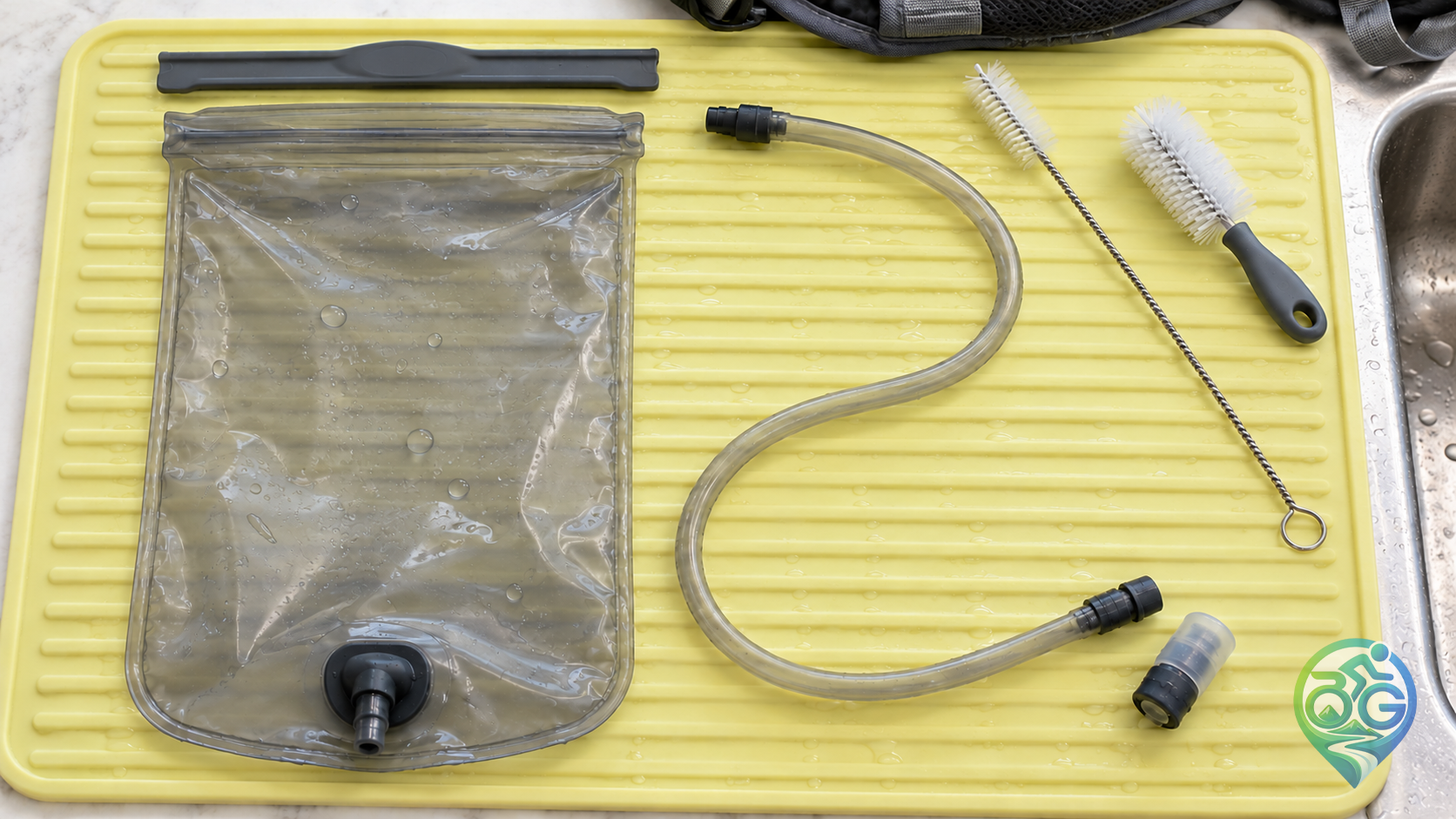
The drinking tube is easy to overlook when the large reservoir looks clean. It carries the same drink, yet can remain tucked into a shoulder strap long after the bladder has been rinsed. Cleaning a hydration bladder after cycling means dealing with that whole drinking path. Set the pack aside, empty the reservoir and give the removable parts a clean place to sit before beginning.
Match the cleaning method to the parts you own
Identify the reservoir model and find its care instructions. Note how the hose disconnects, what comes apart at the mouthpiece and whether the body can be reversed. Photographing the assembled arrangement can help you keep track, but the fitting instructions remain the reference. Put small components in a separate clean container so they do not disappear down the sink while you work.
Reversible does not describe every bladder
HydraPak's reservoir care page distinguishes its models and internal baffle arrangements. It describes reversing suitable reservoirs, brushing the hose and cleaning removable valve components. Its dishwasher permission also belongs to its specified products. Do not transfer that instruction to another brand's reservoir, tube or mouthpiece, or pull internal structures apart because a different model opens that way.
Choose brushes that suit the accessible spaces. The flexible tube brush serves a different job from the brush used inside the main body. Keep the model information with your care supplies, particularly if the household has several similar-looking systems with different connections.
Let the last drink determine the work
CamelBak's care guidance separates use with plain water from use with flavoured or electrolyte drinks, which calls for more thorough cleaning. Make remembering the contents part of unpacking after a ride. Your touring water and resupply plan can establish what goes in each container before departure, so the after-ride job starts with known contents.
For its Hydraulics system, Osprey describes warm water and mild washing-up liquid, brushing the interior and hose, then rinsing the components. It explicitly excludes bleach and boiling water from that method. Follow the cleaner approved for your own equipment. Where you use a cleaning tablet, take concentration and contact time from its instructions instead of inventing a stronger mixture or combining different products.
Include the complete drinking path when rinsing. Cleaning the large compartment while leaving solution in the tube is an unfinished job. Plan enough space to set the washed pieces down without putting the mouthpiece back onto dirty riding kit.
Finish with airflow, then check the system before packing
CamelBak recommends keeping the reservoir open and the drinking tube open at both ends during drying, avoiding tight coils that hold water. Examine the corners, hose and connector areas for remaining droplets before closing the system. A fixed number of hours is less useful than the condition of the actual parts in your available drying space.
Deuter's care advice warns against direct sun during drying and storage. Resist treating a heater or a sunny window as a universal shortcut; follow the material's care limits. Once dry, keep the equipment in a clean, suitable place rather than returning it beneath damp gloves or muddy shoes.
Keep maintenance separate from water treatment
The bikepacking water-filter guide addresses a different decision. Washing the reservoir does not establish that water collected from an uncertain source has been treated. Keep those tasks distinct when preparing for a multi-day journey; a clean container is not evidence about the source filled into it.
Reassemble according to the model instructions once the parts are dry. CamelBak advises replacing components that are cracked, leaking, deteriorated or no longer cleanable. At the next fill, inspect the connections before placing the reservoir among your luggage. Consider the water compartment as part of the bikepacking bag arrangement: avoid trapping the hose in a zip, protect the mouthpiece from dirty equipment and retain access to the connections for checking.
Discussion & Comments 0
Share your thoughts, gear experiences or ask questions about this guide.
No comments yet.
Be the first to share your thoughts!
Join the Discussion
Log in with your Bisikletli Gezgin mobile account to participate in discussions and track your contributions.