
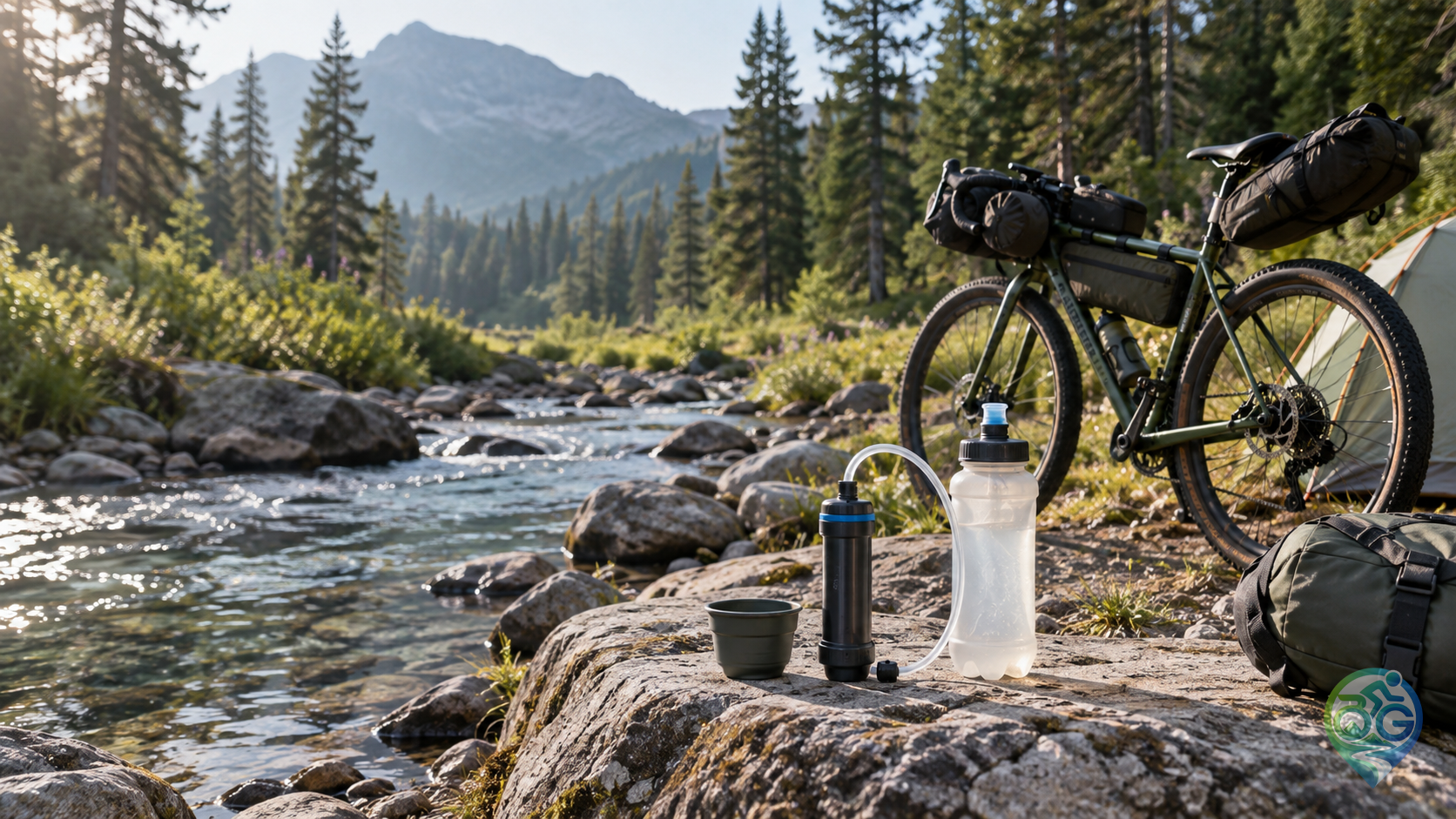
Water planning on a bikepacking trip is not only a question of carrying more bottles. A route may offer a spring, stream, lake or shop, but those sources do not carry the same level of risk. A filter can reduce carried weight when it is used within the limits stated by its maker. It is not a universal purifier, and clear-looking water is not automatically safe. Treat the filter as one part of a source, treatment and storage plan.
What a filter can and cannot do
Many filters are designed to reduce sediment and certain microorganisms. They do not all address viruses, agricultural chemicals, fuel or heavy metals. Water downstream from farms, settlements, mines or damaged infrastructure may require a different decision entirely. Read the tested protection claims rather than assuming that every outdoor filter handles every contaminant. When the source is questionable, carrying safe water may be the better option.
Filter formats for a bicycle tour
Squeeze-bag and bottle filters are compact and quick for short stops. Pump filters can be useful when a group needs more volume, while gravity systems work well at camp but take more bag space. UV treatment depends on clear water and charged batteries. Compare the complete system, including dirty bag, hoses, caps and spare parts, not just the filter body. A few extra grams can be worthwhile if the system is easier to keep clean and separate from your drinking bottles.
Flow rate and cartridge life
Advertised flow is usually measured in favourable conditions. Silt and cloudy water slow a cartridge, so a model with a practical backflushing or cleaning routine matters on a long trip. Cartridge life is also affected by source quality and maintenance. Test the system at home before leaving, check every connection and learn how the dirty and clean sides are marked. The water planning guide shows how a filter can fit into a broader daily supply plan.
A safe field routine
Keep dirty and clean containers separate and do not let the dirty outlet touch the mouth of a clean bottle. Follow the maker’s backflush, drying and storage instructions. Freezing can damage some filter elements, so protect the cartridge in cold conditions. If a source carries a higher risk, consider boiling or a treatment method recommended for that specific situation. Do not improvise chemical combinations or assume that filtration removes every pathogen.
Pack the system for access
Store the filter where it is protected from crushing but easy to reach at a water stop. A spare seal, connector or cleaning brush may be useful if the model supports it. Do not base a remote section on a source that you have only guessed from a map. The bikepacking starter guide connects gear choices with bag volume and route conditions. If your system needs pressure or a separate pump, the bicycle pump buying guide is a helpful companion.
Buying checklist
Before buying, check tested contaminant claims, realistic flow, cartridge life, cleaning method, replacement availability and temperature limits. Add the weight and volume of bags and hoses to the comparison. The lightest filter is not the best bargain if it clogs quickly or cannot be serviced in the field. Our bikepacking gear checklist helps place water treatment alongside the rest of your camp kit.
Discussion & Comments 0
Share your thoughts, gear experiences or ask questions about this guide.
No comments yet.
Be the first to share your thoughts!
Join the Discussion
Log in with your Bisikletli Gezgin mobile account to participate in discussions and track your contributions.