At first glance, padded cycling shorts seem simple: choose a pad, pick a size and ride. The harder part is that the shorts need to work in a forward-leaning position, with the pad sitting where it should once you are on the saddle. More padding is not automatically more comfortable, and a size label from one brand tells you little about another. Treat the maker’s size chart as the starting point, then assess the garment in a riding posture if you can.
Look at pad shape before pad thickness
The chamois is designed for the contact area between rider and saddle. It is not a substitute for a saddle that fits, nor a fix for a poor bike position. Brands build pads with different profiles, density zones, thicknesses and seams. Castelli’s own guide, for example, describes distinct pad families and constructions across its range. Those details explain that company’s products; they should not be assumed to describe every other brand’s shorts.
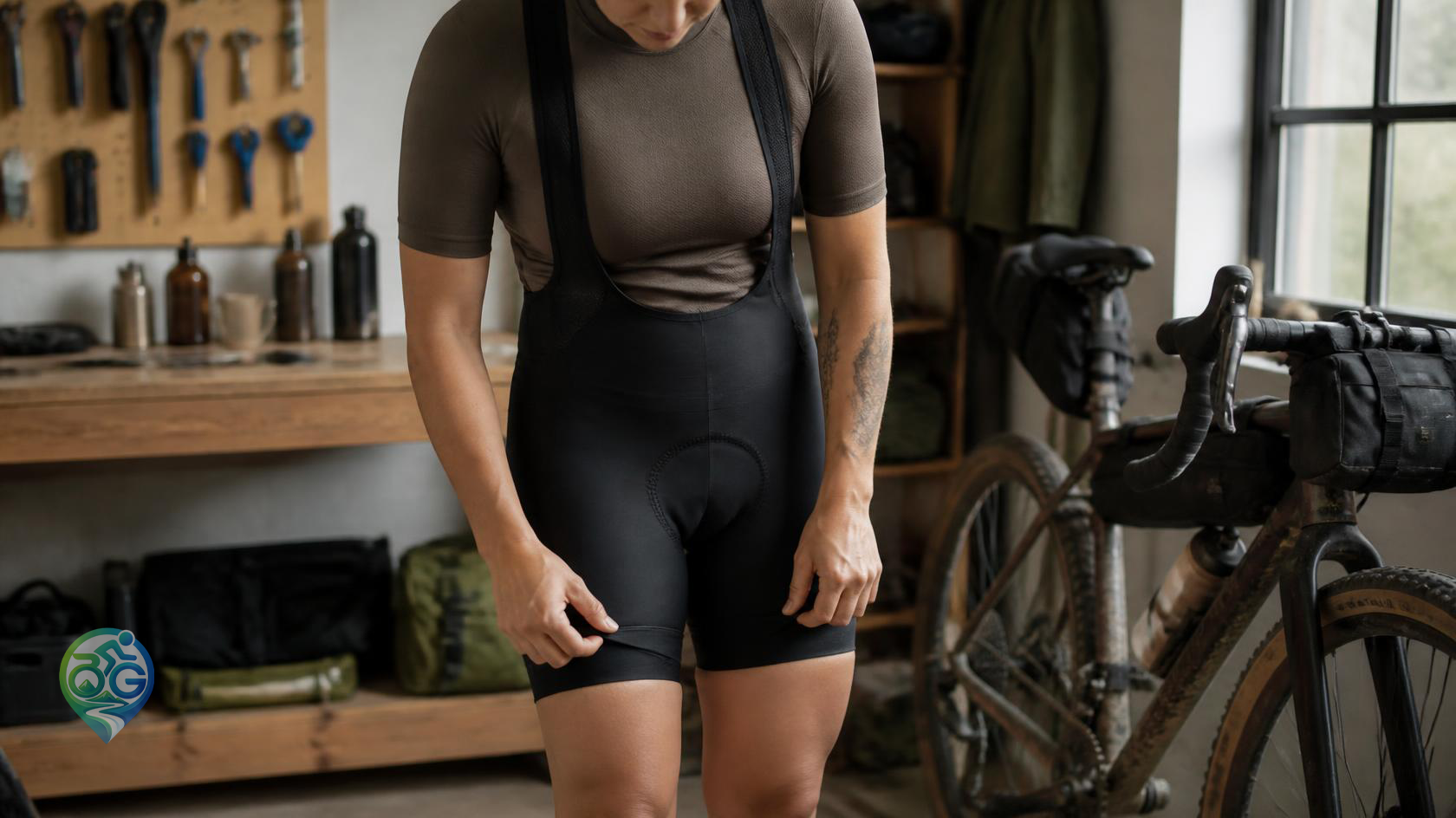
When trying a pair on, bend forward as you would on the bike. Check whether the pad stays aligned or bunches at the front or rear. Pay attention to seams and leg grippers as you move through a few pedal-like motions. A standing mirror check alone can miss the way fabric shifts once your hips rotate into a riding position.
Bib shorts or a waist short?
Bib shorts use shoulder straps instead of relying on a waistband to keep the garment in place. Some riders prefer that feel on longer rides; others find a waist short quicker to put on, easier for everyday use or more comfortable when stopping. Neither design is universally better. Check that the straps do not pull at the shoulders when you are on the bike, and consider what you normally wear on your upper body. Fit varies by cut, including between men’s and women’s models, so read the product’s own description rather than generalising from the category name.
Measure for the brand, not your jeans
Do not assume your everyday trouser size will translate directly. Take the measurements the brand asks for, often including hip circumference and inseam, and compare them with that product’s current chart. Castelli’s guide uses hip and inseam measurements and recommends sizing up when a measurement falls between sizes. That is Castelli’s advice for its range, not a universal rule: another maker may use a different pattern, fabric stretch or fit target.
The shorts should feel close to the body without restricting breathing or movement. Straps should not drag the shoulders down, and leg bands should hold position without feeling painfully tight. If you cannot try the garment on first, check the retailer’s returns policy before ordering more than one size.
Match the fabric and construction to your rides
For short commutes, a simple pair that is easy to care for may be enough. Longer rides make pad stability, seam placement and your own comfort preference more noticeable. For hot weather, compare the maker’s fabric and ventilation descriptions; for cool conditions, decide whether the shorts will be worn alone or under another layer. Product claims such as “endurance” or “race” are useful clues about intended use, but they do not guarantee a good fit for your body or saddle.
Follow the care label for washing and drying. Pad materials and fabrics differ, so avoid applying one garment’s care temperature or detergent advice to every pair. Let the shorts dry as directed and inspect stitching and grippers over time.
Make the final check before buying
Review the pad description, fit notes, size chart and care instructions together. If possible, try the shorts in a riding position; if not, choose a seller with clear exchange terms. Persistent numbness or pain deserves a broader fit check rather than an automatic move to a thicker pad. Saddle shape, saddle height and riding posture can all matter alongside clothing.
To compare other contact points, read our practical saddle-height guide, our article on choosing cycling gloves, and our long-distance ride preparation guide.