That rhythmic metallic scraping sound coming from your wheels on every revolution is one of the most frustrating experiences for any cyclist with disc brakes. Beyond being irritating to the ear, brake rub saps your pedaling efficiency, creates unwanted drag, and accelerates uneven brake pad wear. Eliminating disc brake rub is a straightforward mechanical procedure that you can readily perform in a home workshop with just a few basic tools.
Diagnosing the Source of the Rub
Mount your bicycle on a repair stand or suspend the wheel so it spins freely. Peer straight down through the top of the caliper slot with adequate backlighting. Disc brake rub generally falls into two distinct categories: continuous rub and intermittent rub. If the rotor scrapes against a pad throughout its entire rotation, the caliper body itself is misaligned relative to the frame mount, or a hydraulic piston is sticking. If the scrape occurs only once per wheel revolution at a localized spot, the rotor has a slight lateral wobble or bend.
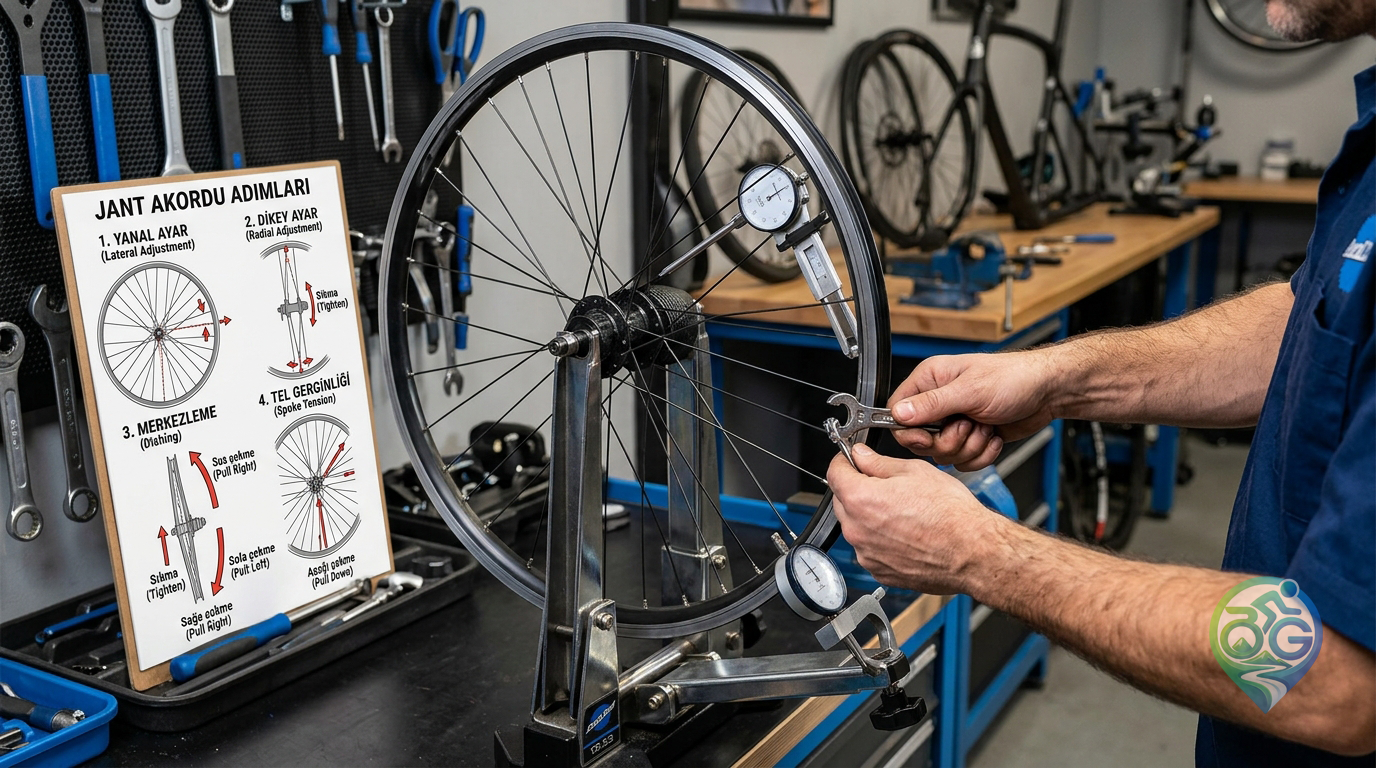
Before touching the caliper bolts, verify that the thru-axle or quick-release skewer is seated squarely in the dropouts and torqued properly. Clamping an axle at a slightly uneven angle alters the alignment of the rotor inside the caliper. For broader wheel and hub inspection, review our how to true a bicycle wheel guide to ensure your hub bearings and axle interface are secure.
Centering the Brake Caliper
To align the caliper body, loosen the two mounting bolts roughly half a turn until the caliper can wiggle freely from side to side. Pump the brake lever firmly three to four times to extend the pistons, then hold the lever clamped down tightly against the handlebars. This hydraulic clamping forces the pads to grip the rotor firmly, drawing the floating caliper into natural center alignment.
While maintaining firm lever pressure (using your hand or a toe strap), tighten each mounting bolt alternately and incrementally. Torquing one bolt completely while the other is loose twists the caliper out of square. Always tighten to manufacturer specifications using a calibrated tool as explained in our guide on how to use a bicycle torque wrench, typically between 6 and 8 Nm. Release the lever and spin the wheel to evaluate clearance.
Truing a Bent Rotor
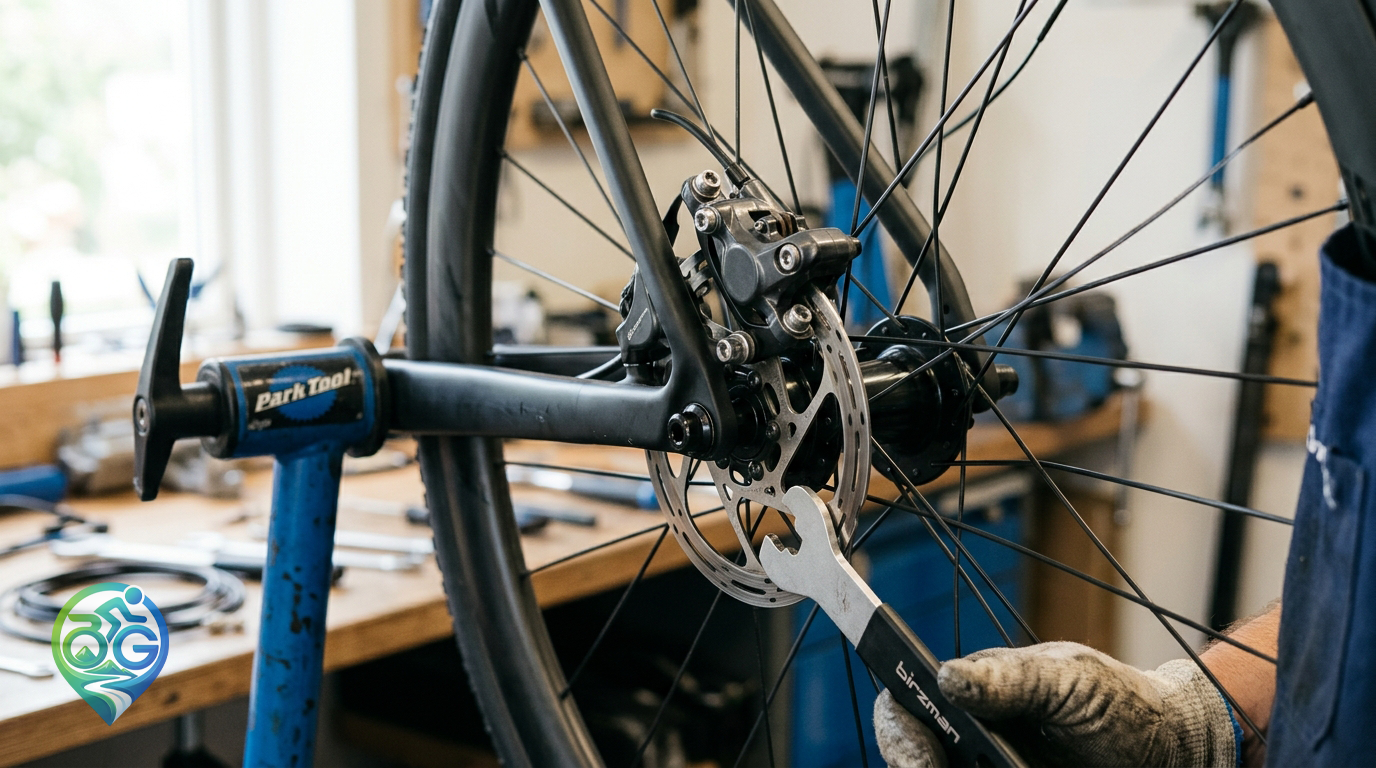
If the caliper is centered but you observe a slight wobble touching one pad at a single point, you must true the rotor. Place a clean sheet of white paper underneath the caliper to serve as a high-contrast backdrop. Spin the wheel slowly until the rotor just kisses the pad, identifying the apex of the deviation.
Fit a dedicated rotor truing fork or a clean smooth-jaw adjustable wrench over the rotor spoke near the deflection. Apply gentle, progressive thumb pressure in the opposite direction. Stainless steel rotors spring back slightly, so work with small, controlled flexes rather than aggressive force. Recheck your light gaps on both sides of the rotor. For comparison with traditional rim systems and general stopping fundamentals, consult our bicycle brake adjustment guide. Once the wheel spins silently with even daylight on both pad faces, your brake system is ready for the road.