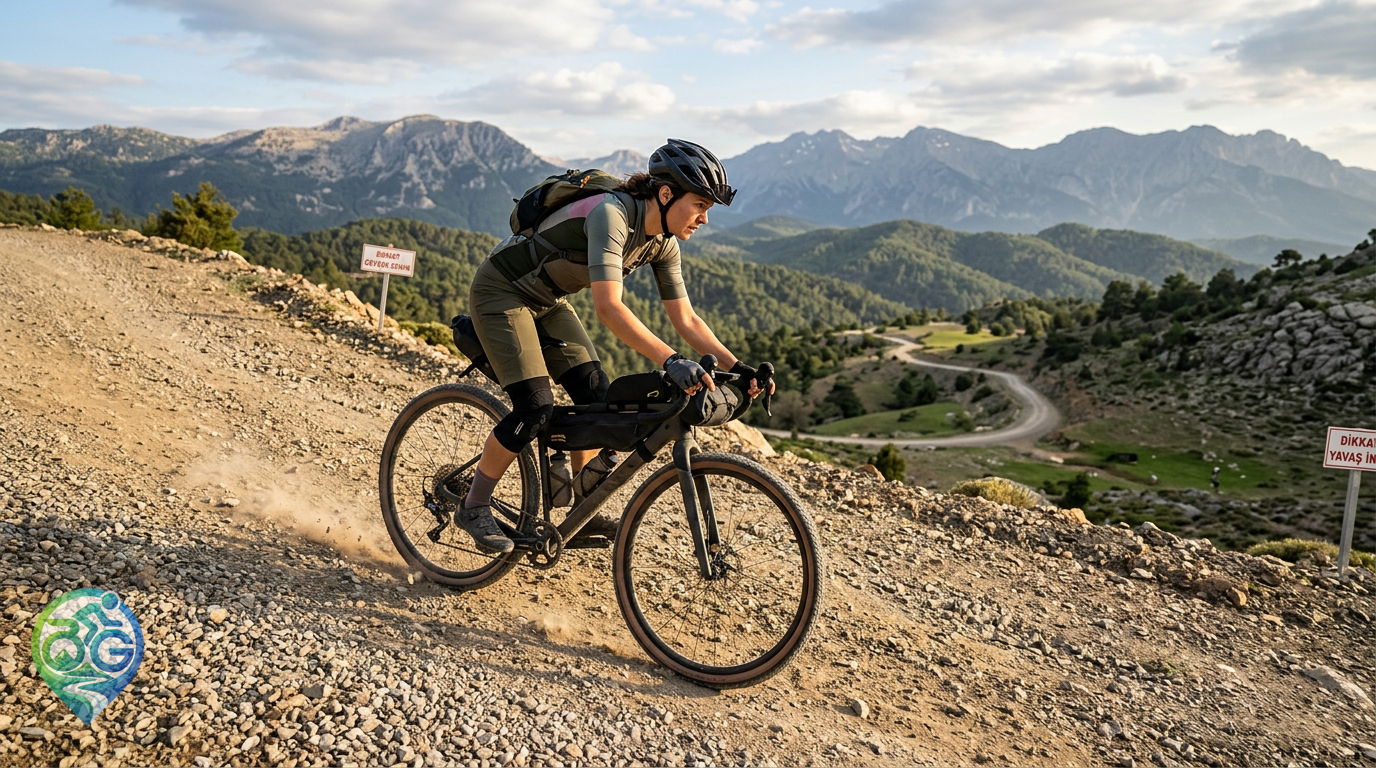
A descent that feels straightforward on tarmac can become a different proposition once the surface turns to loose stone. Descending a gravel bike on loose terrain is less about forcing the bike to track perfectly and more about reading the trail early, choosing a sensible speed and staying relaxed enough to make small corrections. If the tyres shift slightly under you, avoid a sharp tug at the bars; look towards the safe line you want to follow.
Practise these basics at low speed on a traffic-free slope with clear sightlines and a gradient you can comfortably manage. If the trail is steep, deeply sandy, wet, or hides hazards beyond your view, getting off and walking is a sound riding decision.
Read the line before the slope starts
When it is safe to do so, pause before the descent and scan what lies below: loose gravel, larger stones, ruts, drainage channels and bends. Knowing where the surface changes helps you decide how slowly to approach. If you cannot see through a blind corner, leave room for an oncoming rider or vehicle rather than cutting across the bend. Our cycling route-planning guide can help you review surface changes and alternatives in advance, though a map cannot promise current trail conditions.
Set your speed before the corner
Use the straight approach to slow down progressively instead of grabbing the brakes mid-turn. Apply both brakes smoothly and pay attention to how much grip the surface offers. The looser or wetter it becomes, the earlier and more gently you may need to reduce speed. Brake feel depends on the bike, tyres, setup and rider, so there is no single speed or front-to-rear ratio that suits every descent. British Cycling’s descending guidance also stresses controlling speed before a bend and taking extra care when traction is reduced.
Painted markings, metal covers and wet leaves can be slippery as well. Our guide to riding in wet weather covers visibility, braking and changing road surfaces in more detail.
Keep a secure grip without locking your arms
Hold the bars firmly, but do not tense your shoulders or lock your elbows. Slightly bent arms and knees help your body absorb small bumps, reducing the urge to wrestle the bike. On a drop-bar bike, choose a hand position that feels secure and keeps the brake levers within easy reach; use only a position you have practised. Stay balanced and make modest adjustments as the trail changes rather than throwing your weight abruptly backwards. Standing briefly can create room for the bike to move over rough ground, but practise that first on easy terrain rather than trying it for the first time on a steep, technical descent.
Look towards the exit, not at the obstacle
Staring at the front wheel leaves little time to respond. Pick a clear passage early, look through the bend towards its exit and guide the bike with small, deliberate inputs. British Cycling’s gravel-riding tips similarly recommend looking well ahead, staying loose and allowing the bike to move beneath you. Scan several metres down the trail instead of fixating on one rock; that gives you more time to choose a line you can actually ride.
Check tyres and controls before rolling in
Keep tyre pressure within the limits specified for your tyre and rim. Do not drop pressure at random for grip: rider and luggage weight, tyre construction, rim compatibility and manufacturer limits all matter. Our bicycle tyre-pressure guide explains how to find a safe starting range. Before the descent, check that the brakes feel normal and that the tyres show no cut or obvious loss of pressure.
Build confidence one easy section at a time
Start with smooth, firm ground and practise looking ahead while braking gently. Then repeat those movements on a broad gravel slope with a clear view. There is no need to chase speed or ride every section. Stopping somewhere safe and walking the bike is part of a good ride. Control is not measured by whether you pedal all the way down; it is the judgement to match your line and pace to the surface and your current skill.