
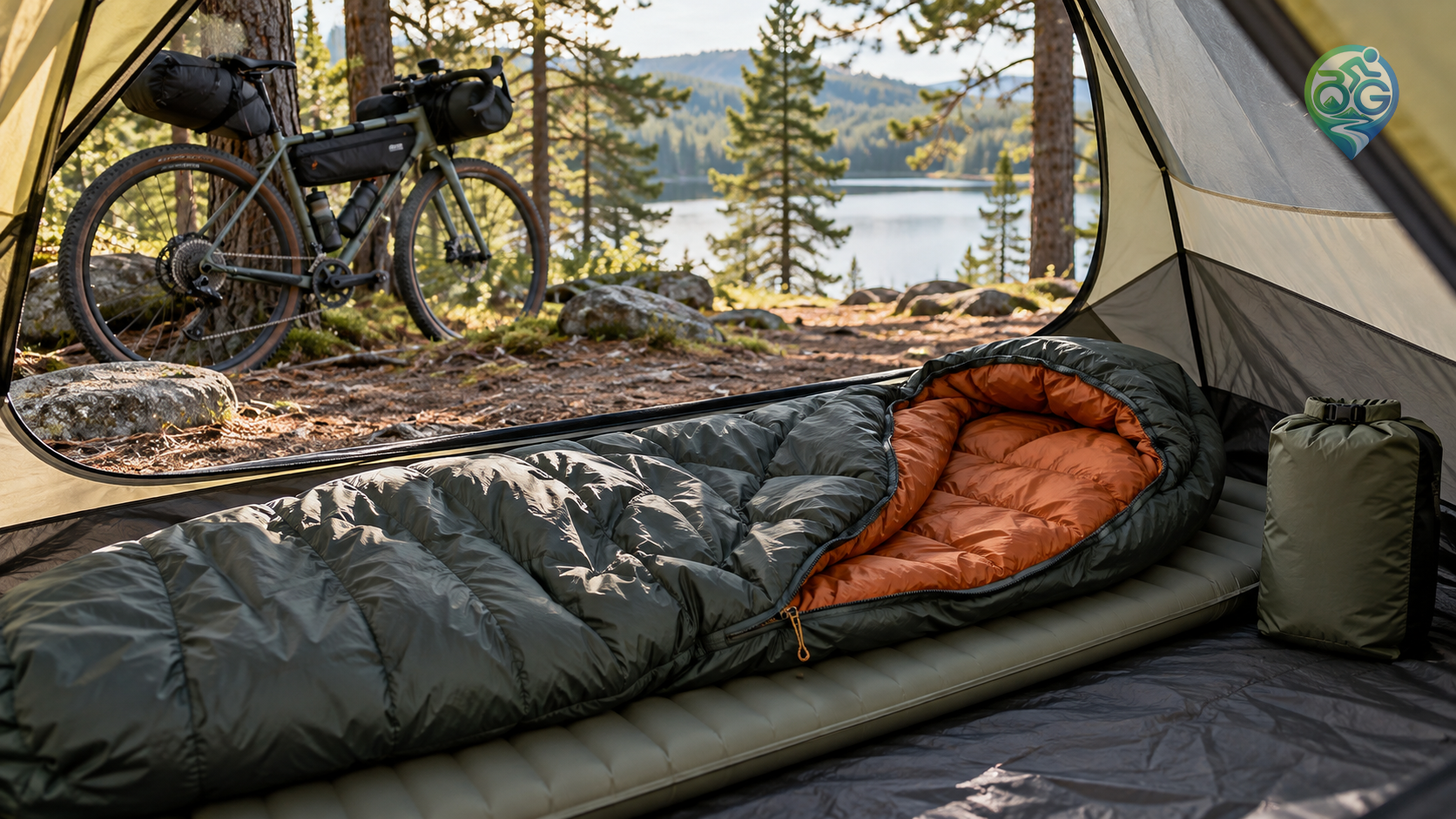
Choosing a sleeping bag for bikepacking means balancing an overnight sleep system with the limited space on your bicycle. The smallest bag is not automatically the right one, and a comfortable car-camping bag may be awkward to carry in a compact handlebar roll. Begin with where and when you intend to camp, then compare temperature information, fit, packed dimensions and care requirements. A number in a product name or a broad “three-season” label is not enough to make the decision. The useful question is whether the bag works for your planned nights and your actual luggage.
Define the trip before comparing products
Write down the duration, likely campsite elevations, expected overnight conditions and the sleeping pad you already own. Treat warm coastal camping and a cool upland stop as separate scenarios, even if they occur on the same trip. Weather at the start of the ride may not describe the place where you will sleep. Use the location and elevation considerations in our cycling route planning guide, then recheck the forecast for the campsite before departure. This keeps a shopping decision tied to a real plan rather than an imagined average night.
Compare temperature labels on the same basis
Sea to Summit explains that ISO testing uses a defined pad and clothing setup. Comfort and lower-limit ratings describe different reference conditions, so comparing one bag's comfort figure with another bag's limit figure is misleading. If you tend to sleep cold, pay attention to comfort information, while remembering that a test result is not a personal guarantee. Pad insulation and clothing affect the complete system. Assess the bag, pad and shelter together rather than assuming a more ambitious bag label can compensate for an unsuitable pad.
Decide what insulation trade-offs matter to you
REI's guide highlights down's low weight and compressibility, while noting synthetic insulation's ability to retain insulation when wet and dry faster. Actual products differ, and neither fill type should be carried unprotected from rain. Compare complete bags at an equivalent temperature reference instead of treating fill type or fill power as a warmth rating. Record the total weight, packed dimensions and price for each candidate. That makes the comparison relevant to the space and conditions on your bike rather than a single impressive specification.
Test packed size against your luggage
A bag's advertised volume is only part of the packing problem: spare clothing, the pad and other equipment also need a place. Measure the available space and, if possible, put the packed sleeping bag into your own luggage before buying. Check that the closure still works properly. Pulling compression straps harder is not a universal solution to an overloaded bag. Our bikepacking load calculator can help organise the plan, but the product's real dimensions and a loaded-bike check remain the practical test.
Try the fit and the controls
If a retailer allows it, get inside the sleeping bag, close the zip and adopt your normal sleeping position. Try another length if you are close to the stated height limit. Do not ignore cramped feet, uncomfortable shoulders or a difficult zip merely to save packing space. Check how easily you can find and use the opening adjustments, including from inside. Think through a normal camp routine: getting in after a long day, moving during the night and opening the bag when it feels warm. Zip orientation and ventilation options become more meaningful when you handle them rather than compare photographs.
Include dry transport and storage in the decision
Plan a separate protective sack suitable for keeping the sleeping bag dry, and follow its closure instructions. On a handlebar setup, check that the load does not rub the tire, interfere with brake hoses or obstruct the controls. If the bag becomes damp, air it when conditions allow and follow the manufacturer's care guidance. After the trip, use the recommended storage method rather than leaving it tightly compressed in its travel sack. Do not guess at detergent or washing settings; the instructions should match the particular fabrics and fill.
Finish with a shortlist of two or three candidates and compare the same fields: temperature reference, usable fit, packed dimensions, complete weight and maintenance requirements. If a bag fails one of your essential needs, another attractive specification does not erase that problem. Before a long journey, arrange a short trial camp somewhere with an easy return option. The preparation approach in our bikepacking starter guide helps you test the sleep system and luggage together. That experience gives you a better basis for a purchase than chasing the lightest number on a label.
References: Sea to Summit sleep-system and rating guidance; REI backpacking sleeping bag guide.
Discussion & Comments 0
Share your thoughts, gear experiences or ask questions about this guide.
No comments yet.
Be the first to share your thoughts!
Join the Discussion
Log in with your Bisikletli Gezgin mobile account to participate in discussions and track your contributions.