
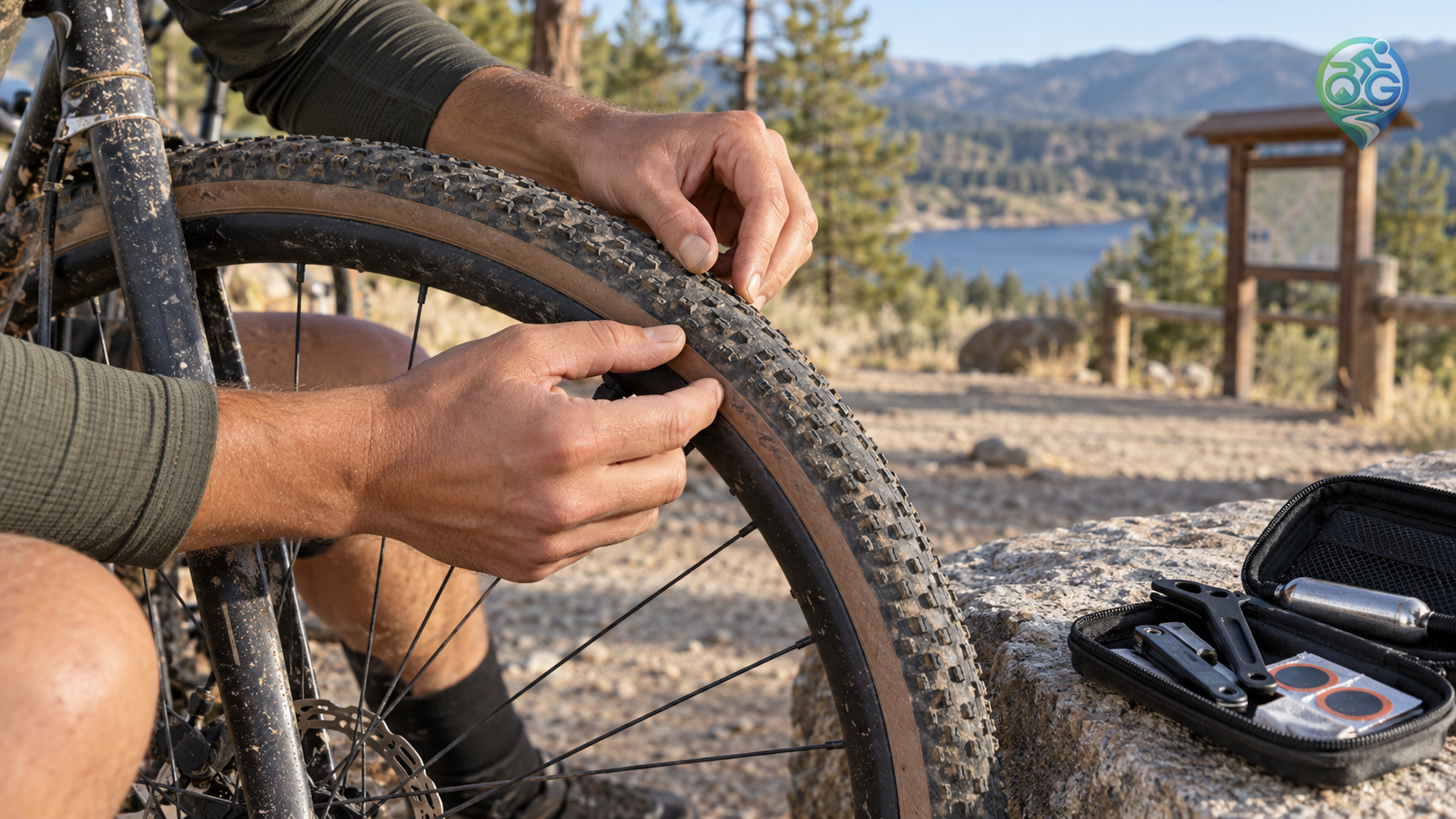
A bicycle tire damage inspection starts with a simple distinction: holding air does not prove that the casing is sound. A cut in the tread, a cracked sidewall and a bulge deserve different attention, even when the wheel still rolls normally. This guide gives you a repeatable way to inspect both tires and decide when the ride needs to stop. It is not a remote diagnosis of a particular tire. Work in good light with the bicycle supported, and ask a qualified mechanic to inspect damage you cannot confidently assess.
Look at the whole tire, not just the suspicious mark
Use the valve as a reference point and turn the wheel through a full revolution. Inspect the tread and both sidewalls, then look at the area where the tire meets the rim. Remove surface mud gently so it does not hide the rubber; do not pry a cut open with a sharp tool. Check front and rear separately, because their condition may differ. Take note of a mark's position and whether the tire's shape changes around it. A clear photograph is useful for your maintenance record, although an image cannot reveal every aspect of casing damage.
Recognise wear without relying on a mileage target
Schwalbe says a tire has reached its wear limit when its protection belt or casing threads become visible through the tread. It also notes that worn tread blocks can reduce grip on loose terrain before that limit is reached. A mileage estimate therefore cannot replace inspecting the actual tire. Look for exposed reinforcement, an opening cut, an unusual bulge or continuing air loss. There is no single cut-length rule that covers every construction and damage location. If the tire has lost its normal shape or its casing is visibly compromised, stop using it and arrange replacement.
Treat sidewall cracking as a separate issue
Schwalbe distinguishes fatigue caused by prolonged low-pressure use from ageing of the rubber, while explaining that both patterns can overlap. Its guidance recommends replacement once cracking is visible. Do not dismiss a sidewall problem merely because plenty of tread remains. During routine preparation, check pressure with a gauge and respect the limits of both the rim and tire. Our bicycle tire pressure guide explains how rider load and terrain inform setup; it does not override a manufacturer's specification.
What to do if you notice damage during a ride
Move to a safe place away from traffic before investigating. Do not ride on a visibly bulging tire, an exposed tube or a tire that is separating from the rim. If pressure is dropping quickly, end the ride rather than using repeated inflation as proof that the tire is acceptable. Consider pickup, public transport where permitted or another practical recovery option. Make those options part of your route planning, especially on remote loops. A repair kit is useful, but it cannot turn every damaged tire into a reliable means of getting home.
Understand the limits of an emergency tire boot
A tire boot supports a damaged tire body; it is different from a patch that seals a hole in an inner tube. Park Tool describes its TB-2 as a temporary fix for tires using inner tubes, and explicitly excludes tubeless systems. It advises replacing the damaged tire as soon as possible. Follow the particular product's instructions and do not assume that a boot is appropriate for any size or location of damage. Closing an air leak is also not the same as restoring a damaged casing. For system-specific background, read our tubeless setup and maintenance guide.
Build inspection into your preparation
Record the tire model, the damaged area and what you did after the inspection. Comparing photographs can help you notice a new change, but monitoring a damaged tire should not become a reason to postpone replacement. For a long tour, inspect tires early enough to source compatible replacements and have the installation checked. Pack the tools and spares your system actually uses, and practise ordinary tube replacement before you need it roadside. Keep the final decision tied to the tire's condition rather than its price, age or the distance remaining. Ending a ride early is a practical recovery choice when the equipment cannot be trusted.
References: Schwalbe tire wear guidance, Schwalbe sidewall cracking guidance, Park Tool TB-2 intended use.

Discussion & Comments 0
Share your thoughts, gear experiences or ask questions about this guide.
No comments yet.
Be the first to share your thoughts!
Join the Discussion
Log in with your Bisikletli Gezgin mobile account to participate in discussions and track your contributions.