
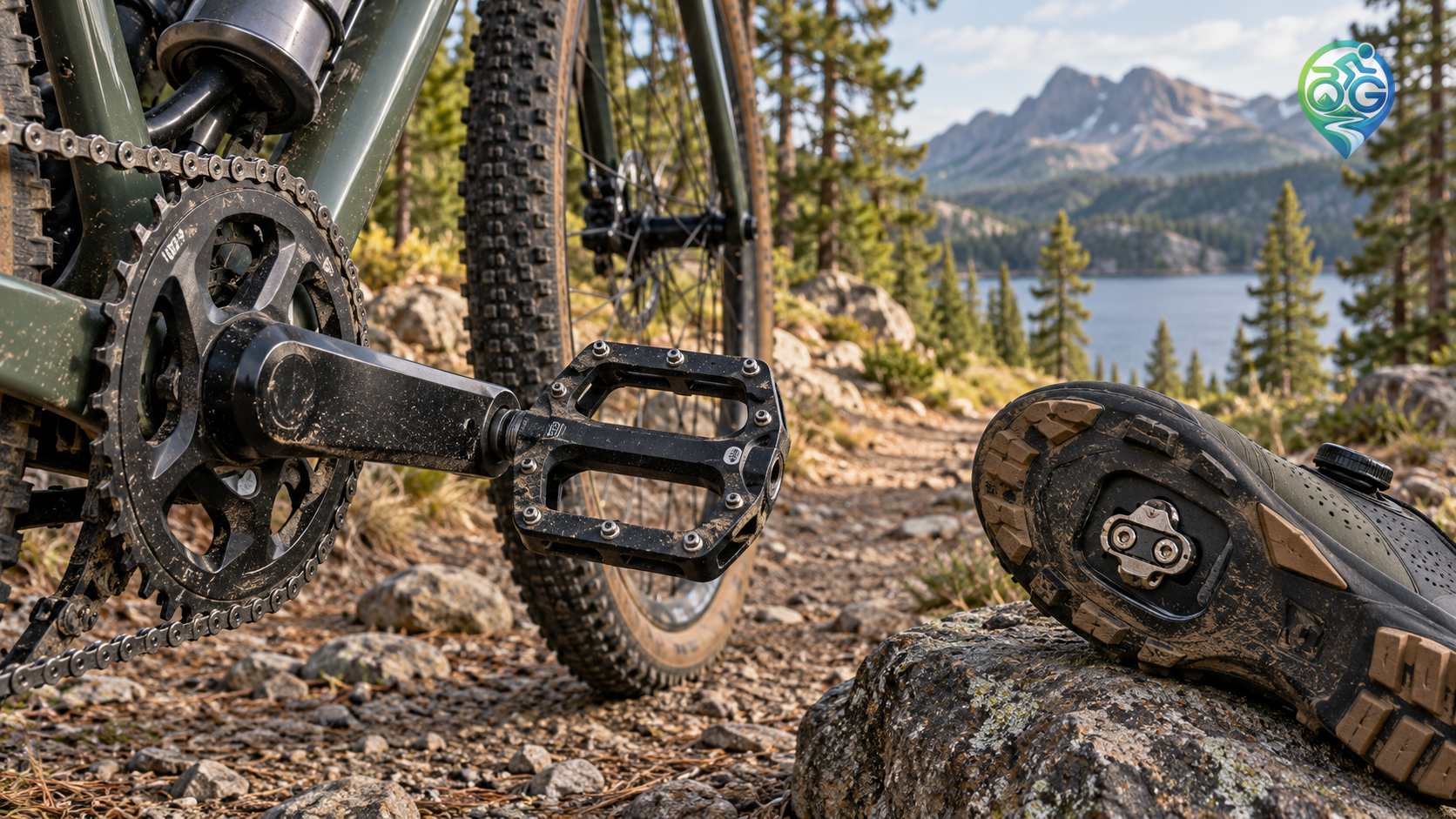
Choosing bicycle pedals is less about chasing a universal performance upgrade and more about matching the contact point to the way you ride. A commuter who stops at every junction has different priorities from a road rider spending hours on steady tarmac or a bikepacker who expects to push the bike over a rough section. Flat platforms, two-bolt SPD-style pedals and three-bolt road systems all make sense in the right context. Start with footwear, terrain and the amount of walking in your day, then check the exact compatibility of the parts you plan to buy.
When flat pedals make the most sense
A flat pedal gives you a platform without a shoe-mounted cleat. You can put a foot down or reposition it without first releasing a mechanism, which many riders value in traffic, on technical paths and while learning bike handling. Pins help the shoe sole stay in contact with the platform, but grip also depends on the sole’s rubber compound, tread and stiffness. Ordinary trainers may be convenient for short rides; a very soft sole can feel tiring over longer distances because the pedal’s pressure is concentrated under the foot. Treat exposed pins with care when carrying the bike or adjusting your foot.
SPD-style pedals and road systems
SPD is a two-bolt cleat system commonly used for off-road riding and touring. Many compatible shoes recess the cleat into the tread, making them easier to walk in than road shoes with a protruding cleat. That can matter on a route with cafés, hike-a-bike sections or campsite errands. It is one reason riders consider SPD for mixed-surface trips; our bikepacking starter guide looks at equipment as part of the whole day, including time spent away from the saddle. Road systems usually pair a larger shoe interface with a more prominent cleat, and are best considered with the specific shoe and pedal models in mind.
Being clipped in keeps the foot connected to the pedal; it does not guarantee more speed or power for every rider. Fit, comfort, cadence and pacing still shape how a ride feels. Before buying, check the number and position of the mounting holes in your shoe, the cleat model supported by the pedal, and the adjustment range. Shimano’s documentation distinguishes SPD from road-focused SPD-SL, while the manual for the exact product should guide compatibility and setup. Avoid assuming that cleats from different systems interchange simply because they look similar.
Choose for terrain and your habits
If your rides are short, involve frequent stops and use everyday footwear, flats are a simple option. If you spend long hours on paved roads and already own compatible road shoes, a road clipless system may suit your setup. For gravel, touring and bikepacking, recessed-cleat SPD shoes can balance a secure pedal connection with the ability to walk more naturally. Think about the route surface, steep or loose sections, and how often you will leave the bike. The route planning guide can help you account for surfaces and off-bike sections before committing to a shoe-and-pedal combination.
Getting comfortable with clipless pedals
Practise in a quiet, flat, open area before riding in traffic. Hold a stable support and repeatedly engage and release one foot, then the other. Follow the manufacturer’s instructions for release tension and cleat positioning; do not assume every pedal adjusts in the same way. Rehearse stopping and putting a foot down before you need to do it at a junction or on a slope. Check that both feet release confidently before heading out. Inspect cleat wear and mounting bolts regularly, and take knee or foot discomfort seriously rather than writing it off as an inevitable adjustment period.
Compatibility and installation checks
Confirm that each pedal is on the correct side of the crank. The threads are handed: the right pedal uses a standard right-hand thread, while the left pedal uses a left-hand thread. Park Tool’s installation guidance recommends starting the threads carefully and using suitable grease; forcing a pedal that has started crooked can damage the crank. Use the torque specification from the pedal or crank manufacturer, and verify any special washer or spacer requirements in its instructions. If you are unsure about thread engagement or torque, ask a qualified mechanic rather than improvising.
In short, choose flats for simple foot placement and easy dismounts, recessed-cleat SPD for a walkable touring setup, or a road system if your riding and shoes are predominantly road-focused. Try the setup on a short ride and review your comfort. Pedal choice works alongside, rather than replacing, a sensible cadence and effort strategy; see our cadence and effort guide for that side of the ride. A familiar, well-adjusted system is more useful than an expensive one you have not learned to use.
Manufacturer and workshop references: Shimano on SPD and road pedal systems; Shimano flat-pedal technology; Shimano cleat selection manual; Park Tool pedal installation and removal.

Discussion & Comments 0
Share your thoughts, gear experiences or ask questions about this guide.
No comments yet.
Be the first to share your thoughts!
Join the Discussion
Log in with your Bisikletli Gezgin mobile account to participate in discussions and track your contributions.