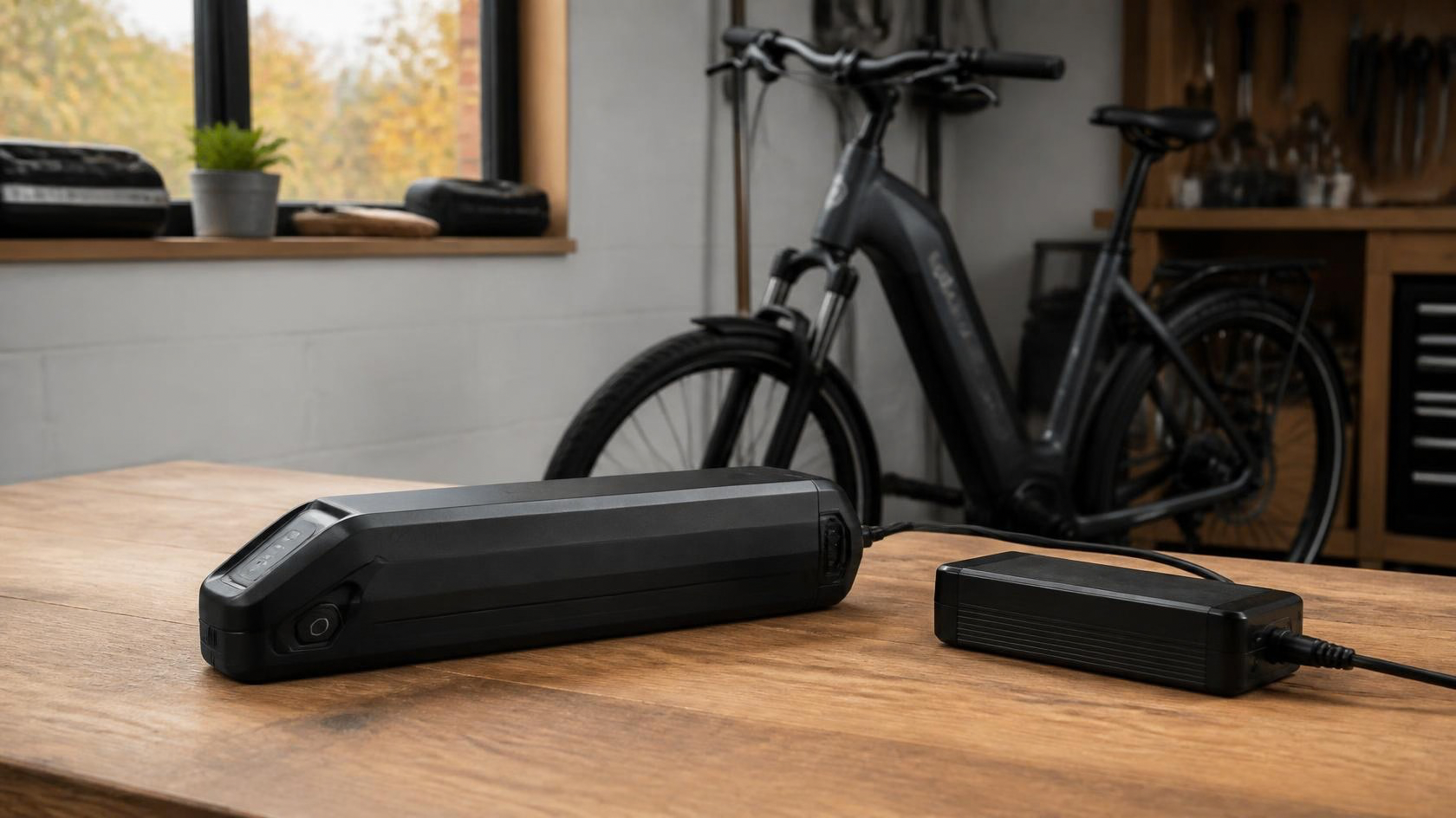
When the riding season pauses, it is tempting to leave an e-bike battery fully charged or run it down before putting the bike away. Neither is a sound universal rule. Lithium-ion batteries need model-specific care during a long break, and the storage figures published by major manufacturers are not identical. Bosch recommends one charge range for its batteries; a Shimano user manual gives a different target and a periodic check. Use those examples to understand the differences, then follow the documentation for the exact battery fitted to your bike.
Identify the battery before choosing a storage routine
Start with the battery label and the bicycle’s model details. Look up the matching user manual for the bike, battery and charger rather than relying on a generic e-bike article. Instructions can differ across generations, and an indicator bar may only show an approximate state of charge. The manual should settle whether the battery is meant to stay fitted or be removed, which temperatures are acceptable, how often it needs checking and what to do before the first ride after storage.
Keep manufacturer charge targets separate
Bosch says its e-bike batteries should be stored at 30–60% charge during a longer period of storage. The Shimano manual cited below recommends approximately 70% when a bicycle will not be ridden for an extended time, and says to recharge the battery every six months so it does not become completely discharged. These are system-specific instructions, not two parts of a single standard. Do not average the numbers or transfer one brand’s figure to another battery. If the level needs adjusting, use only the procedure described by the manufacturer or an authorised service centre.
Choose a dry, calm place indoors
Protect the battery from direct sun, rain, damp and excessive heat. Bosch advises storing its battery at room temperature in a dry room, away from combustible or flammable materials, and recommends a room with a smoke detector. Shimano’s cited manual calls for a cool indoor location, away from sun and rain, and gives approximately 10–20°C for that product guidance. Treat that temperature range as Shimano’s stated example, not a blanket specification for every e-bike.
A stable indoor space is easier to monitor than an uninsulated shed or a balcony that swings between cold nights and bright afternoon sun. Keep the battery clear of heaters and piled-up fuel, paint or other flammables; do not wrap it in a way that traps heat. Store and handle it exactly as its own manual directs.
Put the check on your calendar
Long storage is not the same as forgetting the battery for the whole winter. Follow the inspection and charging interval in the model manual. Shimano’s instruction above explicitly calls for a charge every six months; that interval should not automatically be applied to Bosch or another brand. A calendar reminder makes it easier to check the charge level without repeatedly topping up out of habit. While inspecting the casing, look for cracks, swelling, leakage, an unusual smell or abnormal warmth. If you notice damage or another concerning change, do not charge or ride with the battery; contact the manufacturer or a qualified e-bike service shop.
Bring it back into service carefully
Before the first spring ride, check the manual’s temperature guidance for charging and use, especially if the battery has been stored somewhere cold. Use the charger specified for that system, check that the battery locks securely into its mount and confirm the display behaves normally. Do not open the casing, try to replace cells yourself or attempt a revival with an unapproved charger. For the other electronics on a tour, see our guide to choosing a power bank for bike touring, the guide to choosing a cycling GPS and our long-distance cycling preparation checklist. Those accessories help plan device power; they are not substitutes for the e-bike’s drive battery.
The short version: follow the manual, not a universal percentage
For a long winter lay-up, avoid making “always full” or “always empty” your default. Bosch’s 30–60% guidance and Shimano’s approximately 70% plus six-month check are manufacturer-specific examples. Find the manual for your own battery, store it in an appropriate dry indoor place, schedule any required inspection, and stop using a battery that shows physical damage. A few minutes spent identifying the model now is more useful than guessing at a number in spring.