
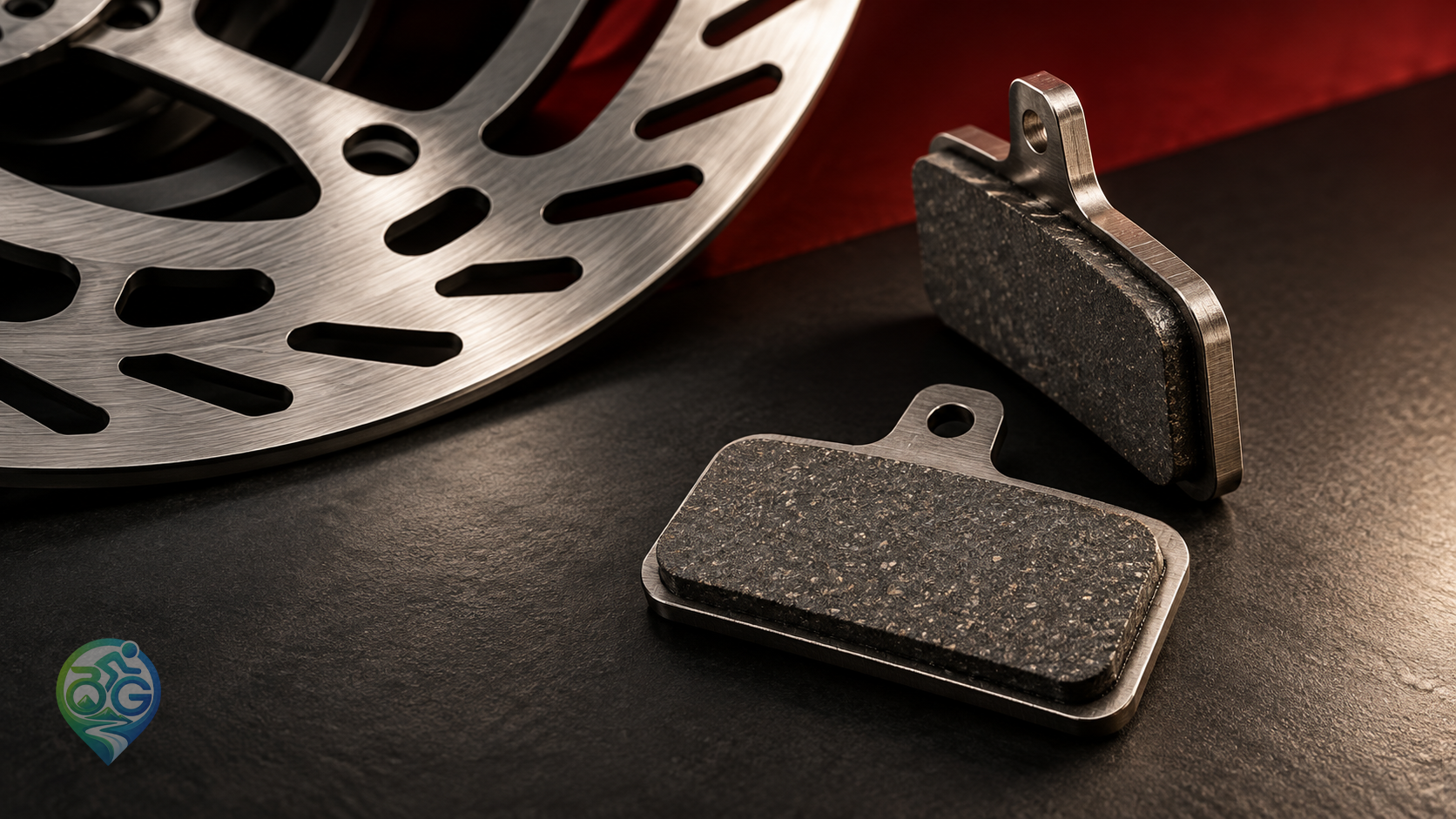
A brake-pad wear figure is useful only when you know what was measured. One instruction may describe pad material, while another includes the steel backing plate. Before comparing your reading with an online number, identify the caliper and the measurement shown in its manual. If braking has become unreliable or noticeably weaker, leave the bicycle unridden while the problem is assessed.
Build a small record for each brake
Start with the front and rear caliper model names, then identify the fitted pad codes. Save a clear photograph of the markings and keep the two brakes separate in your notes. A bicycle can have parts changed over its lifetime, so the specification you remember from buying it may not describe everything now installed. Rotor diameter alone does not identify the correct replacement pad.
That record makes the next question more precise: what does this manufacturer ask you to measure, and where? Disc brake pad thickness can refer to a particular layer or to an assembly. The backing plate is metal; the friction block is the material that contacts the rotor. Follow the dimension shown in the relevant drawing instead of treating the outside thickness as a universally comparable figure.
Two published limits that measure differently
The Shimano UM-8KZ0A mechanical disc-brake manual says not to use pads at a thickness of 0.5 mm or less. Its illustration accompanies that instruction. This is a reference for the products covered by that document, rather than a blanket limit for every brake bearing the Shimano name.
On its road and gravel disc-brake troubleshooting page, SRAM specifies replacement when the combined thickness of friction material and backing plate is less than 3 mm. The inclusion of the backing plate is explicit. Comparing a total-thickness reading with a material-only limit would answer the wrong question, even if your measuring tool was accurate.
Find the instructions for your actual brake before making a decision. If you cannot distinguish the layers, get a repeatable reading or decide what a borderline result means, ask a mechanic to inspect the pads. A picture of another rider's worn pad cannot establish how much useful service remains in yours.
Choose the inspection you can carry out correctly
If inspection requires removing components, use the model's procedure or have a workshop do it. Do not loosen unfamiliar fasteners simply to improve the view. Give hot brakes time to cool and keep oil and grease away from the braking surfaces. Where a wheel has been removed, include the appropriate wheel and axle refitting checks in the job.
Write down the date, the part inspected and the measurement definition you used. That is more useful at the next service than a number with no explanation. Inspect both brakes rather than assuming the less accessible one matches the first. An uneven or unclear result deserves attention; it is not an invitation to select the most reassuring reading and continue riding.
A thickness reading does not clear every fault
Pad wear, contamination and alignment are different questions. Shimano warns against oil or grease reaching the rotor and pads. If braking changes, there is visible damage or something sounds abnormal, adequate-looking thickness alone does not establish that the system is sound. Do not apply lubricant to a braking surface to quieten it.
For a wheel that rubs as it turns, use the separate disc-brake rub assessment. Noise by itself does not identify a worn-out pad, and buying new pads will not explain every cause of contact. Tell the workshop which brake changed, when you first noticed it and whether a lubricant or cleaning product could have reached the parts.
Once replacement is needed, confirm the compatible pad specification and complete the manufacturer's installation checks and bedding-in procedure. The broader brake adjustment guide puts this inspection in the context of a functioning system. Keep the model manual with your maintenance record so the next pad check begins with a known instruction rather than a remembered number.
Discussion & Comments 0
Share your thoughts, gear experiences or ask questions about this guide.
No comments yet.
Be the first to share your thoughts!
Join the Discussion
Log in with your Bisikletli Gezgin mobile account to participate in discussions and track your contributions.