
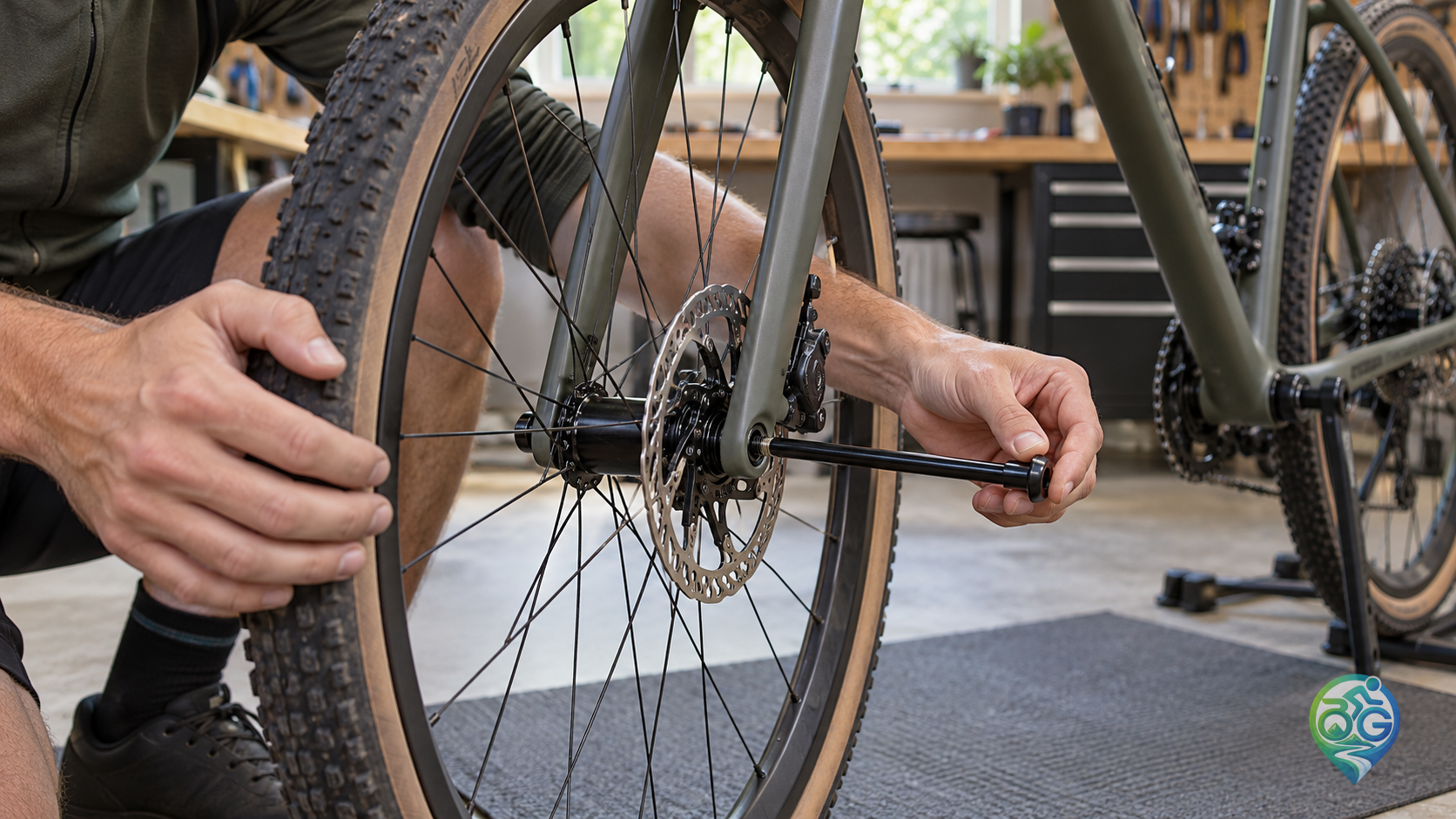
After a puncture repair, cleaning stop or trip in a bike bag, you may need to know how to reinstall a bicycle wheel. The exact fastening method depends on the axle. A traditional quick-release (QR) skewer uses a cam lever and a thin rod through the hub; a thru-axle passes through the hub and threads into the opposite dropout. A wheel that is not fully seated or securely fastened can move or come out while riding. Use your bike’s manual for the specific mechanism on your frame and fork.
Identify the axle and check wheel direction
A quick release has a lever and an adjusting nut on opposite sides of the hub. A thru-axle is a larger shaft that passes through a closed dropout and screws into the other side. Some older or utility bikes use axle nuts instead. Do not force one axle type into a different standard. Check the tyre’s rotation arrow, if present, and make sure the brake rotor sits between the pads. On a rear wheel, the cassette needs to line up with the chain.
Fit the front wheel
Stabilise the bicycle, then guide the wheel into the fork. Push it fully into both dropouts so the axle sits squarely and evenly. With a QR, place the lever in the open position while seating the wheel. Adjust the nut so closing the lever requires firm hand pressure through the cam action. The lever clamps the axle; it is not tightened by turning it like a nut. Shimano’s quick-release manual explains the adjustment and closed position for its mechanism. Check that the lever clears the rotor and cannot catch nearby objects in the orientation specified by your fork or hub maker.
For a thru-axle, slide the shaft through the dropout and hub until it meets the opposite-side threads. Start it by hand and turn it smoothly. If it binds immediately or enters at an angle, stop and realign it; forcing cross-threaded parts can damage the axle or dropout. Tighten the axle using the method and torque specified by the bicycle or axle manufacturer. There is no single torque value that applies to every thru-axle design.
Refit the rear wheel and check your work
Shift to the smallest rear sprocket to make the cassette easier to guide into the chain. Pull the derailleur cage back, settle the chain over the small sprocket and lift the wheel into both frame dropouts. Make sure the hub is fully seated before securing the axle. An unevenly seated rear wheel can affect shifting, braking and handling.
Before riding, confirm the lever is fully closed or the thru-axle is secured as instructed. Spin the wheel and check for a visibly uneven run, side-to-side play or a rotor rubbing continuously on the pads. Squeeze each brake lever several times and confirm it engages normally. If the rotor rubs after refitting, first check that the wheel is seated correctly; do not assume the caliper needs adjustment. Take a short, gentle test ride and recheck the fastening before heading out. For a broader setup check, use our tyre pressure guide, gearing guide and tubeless maintenance guide.

Discussion & Comments 0
Share your thoughts, gear experiences or ask questions about this guide.
No comments yet.
Be the first to share your thoughts!
Join the Discussion
Log in with your Bisikletli Gezgin mobile account to participate in discussions and track your contributions.