
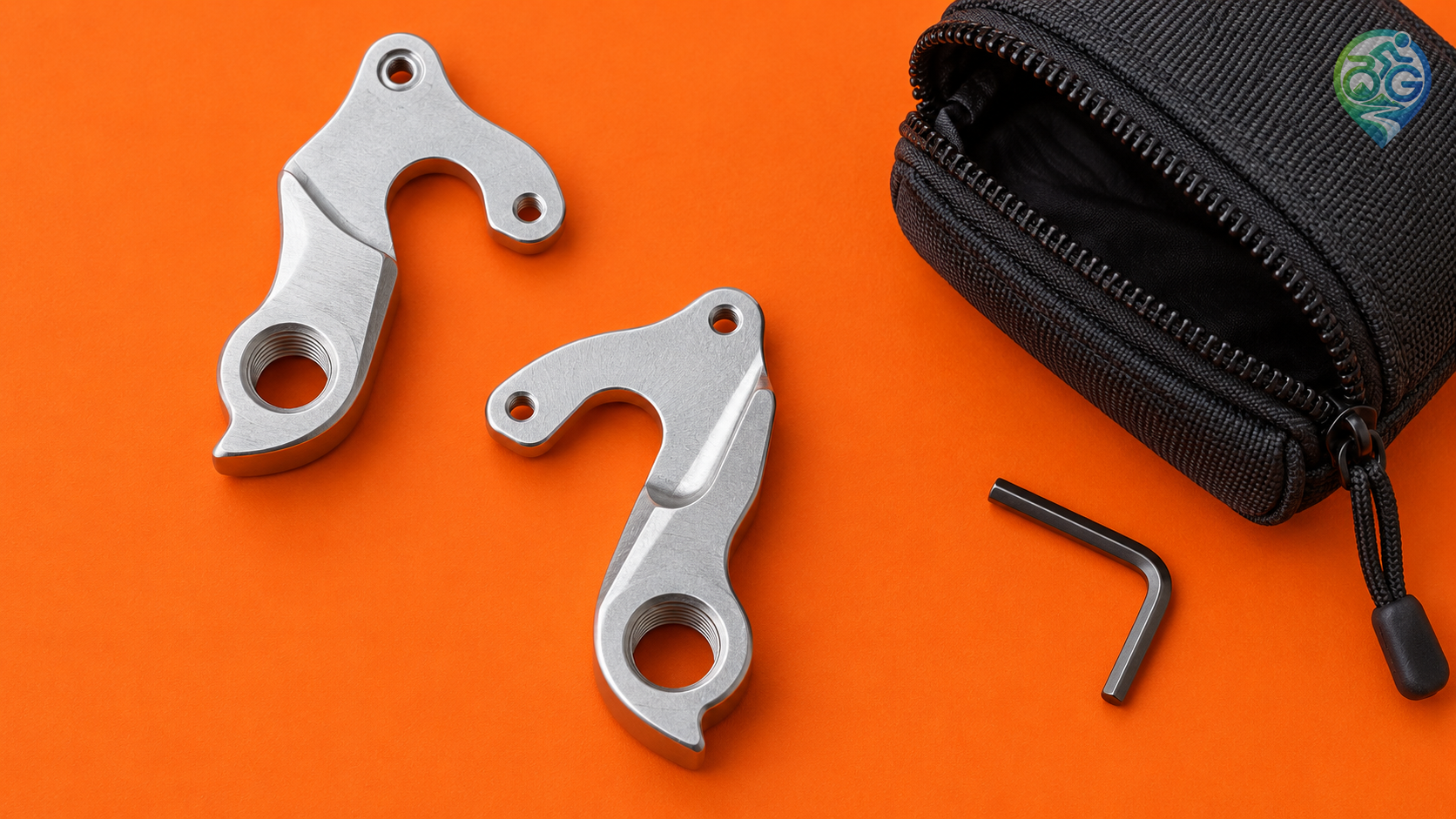
Pack a spare derailleur hanger with an identity, rather than a guess. A matching outline in an online photograph is a starting point for a question, not confirmation that the part fits your frame. Before a bike tour, establish the correct part number and keep the information that lets a workshop verify it. That preparation is useful even when you do not intend to replace the hanger yourself.
Build a small parts record before buying
Start with the bicycle's exact model and year, plus a frame product code where available. Find the hanger in the frame maker's spare-parts documentation and record its reference. Compare the supplier's compatibility list against that record. Do not silently substitute another model year because the bicycle name stayed the same. If the lists disagree, send the actual identifiers when asking the frame maker or supplier for clarification.
Keep photographs of the installed part, any visible markings and its attachment area. Avoid dismantling unfamiliar fittings simply to improve a photograph. The shape, mounting holes and mating faces all need the right match; a similar silhouette does not settle the question. When the order arrives, compare the packaging code with the confirmed reference while there is still time to resolve a mistake.
Verify UDH instead of assuming it
SRAM's UDH guidance points riders to identification marks, model-and-year compatibility tools and the frame manufacturer when uncertainty remains. “Universal” does not mean that a UDH can be fitted to any frame. Establish which system your bicycle actually uses before buying a spare or applying another system's installation instructions. The rear derailleur's brand alone is not your frame's spare-hanger specification.
Save the confirmed part reference and relevant fitting instructions offline. A screenshot of a shop listing without the product code loses much of its value once several nearly identical options appear. Include the supplier's reference alongside the frame maker's code if they differ, and keep your own photographs labelled with the bicycle they belong to.
Separate carrying the part from completing the repair
A spare needs a protected place, its identification record and any correctly specified associated hardware. Keep a removed damaged part clearly separate from the replacement. Do not discover, beside the road, that you have two unlabelled pieces and no way to distinguish their history. If you lack the tools or knowledge to fit it, taking the verified part to a suitable workshop remains a practical plan.
Take tightening data from the correct instructions
Use the frame or component maker's instructions for that fitting, including the specified hardware and torque. A number from a video about a different hanger is not transferable. Our torque-wrench guide supports using a known specification; it cannot supply the missing specification itself.
After replacement, have alignment and derailleur adjustment checked again before treating the job as complete. Ask which part was fitted and whether any related damage was found. Update the offline record and replenish the verified spare before the next tour. The accompanying generated image illustrates loose replacement parts; it is not a compatibility drawing for a particular frame.
Let an impact change the repair decision
Tell the workshop if poor shifting began after a fall onto the drivetrain side or a handling knock. Park Tool explains that hanger misalignment cannot generally be corrected through indexing or limit-screw adjustments. Repeatedly changing those settings can obscure what changed after the impact. If the derailleur approaches the spokes, stop testing and riding; arrange safe transport or assistance.
Keep the diagnosis open. Park Tool's advanced shifting troubleshooting also considers cable friction and incompatible components. A shifting complaint is not proof of a bent hanger. The gear adjustment guide helps describe the system's behaviour, while a separate chain-wear assessment addresses another possible cause. Explain what you observed before requesting a particular replacement.
A rearward visual check cannot certify alignment. Ask for an assessment with the appropriate gauge. Park Tool also warns that repeatedly bent or realigned hangers may fail during alignment. Disclose any previous straightening you know about. This guide supplies no roadside bending technique, and carrying a spare is not a reason to continue riding a damaged assembly.
Discussion & Comments 0
Share your thoughts, gear experiences or ask questions about this guide.
No comments yet.
Be the first to share your thoughts!
Join the Discussion
Log in with your Bisikletli Gezgin mobile account to participate in discussions and track your contributions.