
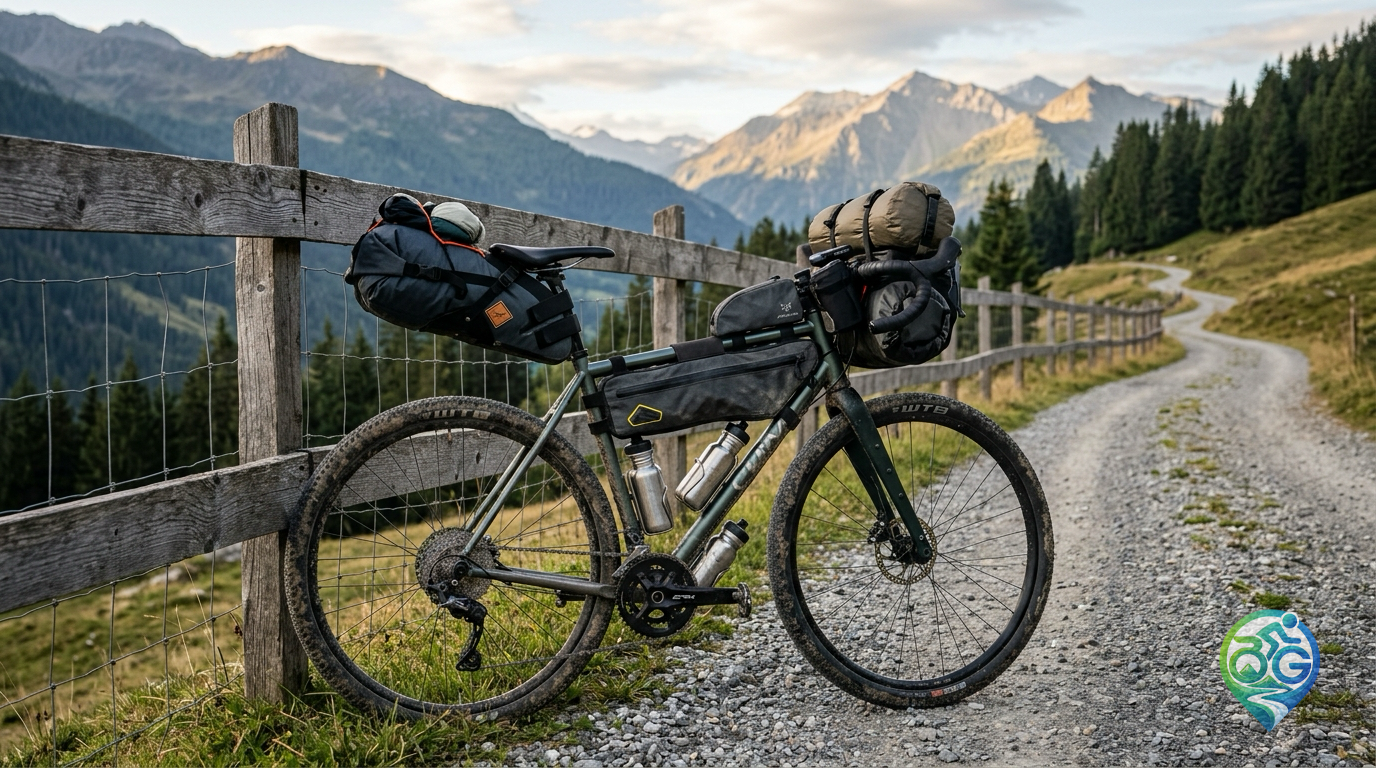
In wilderness bikepacking, bike handling, cornering stability, and pedaling efficiency are directly dictated by how well your cargo is balanced across the frame. Unlike traditional pannier touring systems mounted low over heavy steel racks, soft bikepacking bags strap directly to handlebars, main frame tubes, and seatposts. An improper load setup raises the bicycle center of gravity, turns responsive steering sluggish, and induces frustrating lateral sway on steep out-of-the-saddle ascents. Understanding proper bikepacking weight distribution is essential to keeping your adventure rig responsive and safe on rough gravel and singletrack.
Centering Mass Low: The Frame Bag Priority
The primary physical principle of bicycle dynamics is that high-density, heavy items must sit as low and central as possible, right between the two wheel axles. The main frame triangle represents the most valuable cargo space on your bike. Reserve this area for compact, dense essentials: multi-tools, spare inner tubes, mini floor pump, chain pliers, power banks, camp stove, and heavy water bladders.
Carrying dense mass inside the frame bag prevents unpredictable yaw moments when leaning into tight corners and ensures your front tire maintains traction on punchy climbs. Because this weight sits directly above the bottom bracket, it has virtually zero negative impact on handling. For selecting the best bag configuration and mounting style for your frame geometry, consult our bikepacking bag setup guide.
Handlebar Harness: Bulky Yet Lightweight Sleep Gear
The handlebar roll sits directly on top of your steering axis, meaning any weight strapped there exerts an immediate leverage effect on control. Overloading the front cockpit with more than 2.5 to 3 kilograms introduces severe steering inertia, causing understeer and sluggish line corrections on loose gravel descents.
Therefore, dedicate your handlebar harness strictly to high-volume, low-density camp gear: down sleeping bag, inflatable sleeping pad, ultralight bivy sack, and spare camp clothes. When securing the handlebar roll, ensure ample clearance above the front tire and verify that brake and shifter cables are not pinched or kinked. To ensure your camping kit includes all vital gear without unnecessary clutter, refer to our bikepacking gear checklist guide.
Eliminating Seat Bag Tail-Wag: Rear Packing Strategy
Large bikepacking saddle bags cantilever rearward from the seatpost without rigid rack supports. When packed incorrectly with heavy items near the tapered roll-top closure, the bag acts like an inverted pendulum, causing noticeable lateral oscillation (tail-wag) every time you stand up to sprint or climb. This oscillation wastes muscular energy and can destabilize your rear wheel on technical descents.
To permanently eliminate seat bag tail-wag, follow a strict packing hierarchy: Push heavy, dense gear (such as spare shoes or a compact tarp) all the way into the narrow base of the bag adjacent to the seatpost clamp. Place lightweight soft clothing, such as a rain jacket, thermal layers, and socks, into the rear tapered portion. Once packed, purge all trapped air through the purge valve, roll the closure tight, and cinch down every side compression strap firmly. Before embarking on multi-day journeys, test your setup over varied terrain by following our long distance cycling preparation guide.
Discussion & Comments 0
Share your thoughts, gear experiences or ask questions about this guide.
No comments yet.
Be the first to share your thoughts!
Join the Discussion
Log in with your Bisikletli Gezgin mobile account to participate in discussions and track your contributions.