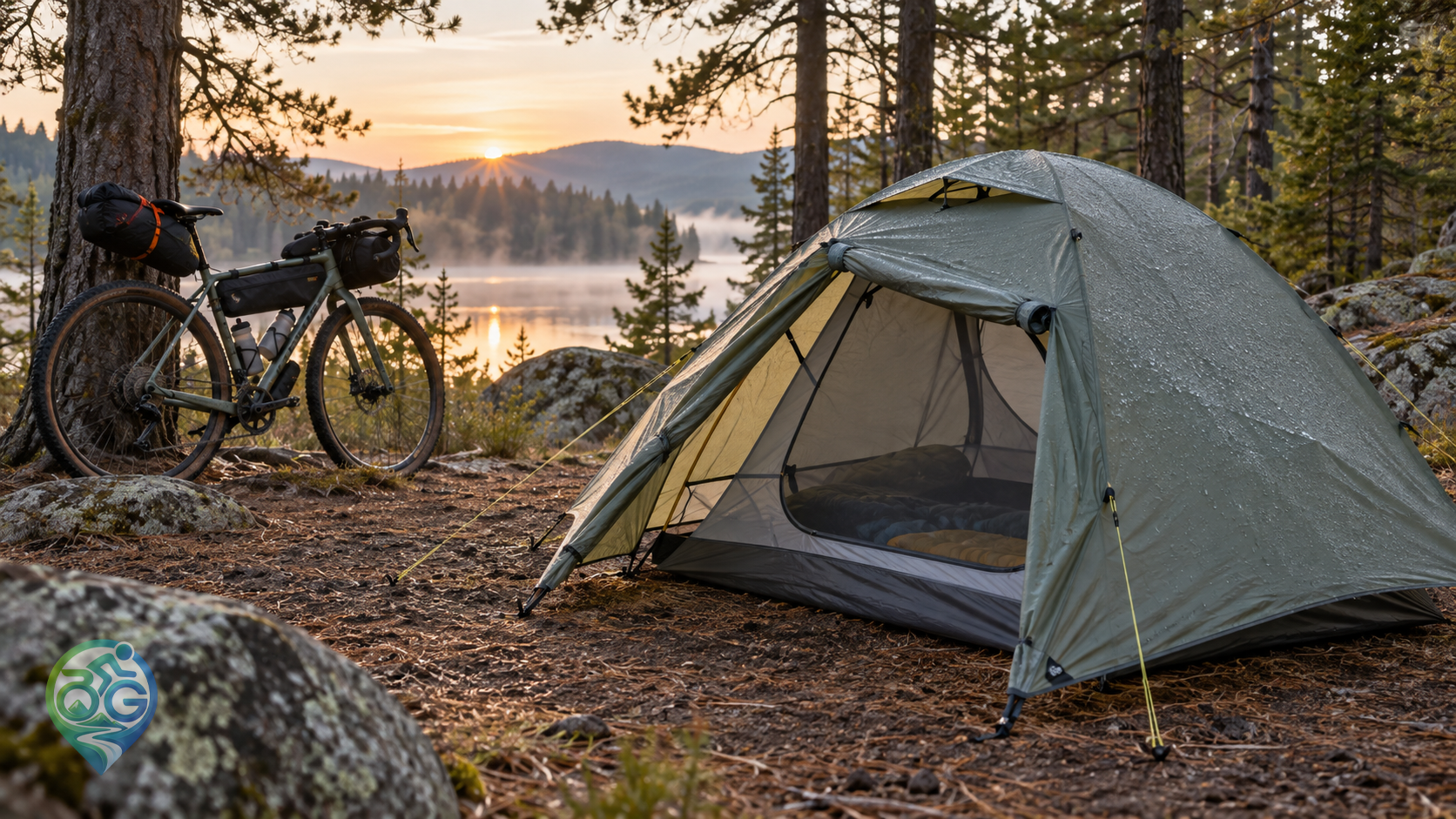
You reach for your sleeping bag in the morning and brush a wet tent wall. Nothing fell from the sky overnight, yet the flysheet is covered in droplets. Before blaming the waterproofing, take a closer look. Bikepacking tent condensation can happen in a sound shelter; the useful question is how to keep that moisture away from your insulation and the rest of your luggage.
Work out where the moisture is coming from
Droplets on a cool surface may be condensation rather than rain coming through. Breath, perspiration and damp surroundings all contribute. NEMO explains the relationship between temperature and moisture. That does not mean every puddle should be dismissed. Repeated entry at one seam during rain, or a persistent wet patch on the floor, deserves a separate inspection. REI's tent repair guidance notes that condensation can occur even with sealed seams. Droplets alone do not diagnose a failed tent.
Set up airflow before you turn in
Use the protected vents your shelter provides and tension the fly according to its instructions. On a double-wall tent, luggage should not close the gap between inner and fly. MSR's ventilation guidance emphasises giving moist air a route out. Balance openings against wind-driven rain; leaving the whole entrance open is not a universal solution. Some condensation may remain on a very humid night despite a careful pitch.
Check the layout from your sleeping position
Lie on the mat before unpacking everything. Does the saddle pack push the inner outwards at your feet? Is a helmet wedged against the wall beside your head? Move those items and check that your sleeping bag has space away from wet fabric. It is easier to reorganise now than to wrestle with a pile of bags in the dark. Treat this as part of arriving at camp, not an extra job to remember after getting comfortable.
Give wet riding kit its own place
A rain shell and damp socks do not belong in a heap with tonight's dry layers. NEMO advises against trying to dry wet equipment inside the tent. Build a packing system around that distinction: protect sleeping insulation separately and prevent wet pieces from touching dry ones. Anything left outside still needs protection from rain, wind and loss. Our bikepacking gear checklist helps you review what you carry before assigning each item a place.
Pack the dry equipment first
When the fly is still damp, put the sleeping bag into its dry bag before handling the shelter. REI's tent care advice calls for drying a tent promptly after packing it wet and making sure it is completely dry before storage. Arrange your luggage so you can reach the shelter at a later stop. Packing a wet tent at the very bottom creates an unnecessary unpacking job when an opportunity to dry it appears.
Make room for the routine in your riding day
Departure time is not just breakfast plus a distance target. Checking the shelter and separating wet kit takes time, and drying may become a job for a later break. Rehearse the sequence on an overnight shakedown as part of your preparation for longer cycling trips. The guide to riding in rain covers the riding conditions that can leave you arriving with wet kit in the first place. If the same problem keeps returning, note where the moisture appears, which vents were open and where damp clothes were stored. Change one part of the setup the next night so you can tell whether it helped.