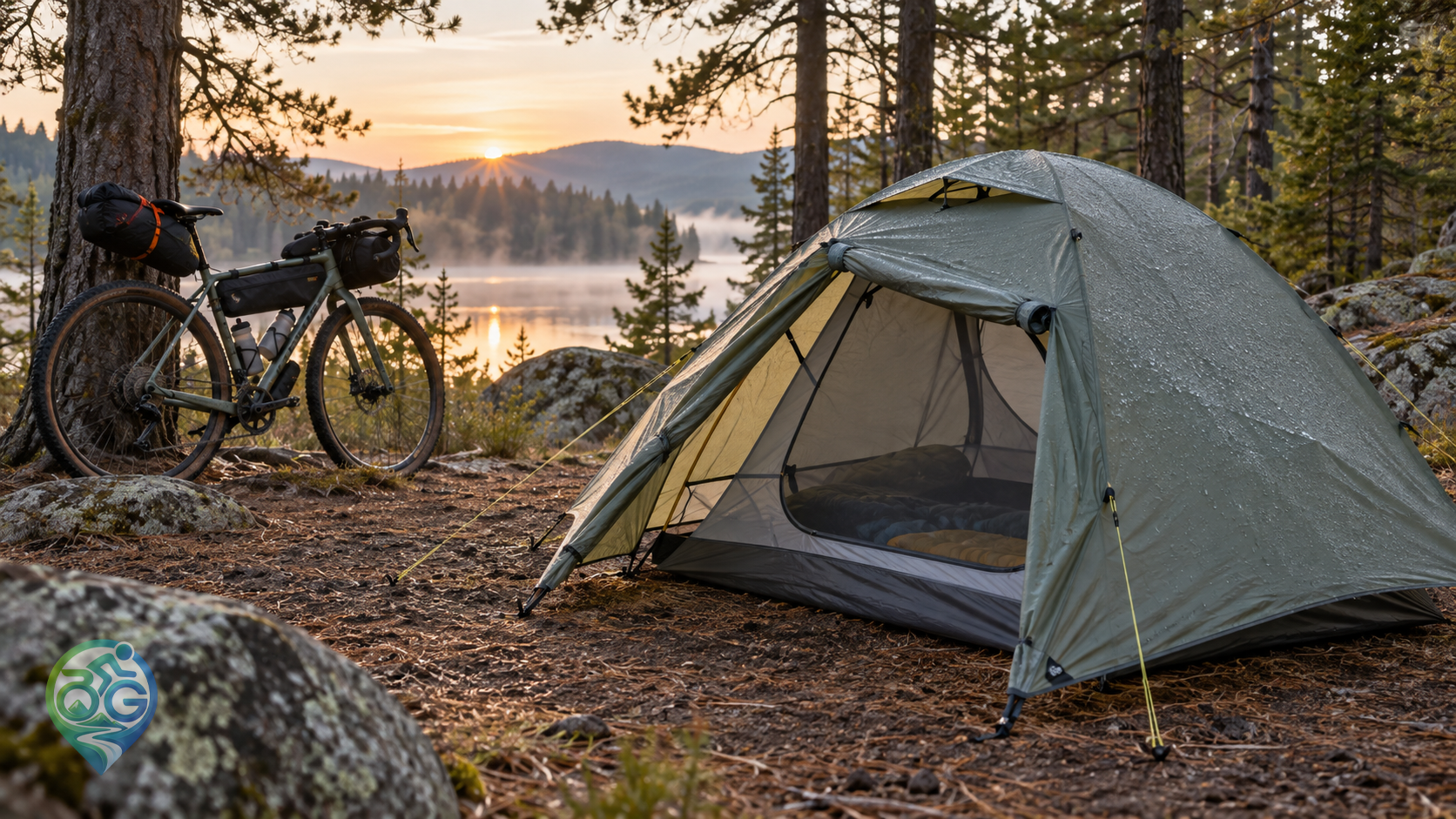
After a long day in the saddle, finding a quiet place to sleep can feel like the reward at the end of the route. The best overnight stop is not simply the flattest patch of ground: it is somewhere you are allowed to stay, where your setup causes as little disturbance as possible and where you can leave without evidence of having been there. Leave No Trace bikepacking is less about memorising slogans than making a handful of thoughtful decisions before, during and after camp.
Confirm that overnight camping is allowed
A secluded-looking clearing is not automatically a campsite. National parks, private land, protected habitats and local authorities can all have different rules. Check the current guidance from whoever manages the land before you ride there. Some places permit overnight stays only at designated sites; others prohibit them altogether. If the answer is unclear, ask the site manager or local authority instead of pitching first and hoping for the best. General outdoor advice does not grant access or override local regulations.
Use the overnight stop as part of route planning rather than an afterthought. Our guide to planning a cycling route can help you think through stages and breaks, but every prospective campsite still needs its own permission check.
Use an established, durable spot
Where camping is permitted, prefer an existing site or the area identified by its manager. Avoid flattening vegetation, shifting stones and branches to make a new pitch, or leaning a loaded bike against living plants. Repeated small impacts add up when riders keep choosing fresh ground. Look carefully before pitching: protect roots and young growth, keep clear of drainage channels and avoid low ground that could collect water during rain.
On a group ride, spreading several tents across a wide area creates more disturbance than sharing a suitable established site. Keep bikes and bags within the campsite boundary rather than blocking a trail or access route. Give other visitors room and keep the footprint compact.
Carry out food and every kind of rubbish
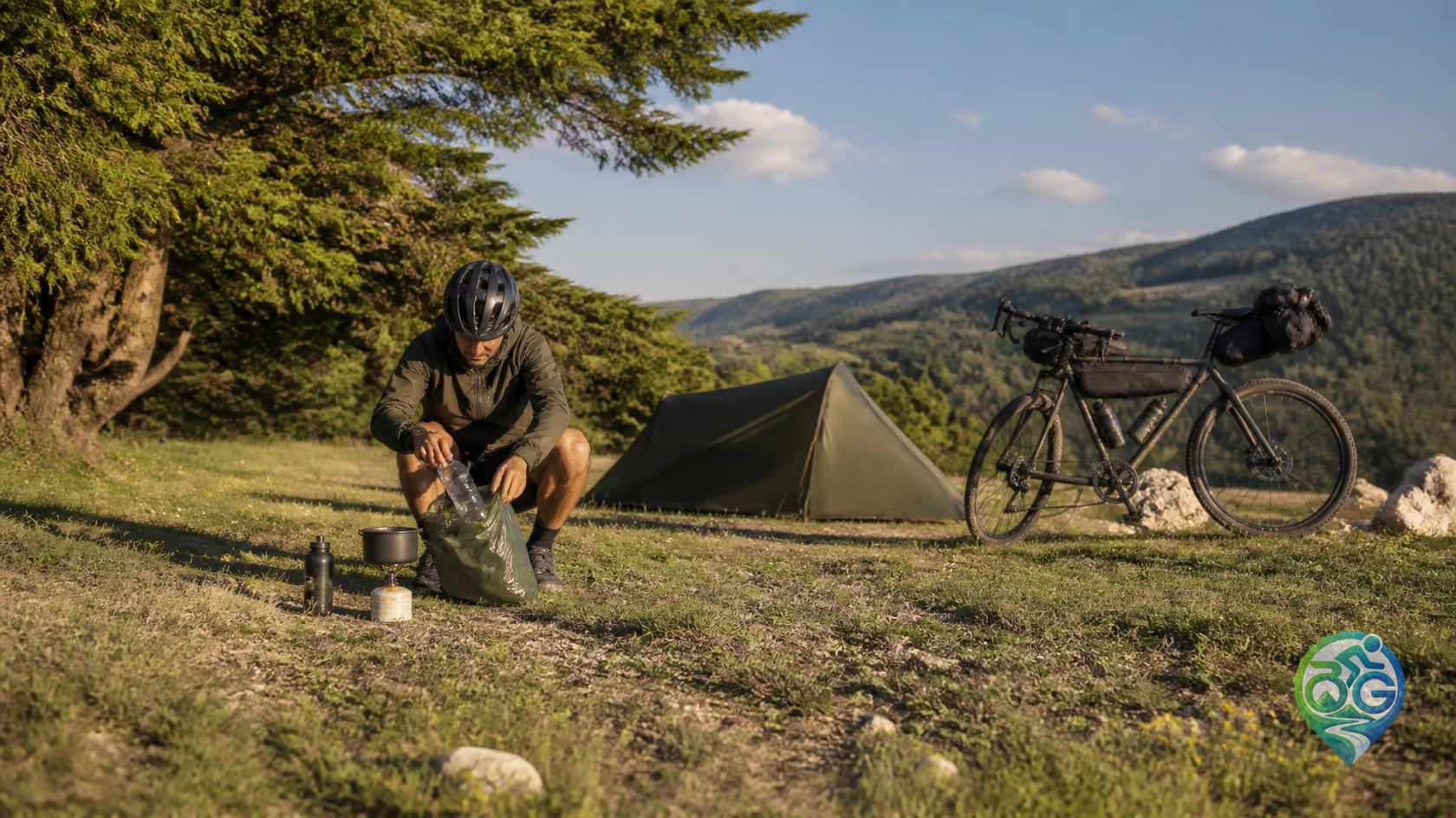
Bring a small, secure rubbish bag and take home everything you brought in: wrappers, wet wipes, leftovers and fruit peel included. “Compostable” does not mean that a food scrap belongs in a wild place. Open food can attract animals and teach them to associate people with a meal. The US National Park Service overview of Leave No Trace principles includes disposing of waste properly and leaving wildlife undisturbed. It is useful general guidance, not a substitute for the rules of a campsite in Türkiye or elsewhere.
Keep washing water away from streams and lakes, and follow the land manager’s instructions for greywater and toiletries. If you are unsure what is permitted, ask before washing up. Planning refill stops also helps you avoid unnecessary trips to sensitive water edges; see our practical guide to carrying and refilling water on a ride.
Treat fire as a permission question, not a judgement call
A small flame is still a fire. Wet ground, a cleared patch or a quiet evening does not tell you whether fires are permitted. Check current restrictions with the official land manager and do not light one when the rules are unclear. A stove also needs to be allowed and used on a stable surface, away from dry vegetation and combustible gear. If fires are permitted, follow the site’s instructions for extinguishing and ash disposal rather than improvising.
The National Park Service discusses minimising campfire impacts as one of its outdoor principles, but that guidance does not establish rules for another country. Restrictions can change with location and season. For a stove setup that works with limited luggage, our bikepacking stove guide covers the equipment decision separately from local permission.
Give wildlife and other campers room
Do not feed animals, call them closer for a photograph or leave food outside overnight. Store provisions so smells are contained, and follow any area-specific wildlife guidance. Leave plants, rocks, fossils and cultural objects where you find them. At camp, keep voices low, avoid shining lights into the surrounding woods and pack quietly if you plan an early start. These habits make a shared site more comfortable without requiring extra equipment.
Do a final sweep before you ride away
Before packing the last bag, look over the pitch as if you had just arrived. Are there scraps, crumbs or a dropped tent peg? Is the stove fully off? Did a wheel cut through a soft or planted area? Put rubbish somewhere it cannot fall out on the ride and leave the route clear for the next visitor. If you changed anything to set up camp, restore it only when doing so is safe and consistent with the site’s instructions; do not dig, rake or move natural objects to make the spot look tidy.
This is a practical outdoor ethic, not a complete summary of law. Rules vary by land manager and can change with the season, especially around fire and access. Check current official information before setting out, and choose another overnight plan whenever permission cannot be confirmed.