
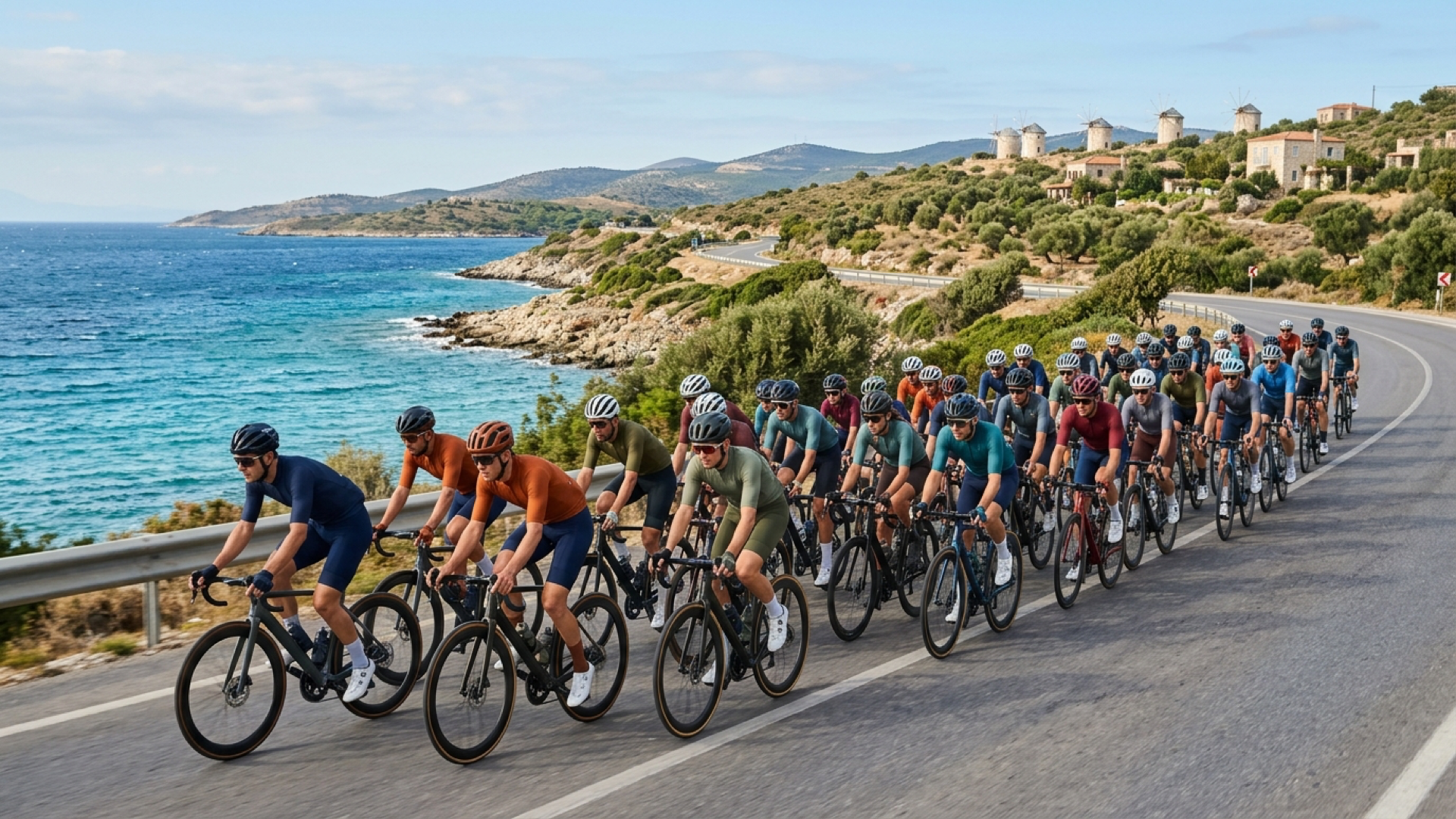
Regarded as one of the premier amateur road cycling events in the Eastern Mediterranean, Gran Fondo Cesme gathers thousands of enthusiastic road cyclists every autumn on Turkey’s scenic Izmir Peninsula. Tracing the sparkling turquoise shores of the Aegean Sea, traversing the historic cobblestone architecture of Alacati, and cresting rugged coastal ridges punctuated by historic stone windmills, this race blends athletic challenge with cultural heritage. Succeeding in a gran fondo requires far more than sheer leg power; it demands racecraft, efficient pack drafting, and methodical long-distance cycling preparation to manage the relentless coastal winds and rolling topography.
1. Course Breakdown: Long and Short Route Elevation Dynamics
Gran Fondo Cesme typically features two distinct courses: the grueling 110-kilometer Long Course and the punchy 67-kilometer Short Course. Both routes commence from the vibrant center of Cesme, rolling through Ilica and Alacati before venturing towards the undulating hills of Germiyan and the Karaburun approaches. While the Long Course accumulates over 1,300 meters of total vertical elevation gain, the Short Course challenges participants with approximately 750 meters of climbing. The initial 25 kilometers unfold at a blistering pace across wide coastal straights; however, steep pitch ramps between 8% and 12% near Ildir shatter the peloton into smaller working groups. Riders should analyze ascent gradients and sharp descent turns in advance with a meticulous GPX track and route check uploaded to their bike computers.
2. Aegean Crosswinds and Peloton Echelon Drafting Tactics
The hallmark of the Cesme Peninsula is its persistent coastal wind. Battling sweeping gusts of Aegean northerlies (Poyraz) on exposed seaside stretches rapidly depletes the muscular reserves of solo riders. Surviving these coastal crosswinds requires disciplined echelon riding, forming angled diagonal pacelines where trailing cyclists shelter behind the leading wheel. Tucking closely into the draft yields a massive 30% to 40% energy conservation. On rolling inclines, maintaining a fluid pedal stroke between 85 and 95 RPM with compact 50/34 chainrings paired to an 11-32T or 11-34T cassette ensures legs stay fresh, underscoring the vital importance of mindful cadence and effort management across the entire distance.
3. Race-Day Fueling, Electrolytes, and Hydration Strategy
Even though autumn racing temperatures along the Aegean coast feel brisk, intense race tempos combined with wind-induced sweat evaporation disguise significant fluid and mineral loss. Cyclists must practice proactive fueling by ingesting 30 to 50 grams of easily digestible carbohydrates every 45 minutes through energy gels, chew bars, or drink mixes. Running dual bottle cages—one filled with plain water and the other enriched with vital sodium electrolytes—prevents painful muscle cramping. Executing strategic water planning on bike tours enables riders to safely navigate crowded feed zones without wasting precious racing seconds or risking mechanical mishaps.
Discussion & Comments 0
Share your thoughts, gear experiences or ask questions about this guide.
No comments yet.
Be the first to share your thoughts!
Join the Discussion
Log in with your Bisikletli Gezgin mobile account to participate in discussions and track your contributions.