
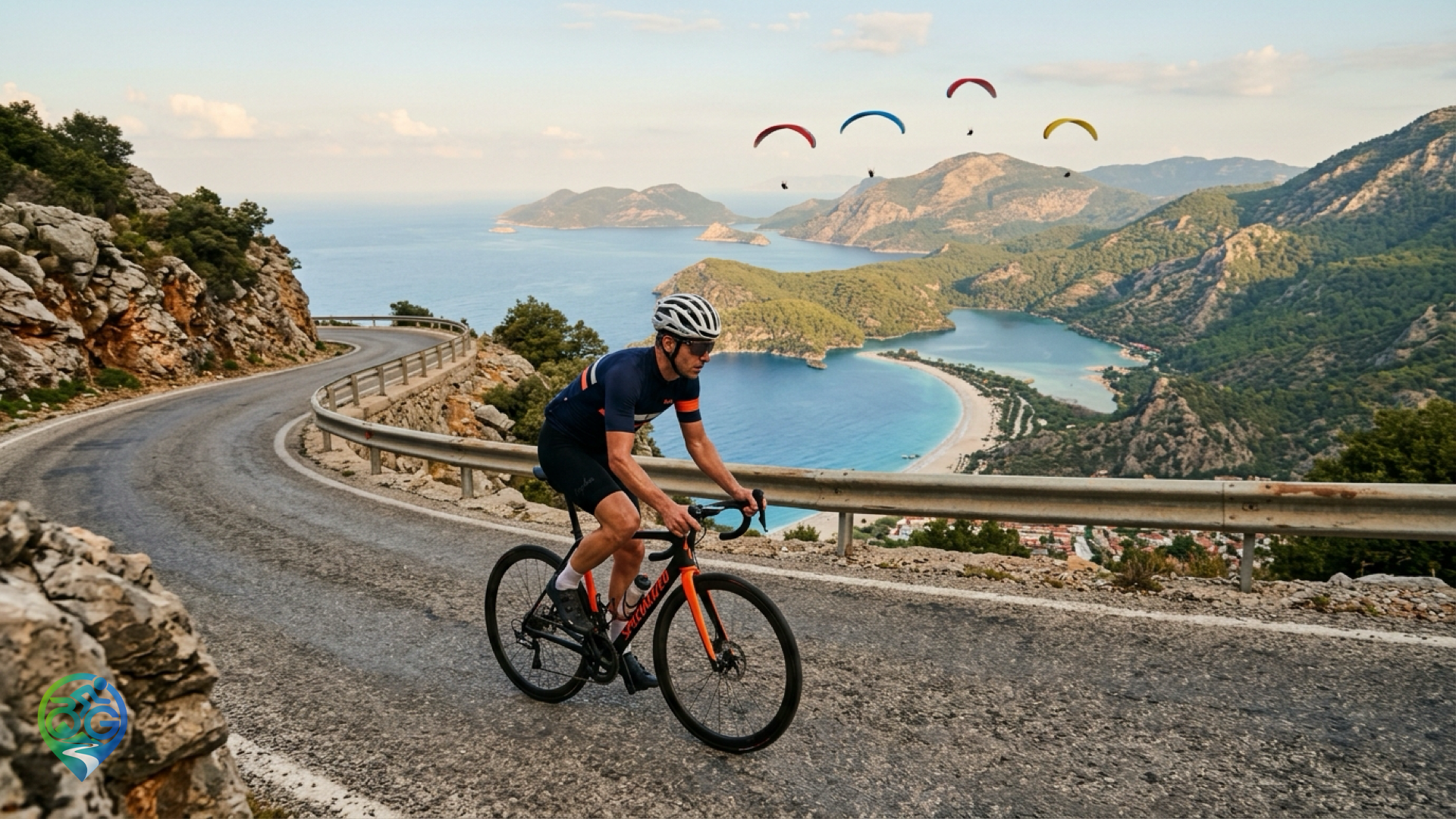
The Fethiye to Babadag stage, introduced to the international cycling calendar by the Presidential Cycling Tour of Turkey (TUR), stands as one of the most breathtaking mountain ascents in professional cycling. Rising directly from the azure waters of Oludeniz up to the summit at 1,965 meters, this legendary climb challenges riders with an unrelenting 10.4% average gradient and sustained ramps exceeding 18%. While it delivers a formidable test for the WorldTour peloton, touring cyclists can conquer this scenic giant with solid long-distance cycling preparation and strategic pacing.
1. Stage Profile and Gradient Reality
The Babadag climb features approximately 18.4 kilometers of continuous climbing. While the initial 6 kilometers through Hisaronu and Ovacik offer moderate rolling gradients, the road pitches up sharply once you pass the lower cable car station into dense pine and cedar forests. The switchbacks leading to the 1,200-meter middle station rarely drop below 12% grade, demanding consistent torque and focus. Performing a meticulous GPX track and route check before rolling out helps you anticipate steep gradient spikes and allocate physical reserves intelligently.
2. Gear Ratios and Cadence Discipline
Tackling Babadag with conventional road gearing (53/39 or 52/36 chainrings) risks severe muscular exhaustion within the opening kilometers. A compact crankset (50/34) paired with at least a 34T or 36T rear cassette is strongly advised for sustained climbing. For gravel or loaded bikepacking bikes, a 1:1 or sub-compact ratio allows you to maintain cadence while seated on double-digit ramps. Retaining a steady rhythm of 70 to 75 RPM and pacing your output methodically is essential; adhering to proven cadence and effort management fundamentals protects your energy across every elevation band.
3. Temperature Swings and Hydration Planning
A comfortable 25°C at sea level in Oludeniz can plummet to 10°C or lower at the windy 1,965-meter peak. Exposed switchbacks trap radiating midday heat, while alpine gusts near the summit rapidly cool sweat-soaked jerseys. Carrying a packable windproof jacket or thermal vest in your handlebar bag is crucial for summit comfort. Because natural spring water sources along the upper mountain road are scarce, executing diligent water planning on bike tours with at least two insulated bidons and electrolyte replenishment prevents dehydration on long climbs.
4. Descent Safety and Cable Car Logistics
After reaching the summit to admire sweeping views of the blue lagoon and colorful paragliders, descending requires careful consideration. Riding down sustained 15% gradients generates immense thermal friction on disc brake rotors and pads, risking heat fade and diminished stopping power. If your brakes or technical descending skills are strained under prolonged steep descents, taking the Babadag Teleferik (cable car) back down to the coast provides a safe, scenic, and practical solution for touring cyclists.
Discussion & Comments 0
Share your thoughts, gear experiences or ask questions about this guide.
No comments yet.
Be the first to share your thoughts!
Join the Discussion
Log in with your Bisikletli Gezgin mobile account to participate in discussions and track your contributions.