
Decide what you want to learn at Troy before deciding how much riding to fit around it. You might want to understand the objects from the region, follow the history of excavation, or spend time reading the archaeological remains themselves. Those choices lead to a different day from simply riding to a named attraction and leaving after a photograph. Plan a cycling visit to Troy with room to get off the bike.
Choose a thread to follow through the visit
The Ministry of Culture and Tourism’s museum overview describes themes spanning the Troas region, Bronze Age Troy, the Iliad and the history of archaeology. Pick a question that interests you. You could concentrate on everyday objects or on how excavations shaped the understanding of the place. That gives you something specific to look for when time is limited, without turning every display into a box to tick.
The provincial museum page locates the museum in Tevfikiye and describes ramp access between exhibition levels, alongside finds from settlements across the Troas region. Include walking in your plans. If your cycling shoes are uncomfortable away from the pedals, consider a practical spare pair. Allow for putting riding equipment away and getting ready to visit, rather than treating arrival at the building as the start of uninterrupted gallery time.
Carry the question outdoors
UNESCO’s account of Troy emphasises its long sequence of settlement and its importance in relations between Anatolia, the Aegean and the Balkans. The archaeological site entered the World Heritage List in 1998. Approach the remains as evidence from successive periods rather than assuming that every visible wall belonged to one city at one moment.
Use the visitor interpretation to connect something you noticed in the museum with what you see outside. A brief note about a period or object can help keep that thread alive. Follow the site’s visitor directions. Arriving by bicycle does not establish permission to cycle through the archaeological area, so organise the visit around the access arrangements you confirm.
Agree what happens to the bicycle while you walk
The provincial contact directory has separate entries for the museum and archaeological site. Ask each relevant venue about bicycle placement, baggage and visitor access for your date. This guide has not verified a bicycle store, luggage deposit or dedicated parking facility. Give staff enough information about the bicycle and bags you will bring to obtain an answer that fits your visit.
Choose your bicycle locking arrangement around the actual place available. Proximity to a cultural building is not a security guarantee. Decide which valuables and removable items will stay with you, and make the walking bag manageable. Two companions could consider taking turns visiting if that suits them; leave enough time for both people instead of silently giving one person the whole visit and the other a hurried look.
Check the two visits separately
Confirm opening and last-entry times, ticket coverage and temporary closures for the museum and archaeological site. An old opening-hours panel or a ticket description for one venue should not become an assumption about both. Save the confirmed information with your travel notes. Where an answer is unclear, resolve it before making the day depend on a narrow arrival window.
Leave the riding plan enough room to change
Once the starting point and return arrangement are chosen, build your distance, climbing and stop plan around the cultural visit. A road-access description written for motorists does not verify a cycling itinerary. Assess surfaces, traffic and access for the route you intend to use. This article supplies no measured ride distance, GPX or current road-condition approval.
Consider the forecast, daylight and your own walking pace when choosing which venue comes first. Museum before site is one possible editorial suggestion, not a mandatory order or a claim to have found the fastest schedule. If the day becomes crowded with extra stops, remove one before cutting the part of Troy you came to understand.
Include walking time in your water and resupply arrangements. Check where you can actually obtain water and food instead of assuming an establishment will be open. Keep an alternative return arrangement that you can realistically use with your bicycle. A bus or taxi appearing on a map does not establish bicycle carriage; check the operator before depending on it.
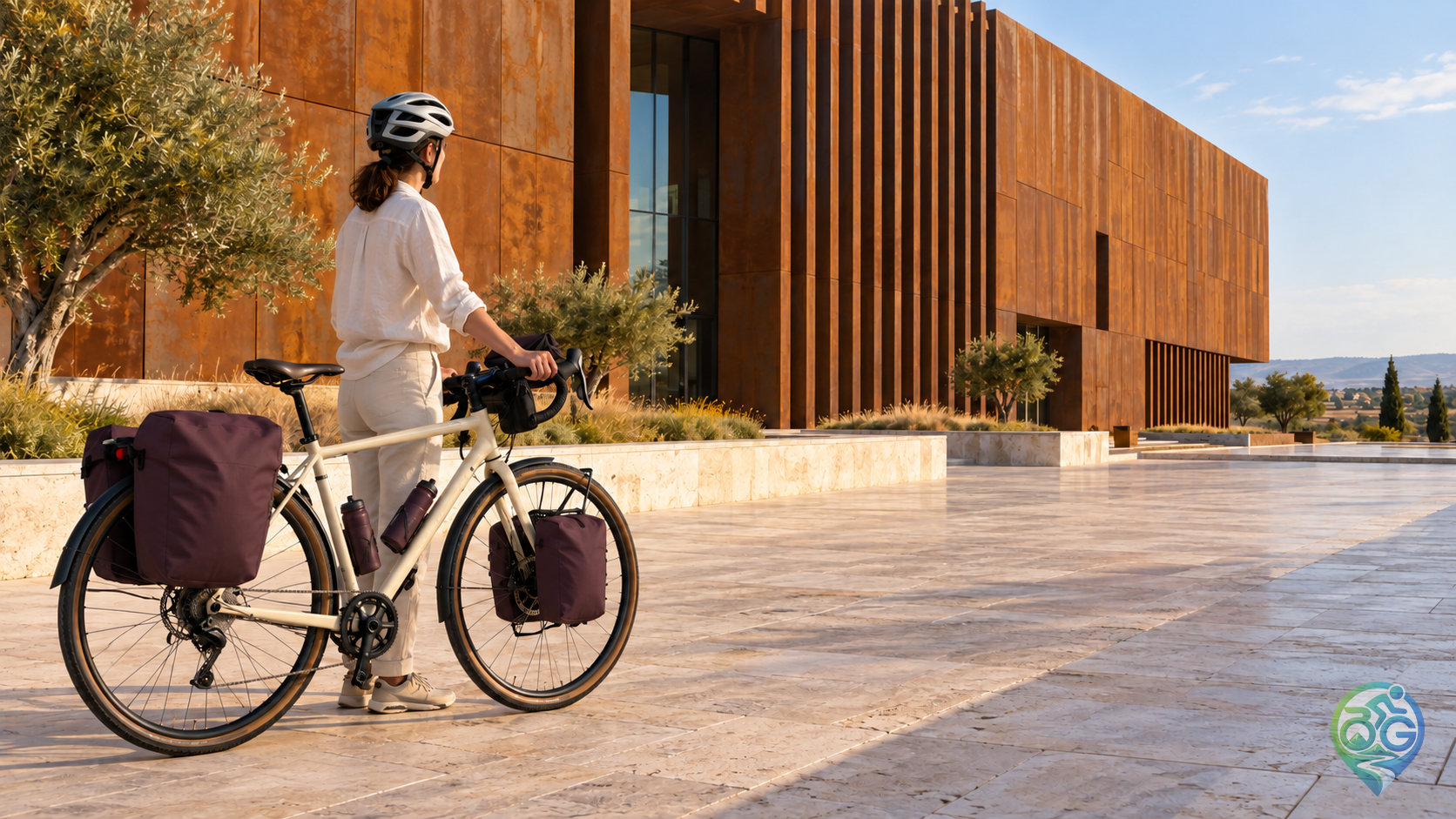
Sources checked on 15 October 2026. Reconfirm the venue arrangements for your travel date. The accompanying image is generated representative artwork, rather than a photograph documenting the museum’s bicycle facilities.
Discussion & Comments 0
Share your thoughts, gear experiences or ask questions about this guide.
No comments yet.
Be the first to share your thoughts!
Join the Discussion
Log in with your Bisikletli Gezgin mobile account to participate in discussions and track your contributions.