A lock that works outside your local shop may be awkward at a railway station or on a loaded touring bike. Start this bike lock buying guide with the places you actually park, rather than a shortlist of impressive-looking products. Security certification matters, but so do usable space, reach and a carrying arrangement you will use every day. The aim is to compare suitable models, not crown one lock as the answer for every rider.
Write a parking brief before browsing
Think through your usual commute, a shopping stop and an overnight touring stop. How long will the bike be out of your sight? Is there a suitable anchor? Will luggage obstruct access to the frame? Put those answers beside your budget. It is easier to reject an unsuitable option when you have a concrete job for it to do.
For a trip, include parking in your route and rest-stop planning. A café symbol on a map tells you little about bike parking. Ask about arrangements before a longer visit, and keep an alternative stop in mind rather than assuming every destination will accommodate a loaded bike.
Compare the shape with your actual bike
U-lock fit: the opening matters
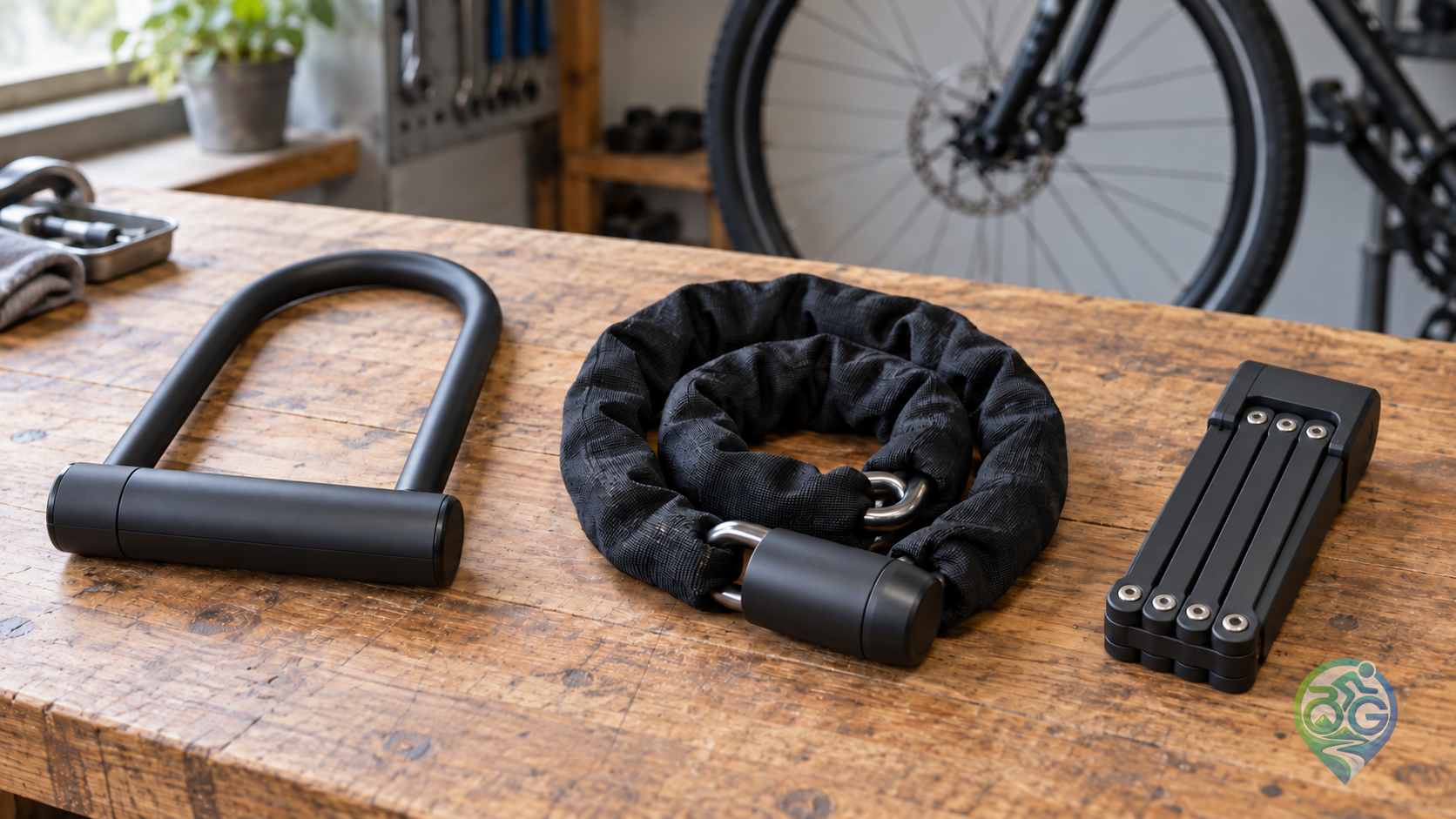
A U-lock, also called a D-lock, has a rigid outline. Look at the space inside the shackle rather than relying on overall dimensions. Can it accommodate your frame and the stand you normally use? Take the bike to the shop if a trial is possible, leaving your bottle and frame bag fitted. A compact lock is not convenient if it cannot reach around your everyday parking arrangement.
A larger size needs a carrying plan too. Check where the bracket would sit and whether you could remove the lock without shifting other equipment. Do not infer a security level from the outline alone: compare the certification of the exact model.
Chains and folding locks: test reach and packed size
A chain can adapt around differently shaped parking points, but the length you choose still has to travel with you. Handle the actual model if possible and check its weight and packed volume. For a folding bike lock, test the available reach when open as well as its neatness when folded. Neither format automatically wins; the useful comparison is between products that fit your parking brief.
Before buying another bag, try assigning the lock a place in your existing luggage. Our bikepacking bag setup guide can help you think through that space. Check whether a bracket is supplied and compatible, rather than assuming an accessory shown in a photograph is included.
Read ratings without mixing different scales
Sold Secure explains its Diamond, Gold, Silver and Bronze grades. Look up the precise product and testing category in the official listing; a brand name is not a certificate for its entire range. If you have cycle insurance, check your own policy requirements separately. A rating mentioned here is not a promise of insurance cover.
Manufacturer scales are different again. Kryptonite uses a ten-point scale within its range; an apparently similar number from another brand is not automatically comparable. Ask the retailer for the product code if several lengths or versions share a family name. This is a better starting point than choosing solely from a headline score.
Make the final decision with a parking rehearsal
The frame needs to be secured to a solid anchor that the bike cannot simply be lifted over. Securing only a wheel leaves the frame unprotected. Kryptonite's locking guidance prioritises the frame; plan protection for the wheels as well. No lock should be treated as a theft-proof guarantee.
Try the key, the carrying arrangement and the intended parking position before committing. Include the same rehearsal in your preparation for a longer ride, with luggage fitted. The right purchase is the model that meets your security needs and remains practical at every stop, not merely the one with the tidiest specification sheet.