Saddle height affects pedaling efficiency, comfort and knee load. A position that feels fine for five minutes may become painful after an hour, so begin with a repeatable measurement and then test it on the road.
Set a safe starting point
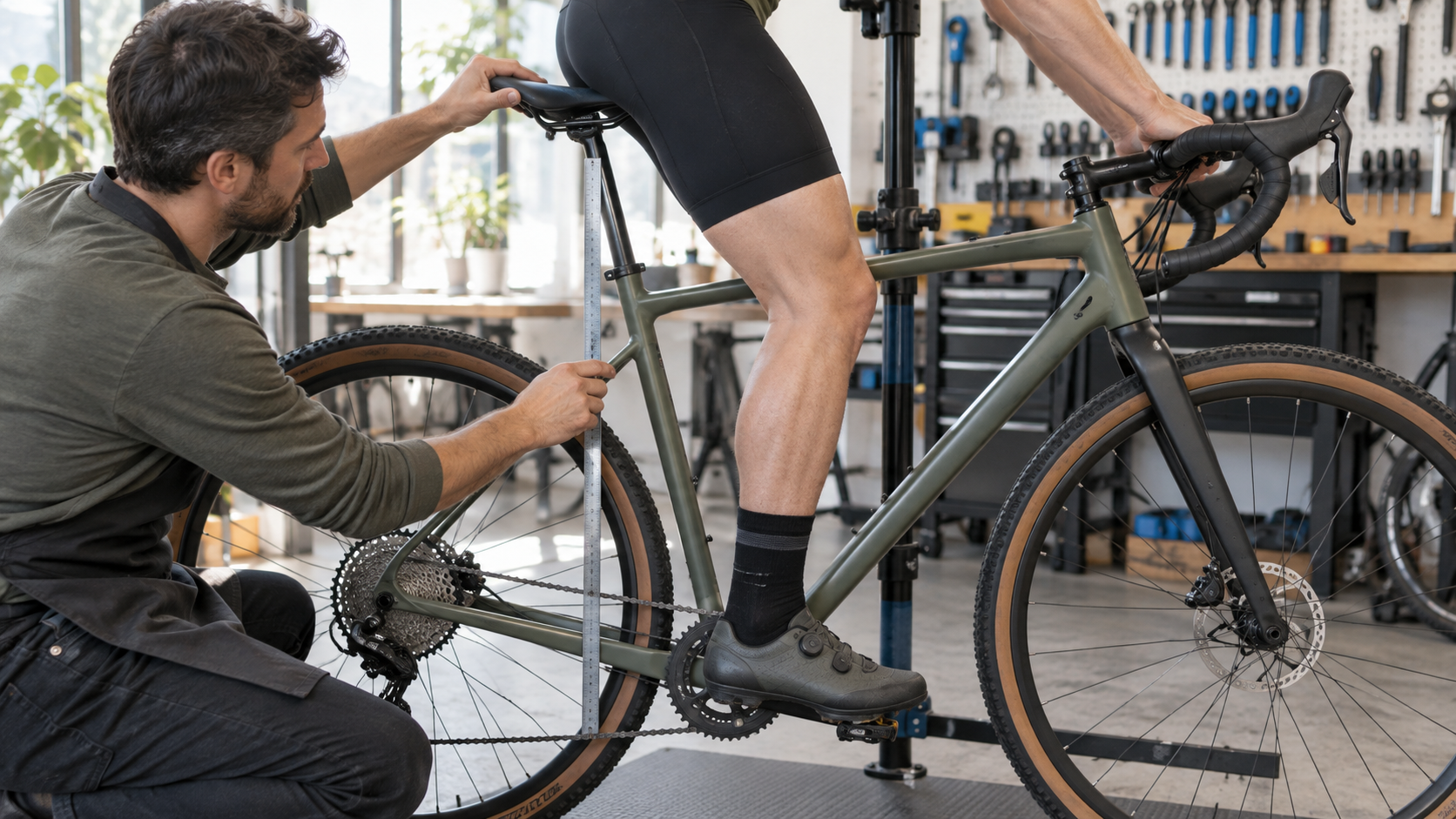
Place the crank in line with the seat tube and measure from the center of the bottom bracket to the top of the saddle along the seat tube. Another practical check is to place the heel on the pedal at its lowest point: the leg should be almost straight without the hips rocking. This is only a starting position, not a final fit.
Observe your knees and hips
If your hips rock side to side or your toes point down to reach the pedal, the saddle may be too high. If your knee remains deeply bent at the bottom of the stroke or the front of the knee becomes sore, it may be too low. Change one variable at a time in small increments and mark the original position.
Test under real riding load
Ride on a familiar, mostly flat route and note where discomfort appears. Knee pain at the front, behind or on the sides can have different causes, including saddle setback, cleat position, cadence and gearing. Do not solve every symptom by moving the saddle in one direction.
Know when to ask for a professional fit
Persistent pain, numbness or a history of injury deserves medical or professional bike-fit advice. Check saddle height together with reach, handlebar position and cleat alignment. A stable position should let you pedal smoothly without chasing the pedals or bracing your shoulders.