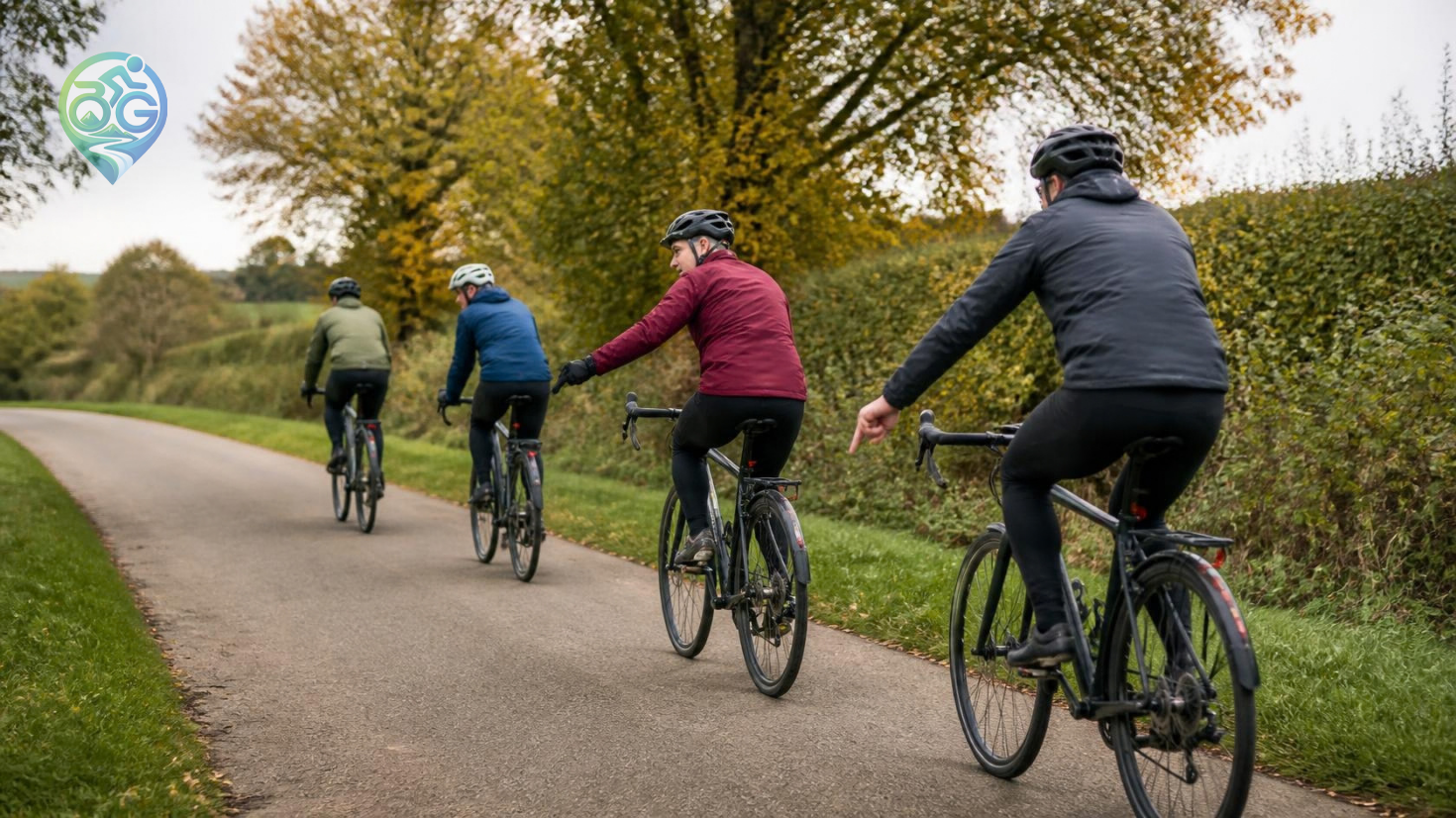
A group ride is a moving conversation. The rider at the front sees the broken glass first; someone near the back may notice a car closing in from behind. If the warning stops with the person who spotted it, the rest of the line has no chance to respond smoothly. Hand signals and brief calls make that information travel, but only when the group agrees what they mean and riders pass them on.
Agree on the vocabulary before the ride
There is no single gesture set that every cycling club uses in exactly the same way. A signal for slowing in one group may mean something different in another, and conventions can vary between countries. Ask the ride leader to explain the calls, the hand signals and how the group handles junctions before rolling out. Cycling UK makes the same point in its signal guide and advises leaders to explain the system during the briefing. Treat the examples below as categories to agree on, not a universal code.
The signals a group needs most
Turns and changes of line
A clear arm extended in the direction of travel can show an intended turn, provided you have checked around you and can control the bike with one hand. Moving around a parked car or roadworks is more than a turn: add a short call such as “moving out” so nearby riders know the group is changing its line. Signal early enough to give others time, but do not hold a gesture so long that you lose control or miss another hazard.
Slowing and stopping
Choose distinct, agreed cues for easing the pace and coming to a full stop. Some groups use a palm-down patting motion for slowing and a raised arm for stopping; others use a different convention. Say “slowing” or “stopping” as well when the road is noisy or visibility is poor. A rider who receives the cue should repeat it when useful, create space and manage their own braking rather than assuming the wheel ahead will do it for them.
Surface hazards
Pointing towards a pothole, debris or a patch of loose gravel can help the next rider choose a line. Add a concise word—“hole,” “glass” or “loose”—when the hazard is large or hard to read from behind. There is no need to call every crack in the pavement. Focus on something likely to change another rider’s line, traction or speed, and leave room for them to make their own choice.
Pass the message along the line
The first rider spots a hazard; the next repeats the warning to the person behind, and so on. Calls should be short, specific and consistent. “Car ahead” or “car behind” is often clearer than local shorthand that a new rider has never heard. Riders at the rear also have a job: let the front know when traffic approaches from behind, when someone has a mechanical problem or when the group is becoming stretched. The route-planning guide is useful for thinking through junctions and road conditions before the ride; the wet-weather riding guide covers visibility and slippery surfaces that call for earlier warnings.
A “clear” call is not permission for everyone
One rider’s view of a junction may not match the view of someone farther back. Avoid using a call as a promise that the whole group can proceed. Each rider still needs to look, judge the gap and obey signs and signals. A group leader can make the ride easier to follow, but a hand gesture cannot replace attention or create right of way.
Practise while stationary first
Before the start, show the group the agreed cues for turning, slowing, stopping and hazards. Confirm the words that go with them and how a warning should travel back through the line. If you are new, ask rather than guessing; a good briefing makes that normal. Check your bike-light setup for low-light visibility and review the helmet fit guide before the ride. The aim is not to perform a perfect sequence of gestures. It is to make intentions legible, keep enough control to react, and leave every rider space to make a safe decision.