
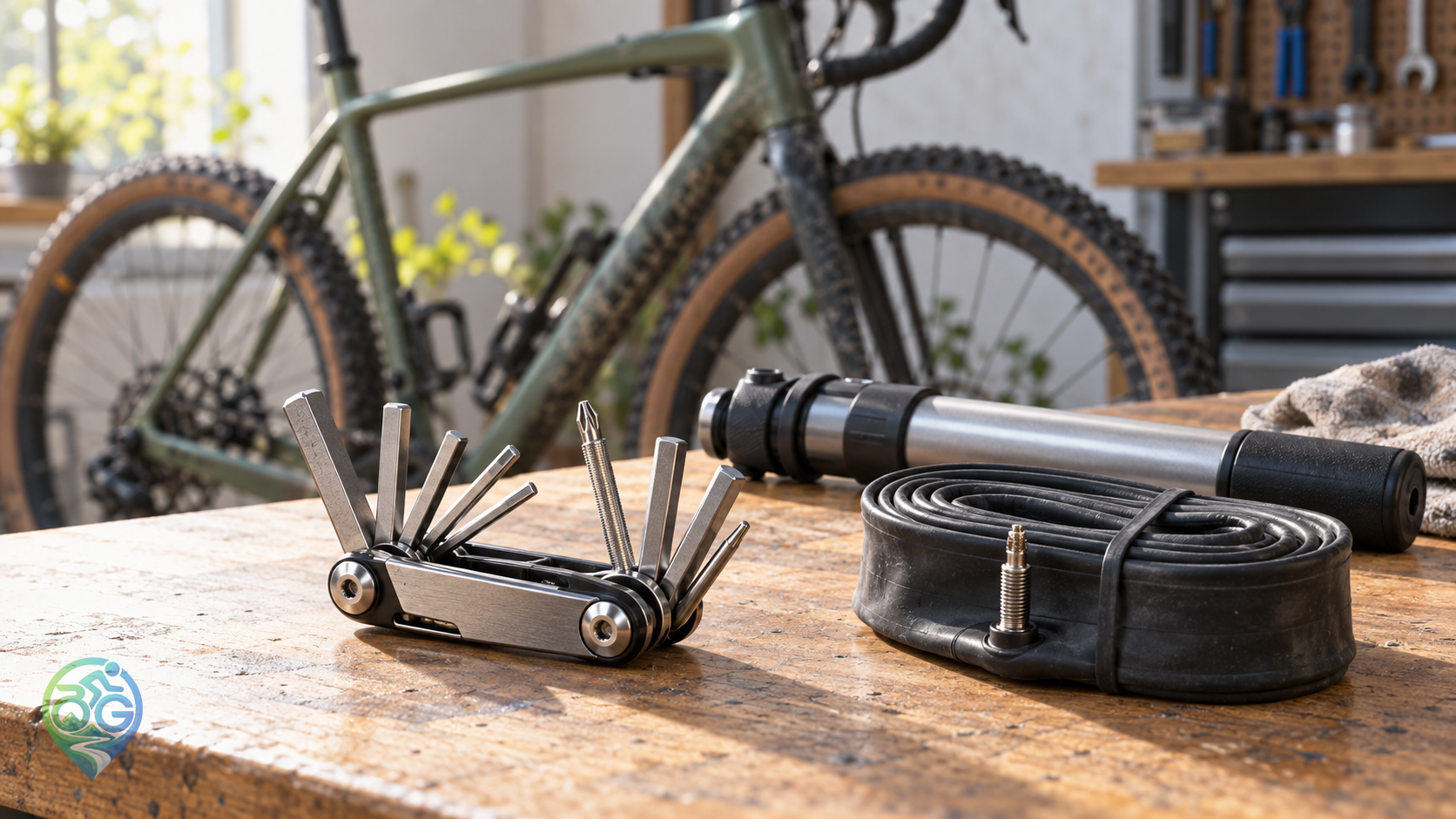
Choosing a bicycle multi-tool starts with your bicycle, not the number of functions printed on the packet. A compact tool with the right interfaces can be more useful than a larger model that omits one fastener size you actually need. Reach matters too: a folding key may fit a bolt but leave too little room for the body to turn. Make a short inventory of your bike and the repair supplies you already carry, then compare a few candidates against that list. The goal is a manageable roadside kit you understand how to use.
Inventory the interfaces on your own bike
Note the fastener types used on accessible accessories, bottle cages, the seat clamp and the stem. Confirm sizes from the component documentation or a known correctly fitting key rather than guessing. You do not need to loosen a secure fitting merely to identify it. Hex and Torx interfaces are not interchangeable, and forcing a nearly fitting tip can damage the fastener. Match the tool's published list to your notes, and revisit the list when you change components. An extra function is only useful if it fits a job on your setup.
Check reach and handling as well as size
If possible, handle a candidate before buying it. Open the keys individually and see whether the remaining tools make the body uncomfortable to hold. Think about restricted areas around bags, bottle cages and other attachments. The tool's length and body shape can matter more there than its advertised function count. Test access at home without changing settings unnecessarily. Being able to reach a bolt does not mean that its adjustment is appropriate for a roadside intervention. Keep the component's instructions in charge of the job.
Read chain-tool compatibility separately
A built-in chain tool is not automatically suitable for every chain. Topeak lists supported chain types for the Hexus X and excludes certain Campagnolo hollow-pin chains. Park Tool's archived MT-40 page also describes a limitation involving chain rivet work; that model is discontinued. These examples illustrate why the exact product's compatibility notes matter. Check the chain maker's joining method and any replacement link requirements too. A speed count alone is not a substitute for confirming that your particular chain and the tool are supported.
This choice is separate from routine drivetrain care. Our chain cleaning and lubrication guide covers preparation that should already be part of your maintenance routine. If you have never used a chain tool, do not make a roadside failure your first lesson. Read the instructions beforehand or have a mechanic demonstrate the relevant operation. Also know when a damaged component needs replacement rather than an improvised adjustment. Carrying an unfamiliar function does not create the skill to use it.
Audit the tire kit independently
Some multi-tools include tire levers, a removable-valve-core tool or an inflation head. Check how those features fit your actual tube or tubeless setup instead of assuming they complete the puncture kit. An inflation head still needs its appropriate air source, and a pump needs to match the valve you use. Keep the tire maker's and rim maker's limits in mind; our tire pressure guide explains the setup considerations. Extra functions on a folding tool do not remove the need to measure pressure or carry the system-specific supplies.
Plan storage and recognise the limits
Keep the multi-tool somewhere you can find without emptying the entire bag. After wet or dirty use, clean and dry it according to its own instructions, and check that detachable bits are still present. If the folding pivots become loose, follow the model's maintenance guidance. An ordinary multi-tool is not a torque-measuring instrument, so hand feel should not be substituted for a specified torque. If a brake, steering or wheel attachment cannot be checked confidently, arrange appropriate help rather than riding on a guess.
For the final comparison, consider supported interfaces, access, chain compatibility, grip and the weight and volume of the complete repair kit. A longer feature list does not compensate for a missing essential. Use the equipment-preparation approach in our bikepacking starter guide to assemble the kit, then carry it on a short familiar ride. The useful tool is the one that fits your bicycle, feels practical in your hands and has limits you understand. That gives you a clearer buying decision than selecting by function count alone.
Technical references: Park Tool MT-40 archived specification; Topeak Hexus X interfaces and compatibility.


Discussion & Comments 0
Share your thoughts, gear experiences or ask questions about this guide.
No comments yet.
Be the first to share your thoughts!
Join the Discussion
Log in with your Bisikletli Gezgin mobile account to participate in discussions and track your contributions.