
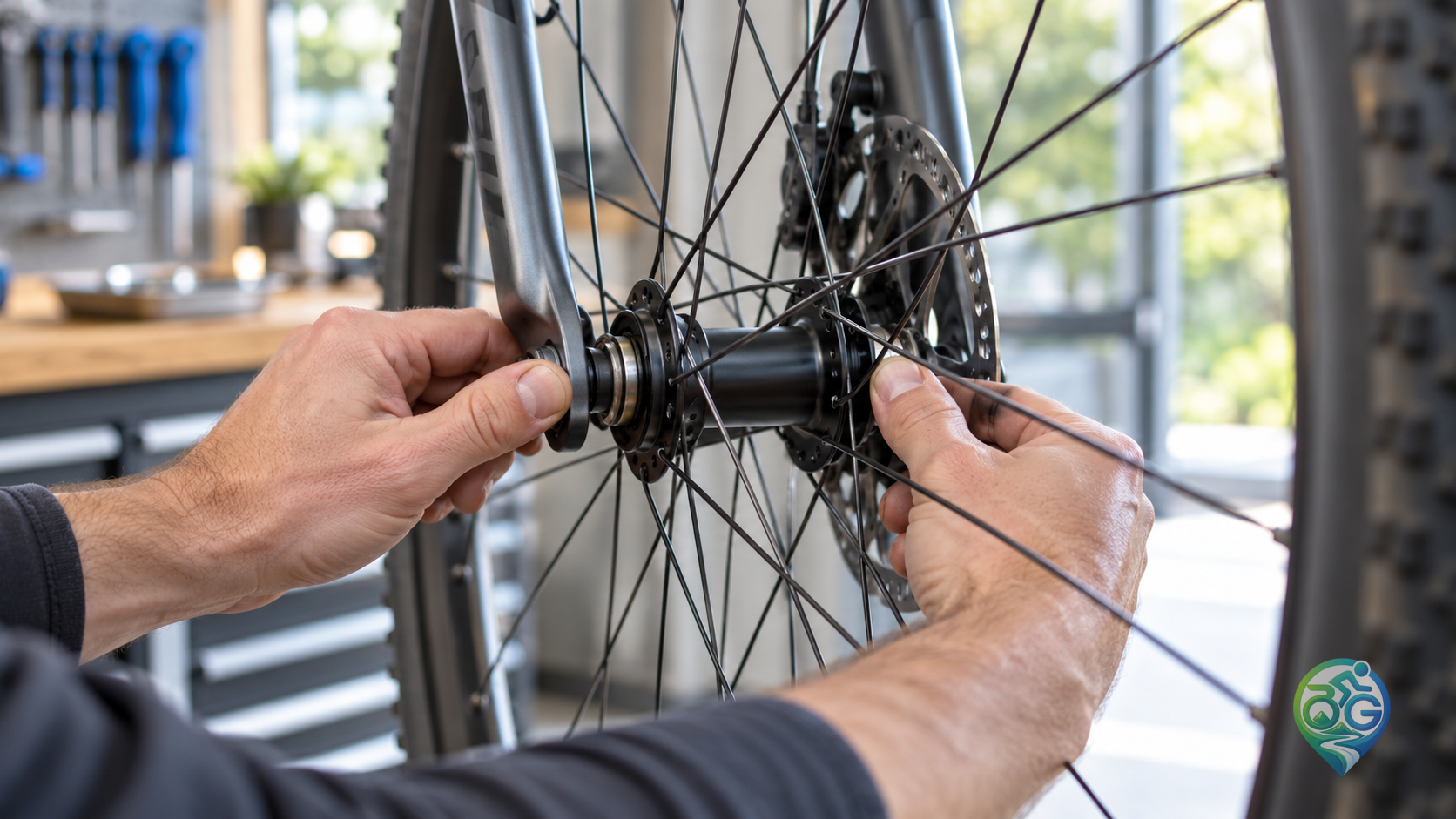
How can you check for bicycle hub bearing play? With the wheel secured in the frame or fork, gently rock the rim sideways and feel for a knock or movement at the hub. Then spin the wheel and pay attention to roughness, grinding or intermittent catches. These are quick screening checks, not a diagnosis by themselves: a loose axle, brake contact, a wobbly rim or frame movement can feel similar. Start with the wheel correctly installed, and separate the side-to-side play test from the spin test so each observation tells you something useful.
Check the wheel while it is installed
Steady the bicycle and hold the rim near the top with both hands. Apply a small side-to-side force, comparing the rim’s movement with the fork or frame. Rotate the wheel and repeat at another position. If you feel a distinct click or see the rim move laterally against the frame, locate the motion near the axle ends and hub shell. Check that the quick release or thru-axle is properly secured first; a loose wheel attachment can imitate bearing play and is a safety issue of its own. Do not ride until a loose connection is corrected.
Separate axle movement from wheel movement
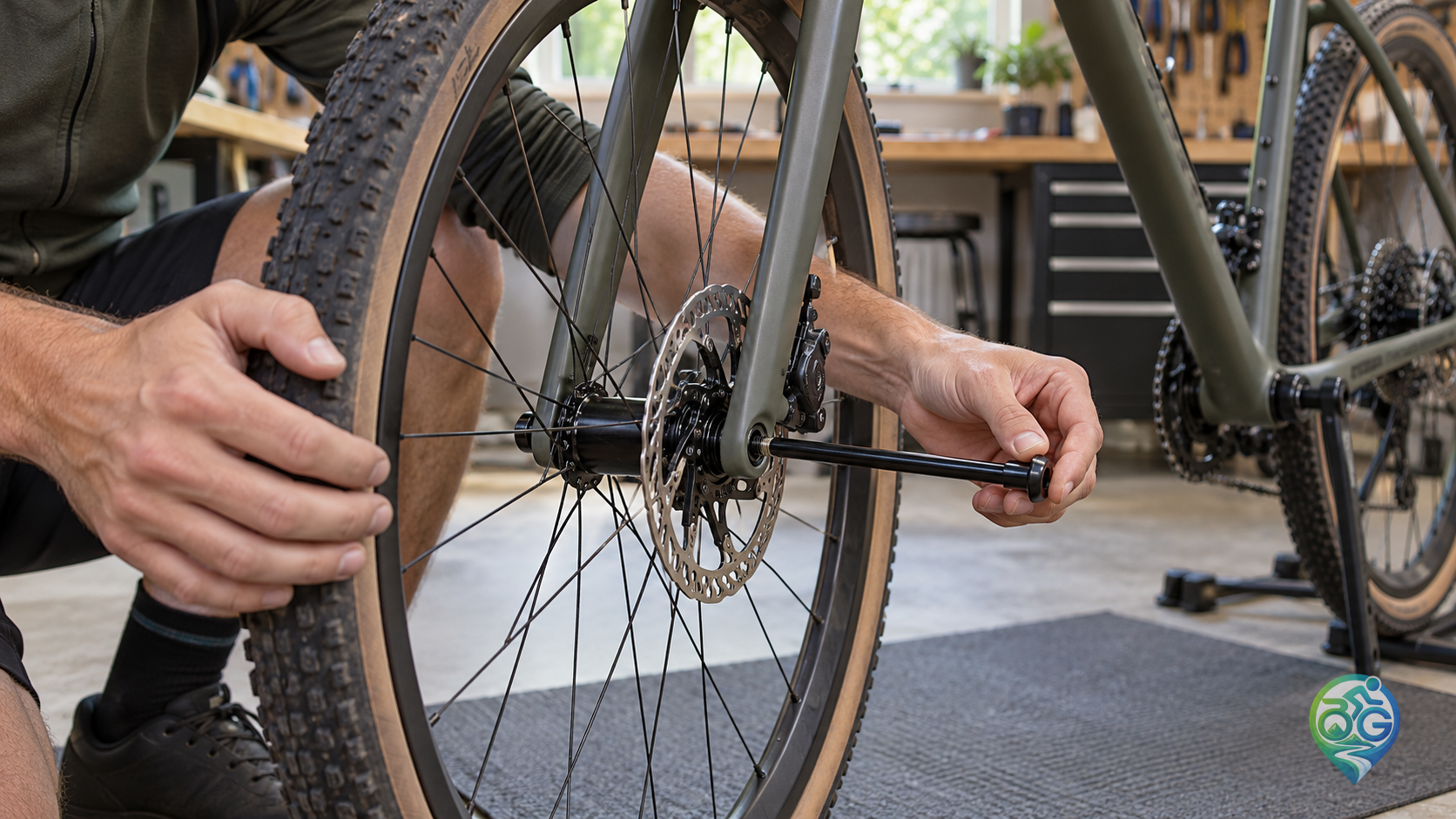
If play remains, remove the wheel according to the bicycle maker’s instructions. Hold the axle ends and gently rock the axle up and down, then side to side, while observing the hub. Park Tool’s cup-and-cone service guide notes an important exception for some quick-release hubs: a slight amount of play with the wheel out of the bicycle may disappear when the skewer clamps the hub in the frame. That does not mean every loose hub is correctly adjusted. The expected feel depends on hub design and the maker’s procedure, so assess the wheel both out of and correctly clamped into the bicycle.
Listen and feel while spinning
Turn the wheel by hand and notice whether it rolls smoothly or has a repeated gritty, notchy or grinding sensation. A sound that repeats once per revolution may come from brake contact rather than bearings. On a disc-brake wheel, inspect rotor clearance and whether the rotor appears to wobble; on a rim-brake wheel, watch the rim against the pads. A wheel that moves side to side as it spins may need truing, which is different from hub bearing adjustment. Perform the stationary play check before drawing conclusions from the spinning wheel.
Identify the bearing system before adjusting anything
Adjustable cup-and-cone hubs use cones and locknuts to set bearing clearance. Cartridge-bearing hubs generally use sealed bearing units and are not adjusted by turning a cone; worn or loose cartridges may need replacement or a model-specific service procedure. Park Tool’s hub guide distinguishes these designs, while Shimano publishes separate maintenance documents for different hub families. Do not loosen locknuts or add force to a cartridge hub based on a generic online instruction. Find the exact hub model and follow its service manual, particularly if the wheel has a complex freehub or disc-brake interface.
When to stop riding and ask a mechanic
Do not ride if the rim has substantial lateral movement, the axle shifts inside the hub, the wheel binds or catches while turning, or a clear knock remains after the axle is correctly secured. Pitted bearing surfaces, damaged cups, loose cartridge fits and bent axles need the right parts and tools; extra tightening can mask a symptom while damaging other components. If the rotor, hub shell or axle interface is visibly damaged, have the wheel inspected before use. A hub that feels smooth off the bike may still be improperly adjusted once clamped, so follow the manufacturer’s full check.
Finish with a safe recheck
After service, confirm the wheel sits fully in the dropouts, the axle is secured using its specified method, and there is no unintended play with the wheel installed. Spin it again, check that the brakes work normally and take a short, gentle test ride before returning to normal riding. For related setup checks, use our bicycle tyre pressure guide, review tubeless tyre maintenance if your wheel uses that system, and use the gear adjustment guide for a related drivetrain check from a hub issue.
Technical references: Park Tool hub adjustment and service; Shimano hub maintenance manual.

Discussion & Comments 0
Share your thoughts, gear experiences or ask questions about this guide.
No comments yet.
Be the first to share your thoughts!
Join the Discussion
Log in with your Bisikletli Gezgin mobile account to participate in discussions and track your contributions.