
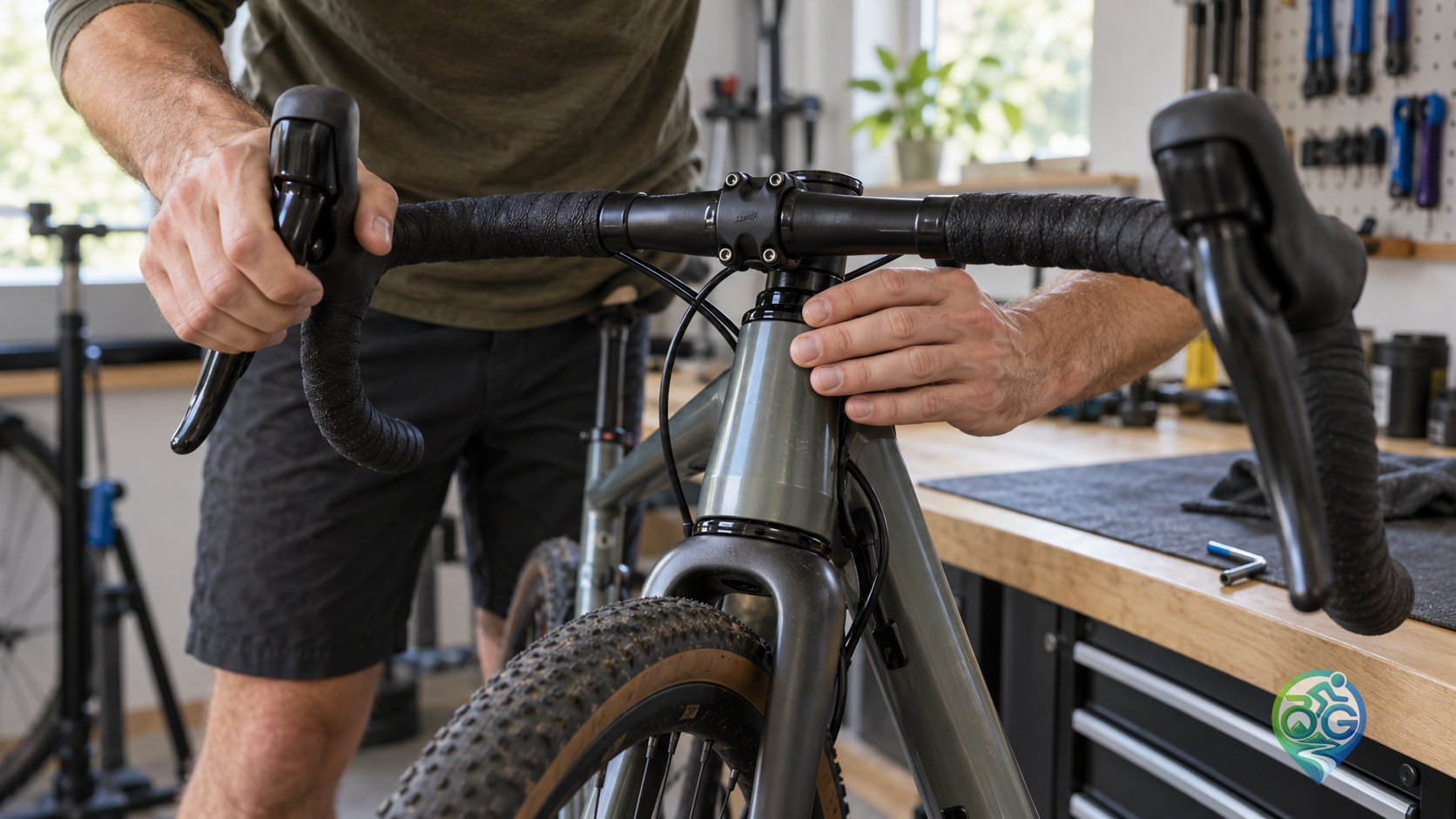
A knock at the front of a bike when you squeeze the brake and rock it can point to bicycle headset play. The headset is the bearing assembly that lets the fork turn inside the frame. Too little preload can leave movement between the parts; too much can make the steering bind and accelerate bearing wear. This guide covers a basic check and a conventional threadless adjustment. It is not a substitute for the frame or headset maker’s instructions, especially on carbon or unusual integrated systems.
Check whether the headset is moving
On level ground, apply the front brake firmly. Place the fingertips of one hand across the headset cover and head tube, then rock the bike gently through a short fore-and-aft movement. A distinct knock or movement under your fingers can indicate play. Repeat the check to make sure you are feeling movement at the headset rather than brake-pad movement or the tyre shifting against the floor.
Lift the front wheel and turn the bars slowly from side to side. They should move smoothly and without a notch or a heavy, dragging feel. A centre notch, roughness or binding may point to excessive preload, contamination or worn bearings. Before a longer ride, it also helps to check the rest of the bike: our bicycle gear adjustment guide covers another part of a useful pre-ride mechanical check.
Adjust preload on a standard threadless headset
The steps below apply to the common threadless arrangement with a top cap and stem clamp bolts. Check the manufacturer’s procedure first. If your bike has a carbon steerer, a suspension fork, a proprietary cap or an unfamiliar setup, stop and ask a qualified mechanic rather than guessing.
- Loosen the stem’s steerer-clamp bolts just enough for the stem to move on the steerer. Note the specified tightening torque before loosening anything.
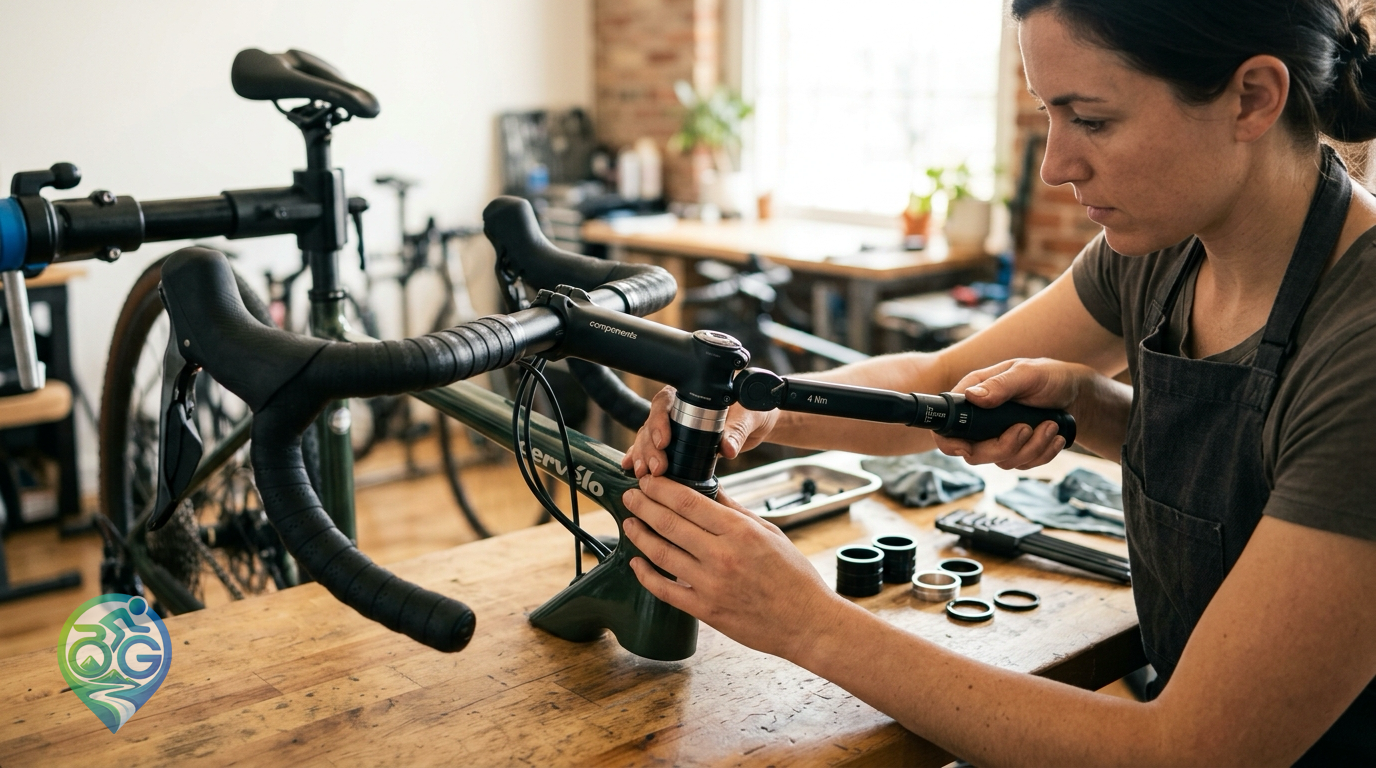
- Turn the top-cap bolt by a very small amount—about one eighth of a turn. The top cap sets bearing preload; it does not secure the stem to the steerer.
- Align the handlebar with the front wheel. Tighten the stem clamp bolts in the maker’s sequence to the specified torque. Do not substitute a generic torque value, particularly with carbon parts.
- Repeat the brake-and-rock test, then check that the bars still turn freely. Stop once the play is gone; additional tightening is not an improvement.
The stem clamp must be loose while preload is adjusted. Once the stem is secured, the top-cap bolt is no longer the way to tighten the stem. Cranking it down against a clamped stem can fail to remove play and may stress components.
When to stop and book a workshop check
If movement remains after a careful adjustment, the top cap bottoms out, steering feels rough, or you can see a crack or movement around the fork and frame, do not ride the bike until it has been inspected. The cause could be a loose stem, incorrect spacer stack, worn bearings or another front-end fault; applying more force without identifying it is not a safe fix. When the steering is smooth and free of play, take a short, gentle test ride and repeat the check afterward. For broader ride preparation, see our tyre pressure guide and cycling route planning guide.

Discussion & Comments 0
Share your thoughts, gear experiences or ask questions about this guide.
No comments yet.
Be the first to share your thoughts!
Join the Discussion
Log in with your Bisikletli Gezgin mobile account to participate in discussions and track your contributions.