
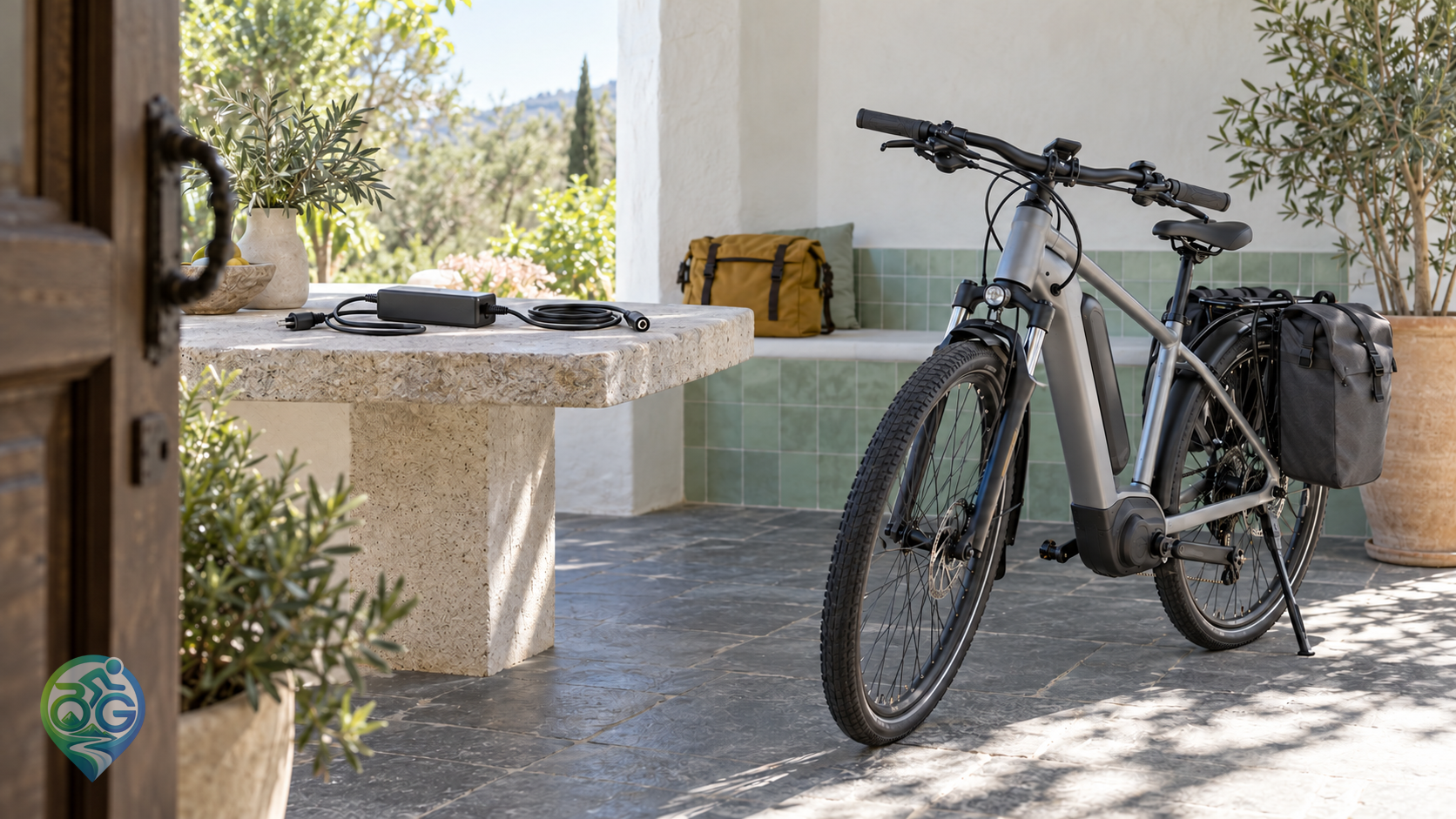
Put the host's answer beside the proposed charging stop on your itinerary. You need to know where your own charger can be used, when the space is accessible and how long you may stay. E-bike charging stops work best as agreed arrangements with usable alternatives. A business appearing open on a map does not settle those questions, and finishing lunch does not establish that the next riding section is within reach.
Confirm permission and the charging conditions
Tell the café, campsite or accommodation provider that you will bring your own charger. Ask permission for the particular arrangement you need, including any charge for electricity or use of the space. Establish whether the bicycle can remain there or whether the battery would have to be removed in accordance with its instructions. A general statement that electricity is available leaves the practical arrangement unresolved.
For an overnight stop, include charging in your accommodation enquiry. A bicycle store is not automatically a charging area. Ask about late arrival, who controls access and whether you can stay with the equipment as required by the manufacturer. Save the reply with the booking details, rather than expecting a different member of staff to remember an informal conversation.
If permission is refused, choose another workable stop. Do not base the journey on using an unattended socket simply because it is close to the road. When travelling with companions, confirm the arrangement for everyone who needs it. Permission for one charger does not necessarily establish space, time or facilities for the whole group.
Check the space against the equipment instructions
Bosch's battery handling guidance specifies a compatible charger, supervision, a dry and ventilated environment, temperatures from 0 to 40 °C and protection from direct sunlight. Those are Bosch's stated conditions; follow the instructions for your own system. A convenient location is usable only when the equipment and the place meet the relevant requirements.
The same guidance calls for checking the battery for damage before charging and disconnecting the charger from the mains afterward. Do not make a long sightseeing absence part of the plan by assuming that supervision will somehow be provided. Confirm an arrangement that you can actually follow. A wet outdoor corner or a table in direct sun should not become the charging location merely because a socket happens to be nearby.
Plan the sections between confirmed stops
In its battery questions and answers, Bosch identifies assistance level, riding behaviour, air resistance, rider weight, tyre pressure and terrain as range factors. Use the estimate provided by your system and observations from comparable riding conditions as planning information. Neither gives a fixed distance that every battery will deliver on every journey.
Bring the climbing, luggage and possible turn-offs into your route plan. Decide where you would shorten the day before committing to a long section that depends on an unconfirmed charging stop. Riding companions may have different batteries, support settings and remaining energy. Discuss the day around those actual differences rather than the largest advertised range in the group.
Separate time at the stop from time connected
Bosch also says charging time depends on battery capacity and the charger used. Find the current information for your own combination. Avoid assuming that a coffee break adds a standard amount of usable range. Arrival, setting up, any preparation required by the instructions and packing away all take time outside the period when the charger is connected.
Ask how the permitted access window relates to that sequence. A venue closing at a particular time may need you to collect and clear the equipment earlier. If the available stop is too short for your intended next section, change the riding plan while that choice is still manageable. Do not silently turn a brief top-up opportunity into an expectation of a full battery.
Keep a shorter day available
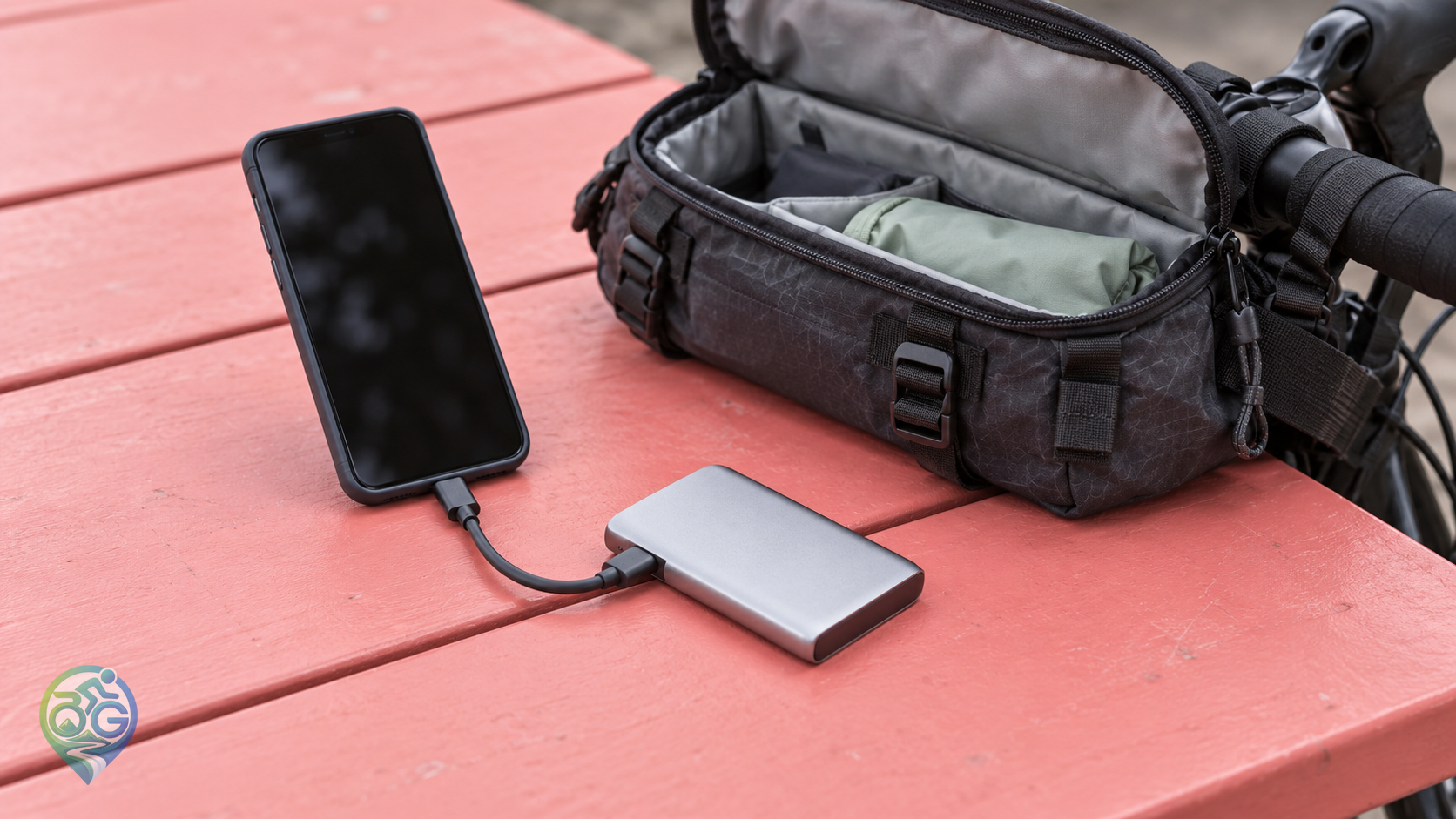
Include a shorter day and a workable return option in your long-distance touring preparation. Keep the charger, required cables and saved venue reply accessible. Recheck access hours before travelling, then revise the following day's itinerary around the charge level you actually obtained. If a stop becomes unavailable, use the alternative you have already assessed rather than inventing a new charging arrangement when time and energy are running short.
Discussion & Comments 0
Share your thoughts, gear experiences or ask questions about this guide.
No comments yet.
Be the first to share your thoughts!
Join the Discussion
Log in with your Bisikletli Gezgin mobile account to participate in discussions and track your contributions.