
Maintaining a quiet, hyper-efficient, and long-lasting bicycle drivetrain largely depends on selecting the proper chain lubricant for your riding environment. Every watt of rider power transferred through the pedals passes across the chain pins, bushings, and rollers under immense mechanical pressure. Applying the wrong lubricant formula or failing to wipe away excess residue quickly turns your drivetrain into an abrasive grinding paste of road grime. Therefore, understanding bicycle chain lube dry vs wet formulations is essential for optimal drivetrain longevity and shifting crispness.
Dry lube chemistry: Dust resistance and dry weather performance
Dry bicycle chain lubricants utilize a liquid solvent carrier—typically alcohol or specialized light solvents—infused with synthetic wax, PTFE (Teflon), or ceramic micro-particles. Once dripped onto individual chain links, the volatile liquid carrier evaporates completely, leaving behind a dry, slippery protective film inside the internal rollers. The defining strength of this dry film is that it does not attract airborne dust, trail sand, or road grit.
Riders operating in arid summer climates, dry gravel paths, or indoor trainers benefit enormously from dry lubes because the cassette cogs and derailleur jockey wheels remain virtually spotless. However, dry lubes exhibit minimal resistance against moisture. A sudden downpour or puddle splash will quickly wash the lubricant out of the internal links, causing premature squeaking. Consequently, dry lubes require frequent re-application every 100 to 150 kilometres or immediately following any wet riding encounter.
Wet lube properties: Relentless wet weather and winter protection
In contrast, wet lubricants are formulated with high-viscosity synthetic oils, anti-wear additives, and water-repellent polymers. As documented in technical references by Sheldon Brown chain maintenance guides, wet lubes remain physically liquid and tacky on the metal surfaces throughout their operating lifespan. Their primary engineering purpose is to withstand relentless torrential rain, standing water, and road salt without emulsifying or washing away.
During cold autumn downpours and winter commuting, a single careful application of wet lube can protect the drivetrain for 250 to 300 kilometres of heavy service. The clear trade-off is surface stickiness: riding with wet lube in dusty summer conditions causes grit to cling aggressively to the outer plates. Before servicing seasonal drivetrains, verify that you are calculating correct bicycle chain link length so that shifting tension remains balanced across all gear combinations.
Step-by-step application and excess wiping protocol
According to certified mechanical practices from Park Tool bicycle repair procedures, lubricant should never be applied directly onto a dirty chain. Thoroughly degrease and dry the links first. If you remove the chain for ultrasonic cleaning, adhere strictly to bicycle quick-link installation and compatibility rules, replacing single-use master links as recommended by component manufacturers.
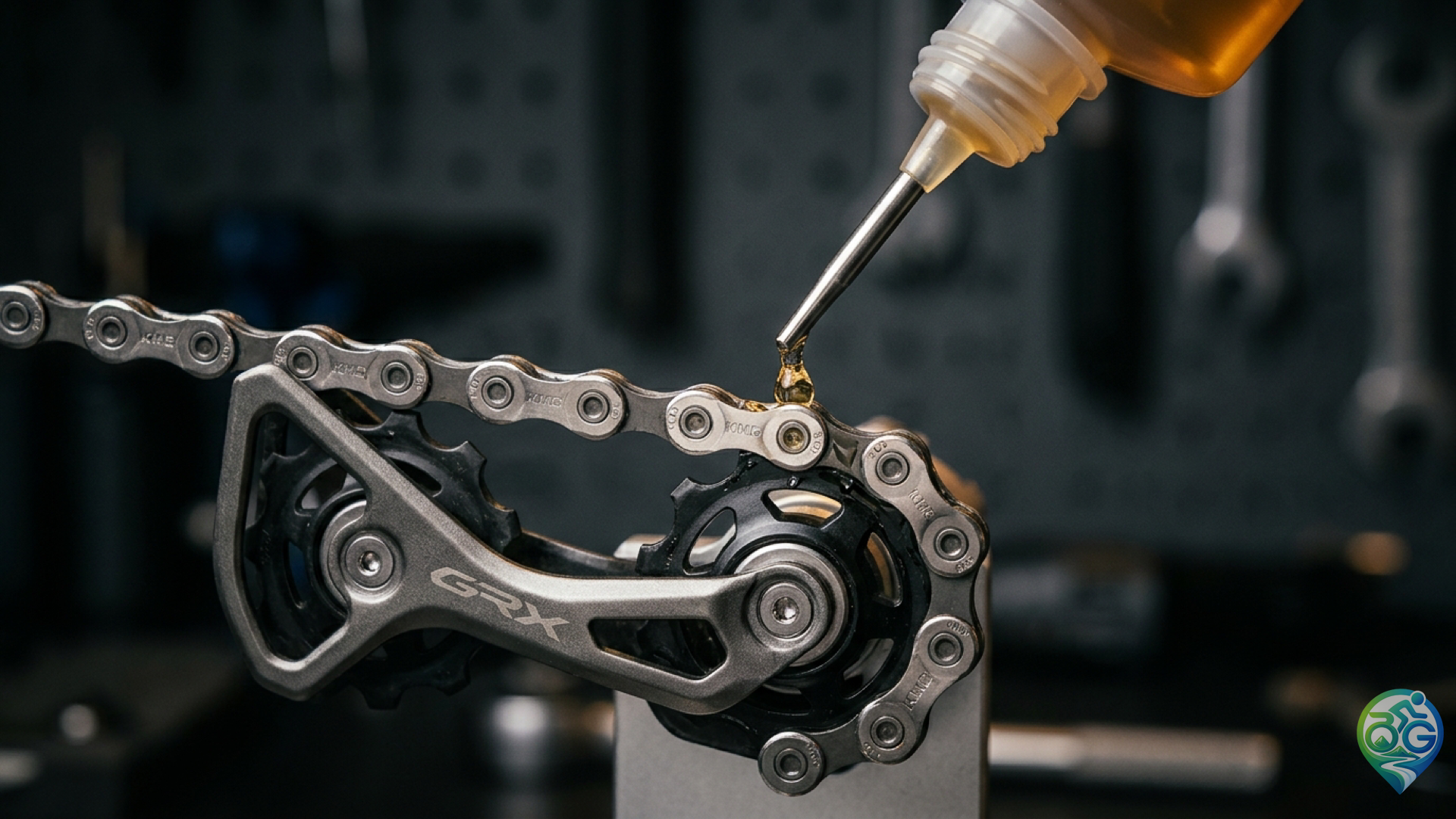
Always choose precision dropper bottles rather than aerosol spray cans to prevent contaminating nearby brake rotors or rim surfaces. Slowly backpedal while placing exactly one small drop onto each chain roller. Allow five minutes for capillary action to draw the fluid into the inner bearings, and then aggressively wipe the entire exterior of the chain with a clean microfibre rag. Keeping outer chain plates dry minimizes grit adhesion and protects rear derailleur alignment and hanger compatibility under heavy pedaling loads.



Discussion & Comments 0
Share your thoughts, gear experiences or ask questions about this guide.
No comments yet.
Be the first to share your thoughts!
Join the Discussion
Log in with your Bisikletli Gezgin mobile account to participate in discussions and track your contributions.