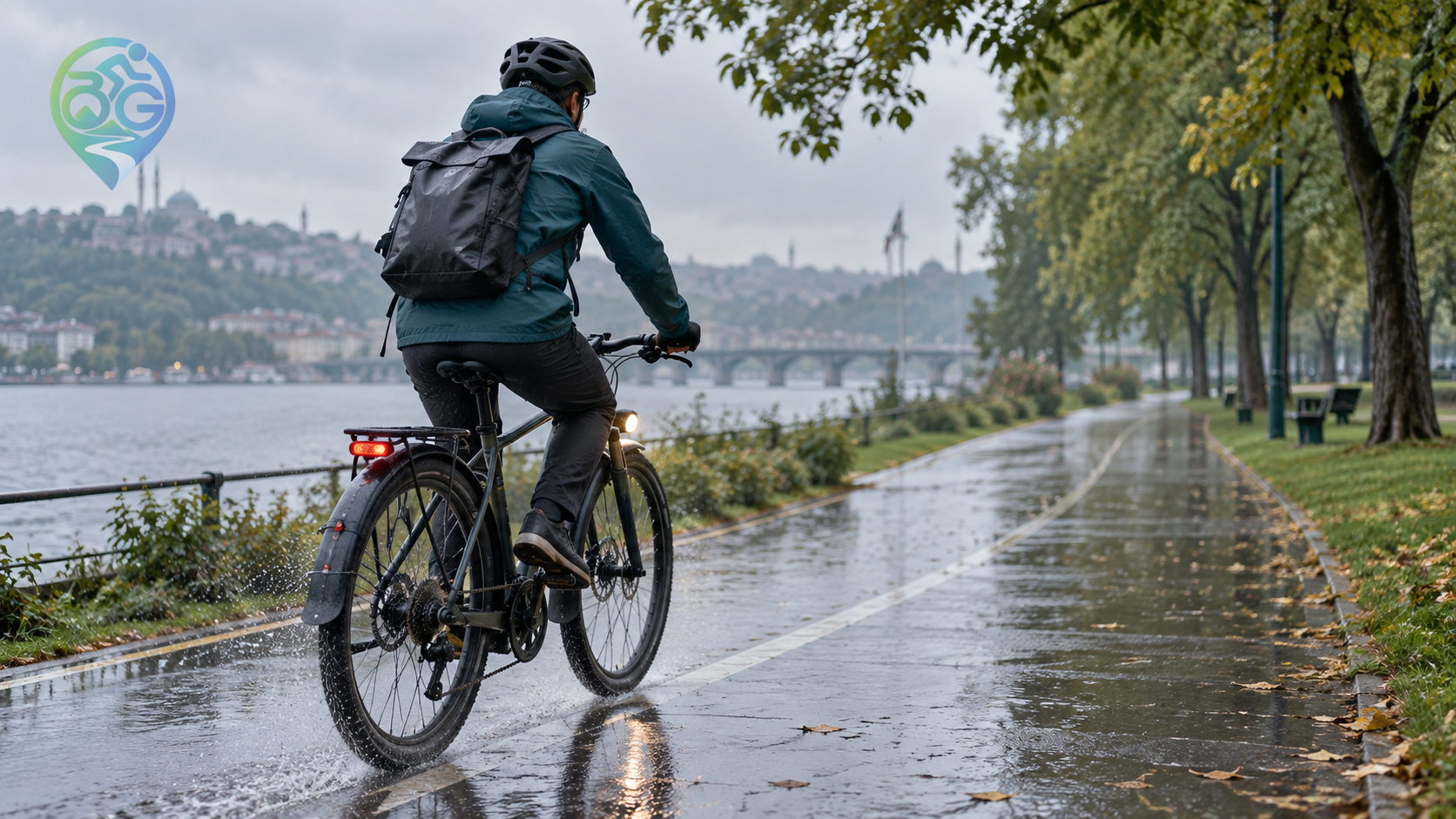
Rain does not always mean that a ride must end, but wet roads require a calmer pace and better preparation. Check the intensity of the rain, wind, daylight and route before leaving. Avoid flooded underpasses, blind corners covered with leaves and busy roads when a safer alternative exists.
Choose and fit the right fenders
Leave enough clearance between the tire and the fender for mud to pass. Full-length fenders protect your back and shoes better on long wet rides, while quick-release models are practical for commuting. After installation, spin each wheel by hand and make sure the fender cannot touch the tire, brake cable or frame.
Stay dry without overheating
A thin base layer, breathable mid layer and light waterproof shell are usually more flexible than one heavy jacket. Keep a phone and spare clothing in a waterproof bag inside the pannier. Waterproof shoe covers and gloves with a secure palm can make a long ride much more comfortable.
Slow down before the corner
Wet paint, metal covers, grates, leaves and standing water reduce grip. Brake earlier on a straight section and use both brakes smoothly instead of grabbing the lever in the turn. Increase your following distance because both your stopping distance and the driver's may be longer.
Be visible and maintain the bike afterward
Use front and rear lights before visibility becomes poor, and keep bags or fenders from covering them. After the ride, rinse away mud and road salt, dry the chain and apply suitable lubricant. Do not direct high-pressure water at hubs, bearings or the bottom bracket.
Lightning, severe wind, flooding and visibility that has collapsed are good reasons to postpone. A wet ride can be managed; losing control cannot.