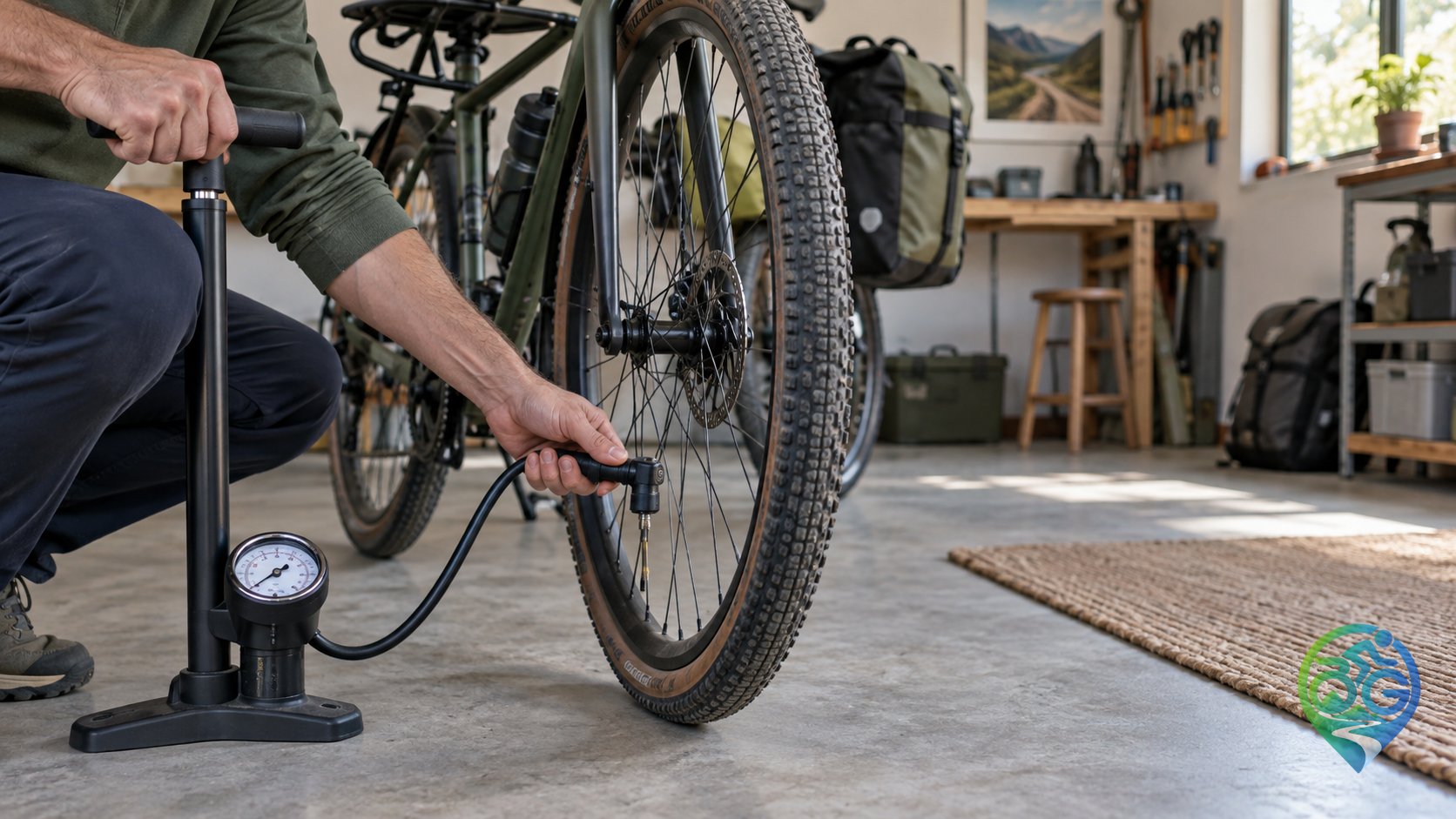
Fixing a punctured tube on an empty trail or beside a hot road can end the rhythm of a tour. A correctly installed tubeless system can improve comfort and reduce many small punctures, but it still needs inspection and a repair plan.
Why use tubeless?
- Fewer pinch flats: Without an inner tube, the tube cannot be trapped between the rim and a hard impact.
- Lower pressure and more grip: A suitable tire can run lower pressure on gravel, absorbing vibration and improving traction.
- Small holes can seal: Sealant may close punctures from thorns, glass or other sharp debris while you continue riding.
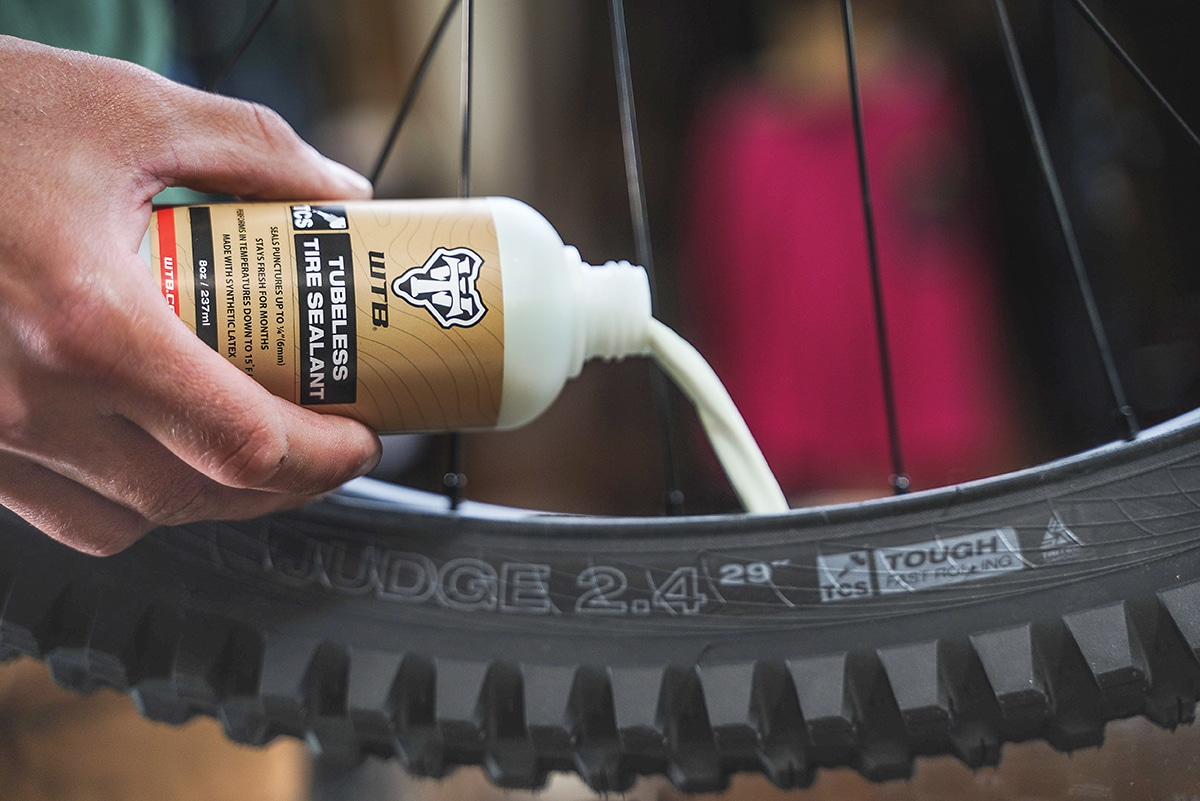
Refresh the sealant
Sealant dries over time, especially in hot weather. Inspect it every few months and add fresh liquid when the tire no longer contains enough to slosh. The correct volume depends on tire size and the sealant manufacturer's instructions; a common starting point is 60–80 ml for a 700c touring or gravel tire and more for a wide mountain tire.
Repair a larger hole with a plug
- Leave the tire on the rim when possible.
- Thread a rubber plug into the insertion tool.
- Push it into the leak and withdraw the tool slowly.
- Inflate the tire and check that the seal is holding.
Carry a valve-core tool, plugs, fresh sealant and one correctly sized spare tube for a serious sidewall cut. Tubeless is not maintenance-free; it is a system that rewards regular checks.