
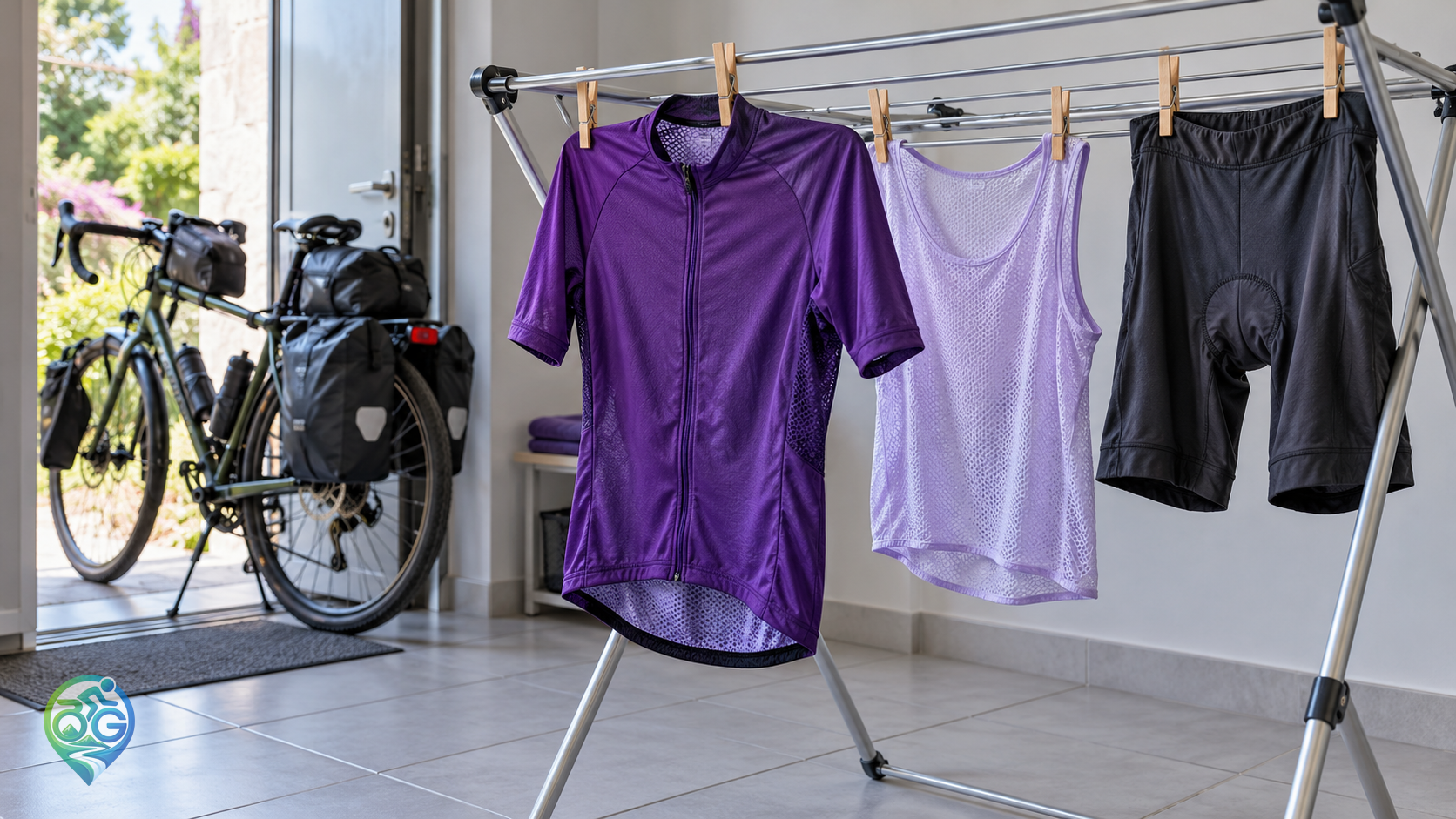
Laundry on a cycling trip has two deadlines: getting a garment clean and having it ready to wear again. A late wash before an early departure can meet the first and miss the second. The result is a damp jersey competing for space with the clothes you hoped to keep dry. Building laundry into your overnight plans gives you more useful choices than trying to solve everything as you pack the bicycle.
Three piles make the next decision easier
Keep clean clothing, used clothing and still-damp items identifiable. The distinction can be simple; it does not require an elaborate collection of bags. Use the bikepacking packing guide to think through access to what you will wear next. Avoid burying your only dry layer beneath equipment that needs to be unpacked every morning.
Choose your spare clothing around the length of the trip and the washing facilities you can actually use. There is no universal jersey count for every rider. One itinerary may include a long stop with a laundry room, while another has consecutive short nights without a permitted wash area. Confirm the arrangements rather than treating every accommodation booking as an opportunity to clean the entire kit.
Ask about laundry before a late arrival
At a guesthouse or managed campsite, ask where washing is allowed, whether a machine is available and where garments can dry. A washbasin does not automatically mean laundry is permitted. Check opening times and whether detergent is provided. If arrival will be late and departure early, consider waiting for a longer stop or washing fewer items. Keep the dry garment you need in the morning out of the wash until you have a workable alternative.
Sharing facilities requires a little coordination. A group can occupy the entire drying area with surprisingly few outfits. Agree an order and leave room for other guests. You can also use the stop-planning approach in our cycling itinerary guide to allow a longer overnight stay when laundry needs it. A drying deadline belongs in your travel plan as much as an onward departure does.
Read each garment, especially the shell
Follow the care label for water temperature, washing method, cleaner and drying. If the label is missing or unreadable, look up the manufacturer’s instructions for that model. When decanting a cleaner into a smaller container, retain enough information to identify it and use it correctly. Check the closure before packing it beside clothing or electronics.
Patagonia’s waterproof jacket guide highlights suitable cleaning products and avoiding fabric softener for those jackets. Follow the instructions for your own shell; a permitted heat treatment for it should not become a default for jerseys, wool layers or cycling shorts. Our rain clothing preparation guide can help distinguish the outer layer’s job from that of the other clothes you carry.
Give drying its own space
Use an approved airy place and separate garments instead of stacking them. Check pockets and thicker sections before deciding something is dry. Do not speed the process by placing fabric close to a heater or flame, and do not use a dryer unless its care instructions allow it. Weather, room conditions and fabric construction affect the result; this article promises no fixed drying time.
If an item remains damp at departure, keep it apart from dry sleeping clothes and air it again at the next suitable stop. Loosely attaching garments to a moving bicycle can bring them close to wheels or the drivetrain. Do not make drying clothing on the bike the essential link in your plan. A spare layer and a later laundry opportunity are more controllable arrangements.
When the wash should wait
The Leave No Trace wastewater guidance explains that biodegradable soap can still affect lakes and streams. Do not wash detergent-covered clothing directly in a natural water source. At a managed campsite, use the disposal arrangement the host identifies. If there is no appropriate washing and wastewater facility, wait for the next suitable stop. A cleaner labelled natural does not turn a stream into a laundry drain.
Discussion & Comments 0
Share your thoughts, gear experiences or ask questions about this guide.
No comments yet.
Be the first to share your thoughts!
Join the Discussion
Log in with your Bisikletli Gezgin mobile account to participate in discussions and track your contributions.