A clean, correctly lubricated chain shifts more reliably and wastes less energy. Maintenance does not need to be complicated, but applying new oil over abrasive dirt only traps the problem inside the drivetrain.
When is it time to clean?
If the chain looks dry, feels gritty or leaves a black, sticky mark on your finger, it needs attention. Mud, rain and road salt shorten the interval. Wipe the chain after a wet ride and inspect it before a long tour.
Use simple, suitable tools
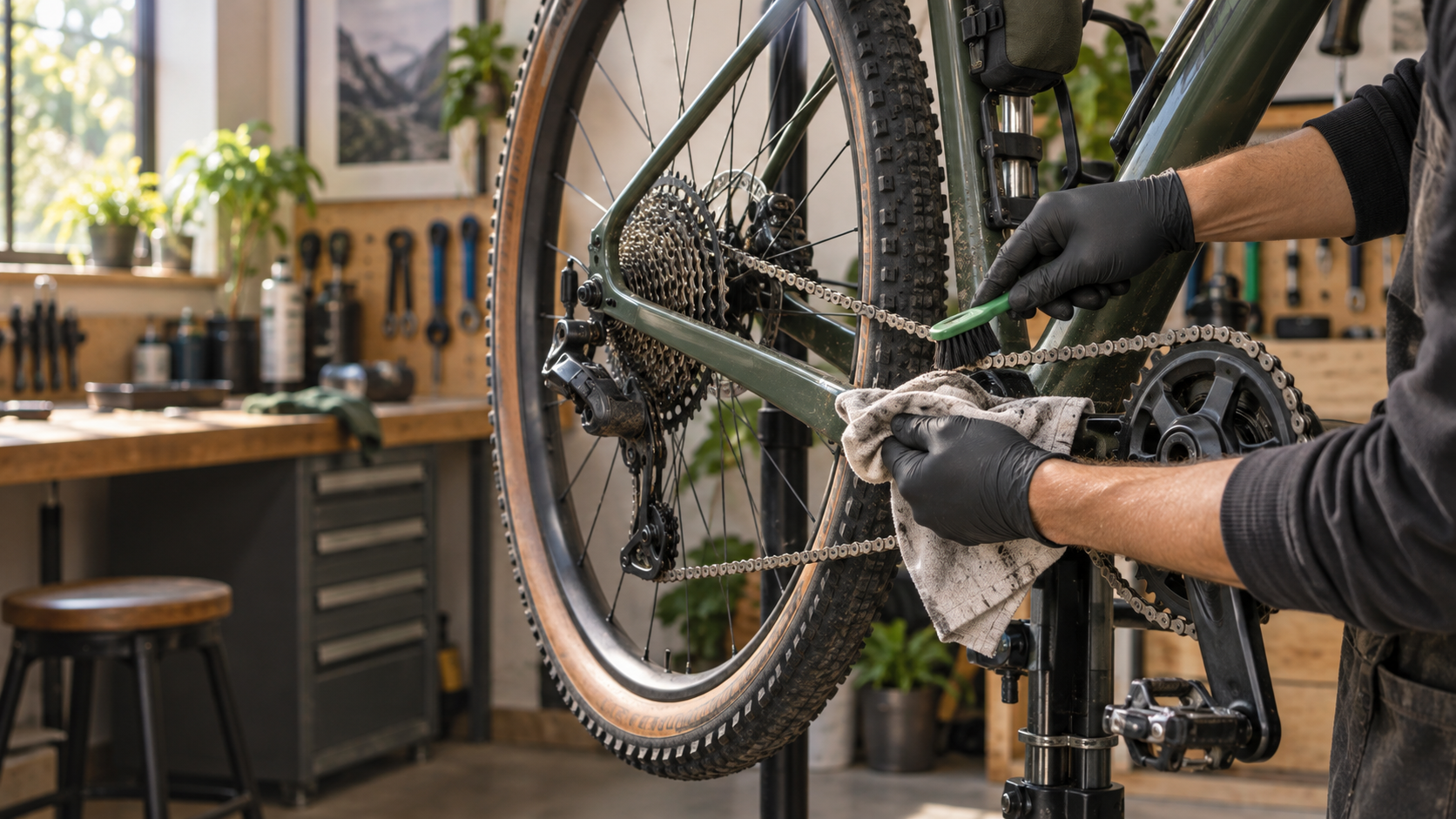
A clean rag, soft brush, bicycle chain cleaner and the correct lubricant are usually enough. Strong household degreasers can damage seals and finishes. Put the bike somewhere stable and shift to a position that lets the chain move freely.
Clean before lubricating
Remove loose dirt with a dry rag, then apply cleaner to the rag or brush rather than flooding the whole bike. Turn the pedals backward and work through every link. Clean the cassette and derailleur pulleys separately, then wipe away residue and let the chain dry completely.
Apply a small drop to every link
Place lubricant on the moving part of each link and allow it to settle. Dry lubricant suits dusty conditions; wet lubricant lasts longer in rain but attracts more dirt. After a few minutes, wipe the outside of the chain thoroughly. Excess oil does not improve shifting.
Check the result
Shift through the gears and listen for grinding or skipping. If the noise remains, measure chain wear and inspect the cassette, pulleys and cable system. A clean chain is easier to diagnose and safer to rely on.