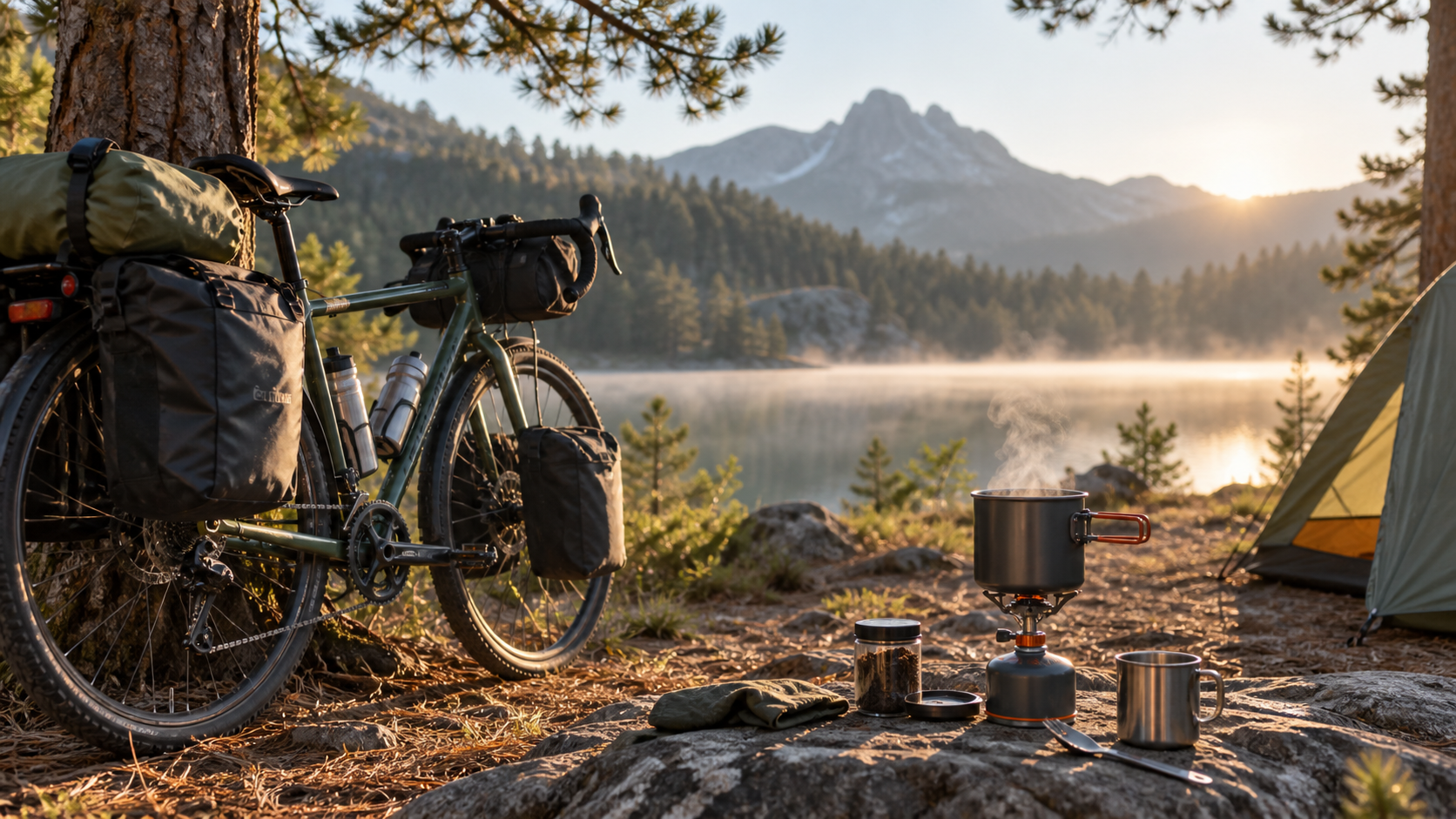
A stove on a bike tour should make food and hot drinks possible without turning the cooking kit into a heavy, complicated system. Fuel availability, packed size, wind resistance and safety matter as much as boiling speed.
Match the stove to the route
Canister systems are convenient when compatible fuel is easy to find. Alcohol and solid-fuel systems can be compact, but their cooking speed and fuel access vary. On a remote route, decide where you will resupply before choosing a stove that depends on a particular cartridge.
Compare the complete cooking system
Include the burner, pot, lid, windshield, lighter, fuel and storage in the weight comparison. A very light burner may need a separate windshield or a specialized pot. Integrated systems often boil quickly, while a simple burner can be easier to repair and share.
Wind and cold change performance
Wind steals heat and makes a small burner inefficient. Use a stable windshield without enclosing a canister in a way that overheats it. Cold fuel may produce less pressure, so allow extra cooking time and keep the system protected from strong wind.
Cook safely outdoors
Use a stable, nonflammable surface away from tents, dry grass and low branches. Never cook inside a closed tent because of fire and carbon-monoxide risk. Let the stove cool before packing it, inspect seals and keep fuel separate from food and electronics.
The best stove is the one you can fuel, operate and pack safely throughout the route. Practice at home before relying on it at camp.